Can Camera Inspections Find Roots in Your Drain?
A main drain that clears briefly, then backs up again, often has more going on than a simple clog. Can camera inspections find roots causing that pattern? In many cases, yes. A professional drain camera can show roots growing through pipe joints, cracks, or broken sections, giving homeowners a clear look at what is blocking the line before anyone recommends the next step.
For homeowners in Eustis, Mount Dora, Tavares, Leesburg, Lady Lake, and nearby Lake County communities, this matters because tree roots can work their way into aging underground drain lines over time. The result may be slow toilets, gurgling fixtures, sewage backups, or repeated clogs that store-bought cleaners never truly solve.
What a Drain Camera Can Show
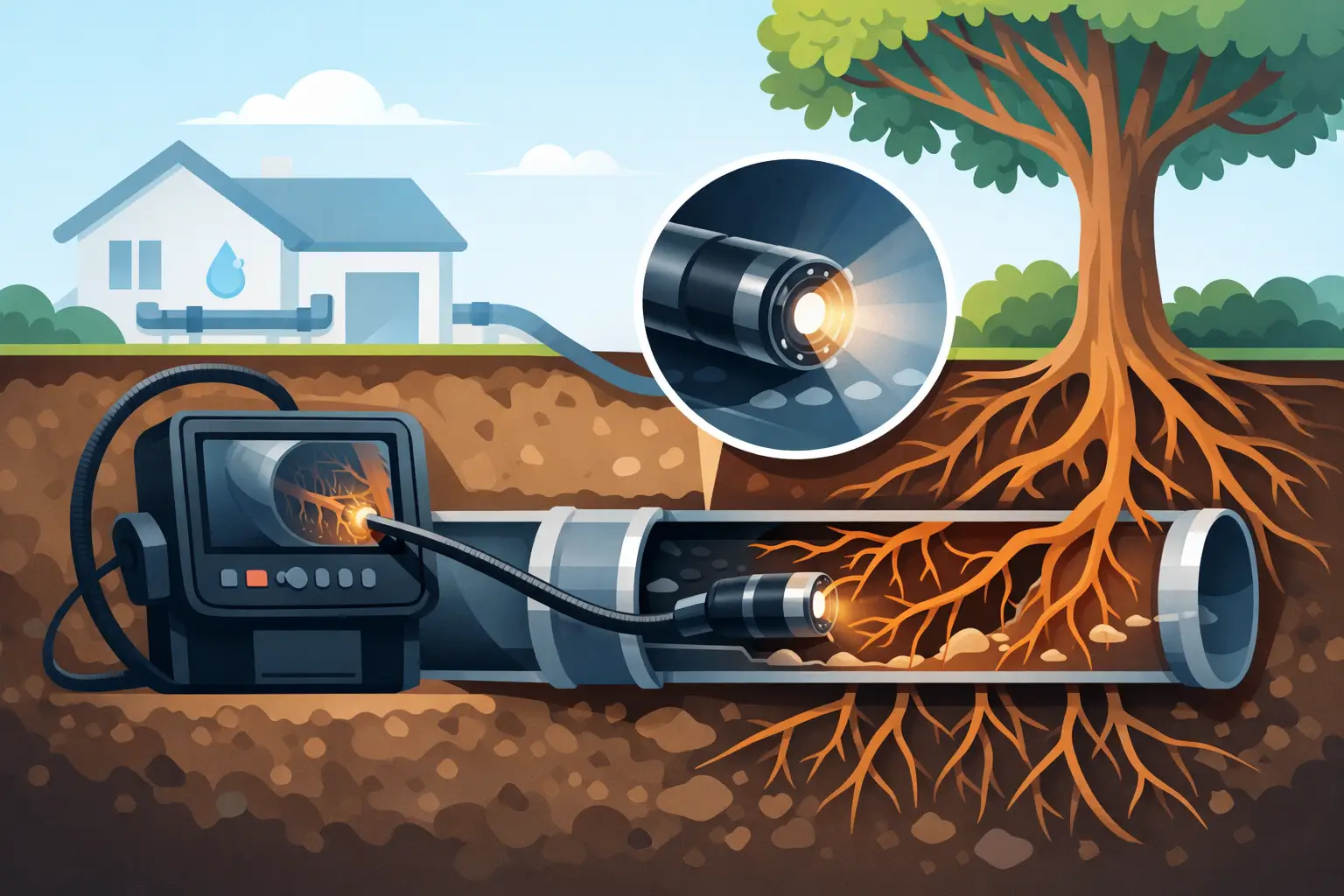
A video camera drain inspection uses a waterproof, lighted camera attached to a flexible cable. A technician feeds it through an accessible drain opening, often a cleanout near the home, while watching live video from inside the pipe.
When roots have entered the line, the camera can usually show them clearly. They may look like thin, hair-like strands at first. In more serious cases, they form a thick mass that catches toilet paper, grease, wipes, and other debris until water can no longer move through the pipe properly.
The camera can also help identify the condition that allowed roots in. Healthy, properly sealed pipes do not invite roots inside. Roots typically enter through separated joints, cracks, corroded pipe walls, damaged connections, or a pipe section that has shifted underground.
A camera inspection may reveal:
- Fine roots beginning to enter at a joint
- Heavy root growth filling part or all of the pipe
- A cracked, offset, or collapsed pipe section
- Grease, scale, sludge, or debris collecting around root growth
- Standing water that may point to a low spot or damaged section
- The approximate location of the problem in the line
This is why a camera is more useful than guessing based on symptoms alone. Two homes can have the same backup, but one may need root removal while the other has a buildup issue or a broken pipe. No guessing. No unnecessary work.
Can Camera Inspections Find Roots Every Time?
Camera inspections are highly effective, but they do have limits. If the pipe is completely packed with roots and debris, the camera may not be able to travel past the blockage right away. A technician may need to clear enough of the line first to create a path for the camera.
Likewise, a camera only sees the inside of the pipe. It can show root intrusion and visible damage, but it cannot show every detail of the soil or roots outside the pipe wall. If a section is heavily damaged, additional locating or repair evaluation may be needed to determine the best long-term fix.
Water quality can affect the view as well. A line full of dirty standing water may limit visibility until the blockage is opened up. That does not make the inspection useless. It simply means the right sequence matters: restore flow where possible, inspect the pipe, then explain what the footage shows.
A trustworthy technician should be clear about what the camera confirms, what it strongly suggests, and what may require further evaluation. You should not be pressured into a major repair based on vague claims or a quick look at a drain opening.
Signs Roots May Be in Your Sewer Line
Roots are usually a main-line concern, not a problem limited to one bathroom sink. When the sewer line is restricted, several fixtures may begin acting up at the same time because they all depend on the same path out of the house.
Watch for toilets that bubble when a shower drains, water rising in a tub after flushing, or a washing machine drain that causes a nearby toilet to gurgle. Foul odors, slow drains throughout the home, and sewage appearing at a ground-level cleanout are also warning signs.
Recurring clogs are especially telling. If a drain cable opens the line but the problem returns within weeks or months, roots may still be growing through the pipe. Clearing the immediate blockage can restore service, but it does not automatically address the opening that allowed roots to enter.
Older homes may be more likely to have vulnerable pipe materials or aging joints, but newer homes are not immune. A root will follow moisture. Even a small gap at a connection can become an entry point over time.
What Happens After Roots Are Found?
Finding roots is the diagnostic step. The proper solution depends on how much root growth is present and what condition the pipe is in.
If the pipe remains structurally sound, professional drain cleaning can cut and remove intruding roots and flush out the material they have trapped. High-pressure jetting may be appropriate for certain lines because it can clean buildup from the pipe walls while moving loosened debris downstream. The method should match the pipe material and its condition. Older or damaged pipe may require a more cautious approach.
After cleaning, another camera pass can be valuable. It lets the homeowner and technician see whether the line is flowing freely and whether cracks, separated joints, or other damage remain visible once the roots are gone.
If roots entered through a major break, collapse, or badly separated connection, cleaning alone may be a temporary measure. The line may need repair or replacement in the affected area to prevent roots from coming back. That is not an upsell. It is the practical reality when the pipe itself can no longer keep soil and roots out.
The best recommendation is based on the actual footage, the severity of damage, the age of the pipe, and how often the problem has returned. A small amount of early root intrusion calls for a different plan than a line that is cracked, sagging, and repeatedly backing sewage into the home.
Why Chemical Root Killers Are Not a Reliable First Move
Homeowners sometimes consider chemical root treatments after hearing that roots may be the issue. These products may have a limited role in certain situations, but they are not a substitute for knowing what is happening inside the pipe.
A chemical treatment will not repair a cracked line, remove a heavy root mass, or clear the paper and waste caught behind the roots. It can also create false confidence if the drain seems better for a short time while the pipe continues to deteriorate.
Pouring harsh drain chemicals into a backed-up line is even less helpful. The product may sit in the pipe, fail to reach the blockage effectively, and create a safety concern for anyone who later works on the drain. If you suspect a main-line blockage, skip the guesswork and have the line evaluated properly.
Camera Inspections Help You Make a Better Repair Decision
A camera inspection is not just about spotting roots. It gives you a basis for deciding whether cleaning is likely to last, whether a repair should be planned, or whether the issue is something else entirely.
At USA Drain Cleaning, the goal is to show homeowners what is in the line and explain it in plain language. You should be able to see why a drain is failing, understand the recommended work, and know what result to expect before moving forward.
That transparency is especially useful when you are dealing with a stressful backup. Instead of approving work because a problem sounds serious, you can make a decision based on the condition of your actual drain line.
When to Schedule a Camera Inspection
A camera inspection makes sense when you have a recurring main-line clog, multiple fixtures draining slowly, gurgling sounds, sewage backup, or a drain that was cleared but quickly clogged again. It is also useful before buying a home with older plumbing or before making a costly repair decision.
Do not wait for a small warning sign to become a weekend backup. If water is rising in tubs, toilets are overflowing, or sewage is coming from a cleanout, limit water use in the home until the line can be checked. Running more water into a blocked main line can make the mess larger and harder to clean.
Roots do not usually announce themselves all at once. They start with a small opening, a little moisture, and a few strands inside the pipe. A camera inspection can catch that problem while there is still time to choose a clear, practical solution that protects your home, your yard, and your budget.