Surface Drain Versus French Drain for Your Yard
A hard Florida rain can turn one low spot beside the driveway into a small pond before you have time to move the patio furniture. When homeowners compare a surface drain versus french drain, the right answer comes down to one practical question: Is water collecting on top of the ground, or is it staying trapped in the soil?
Both systems move unwanted water away from your home, lawn, and hard surfaces. But they do different jobs. Choosing the wrong one can leave you with the same soggy yard, water near the foundation, or flooded walkway after the next storm. No guessing. Start with where the water is coming from and where it needs to go.
What a Surface Drain Does Best
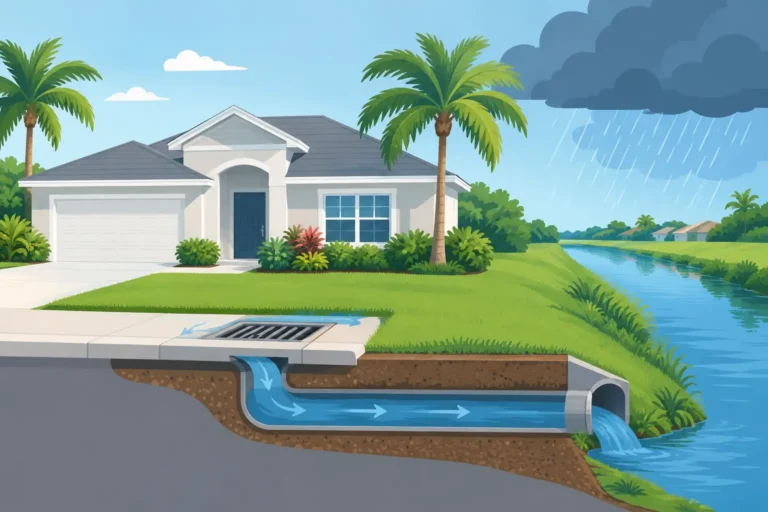
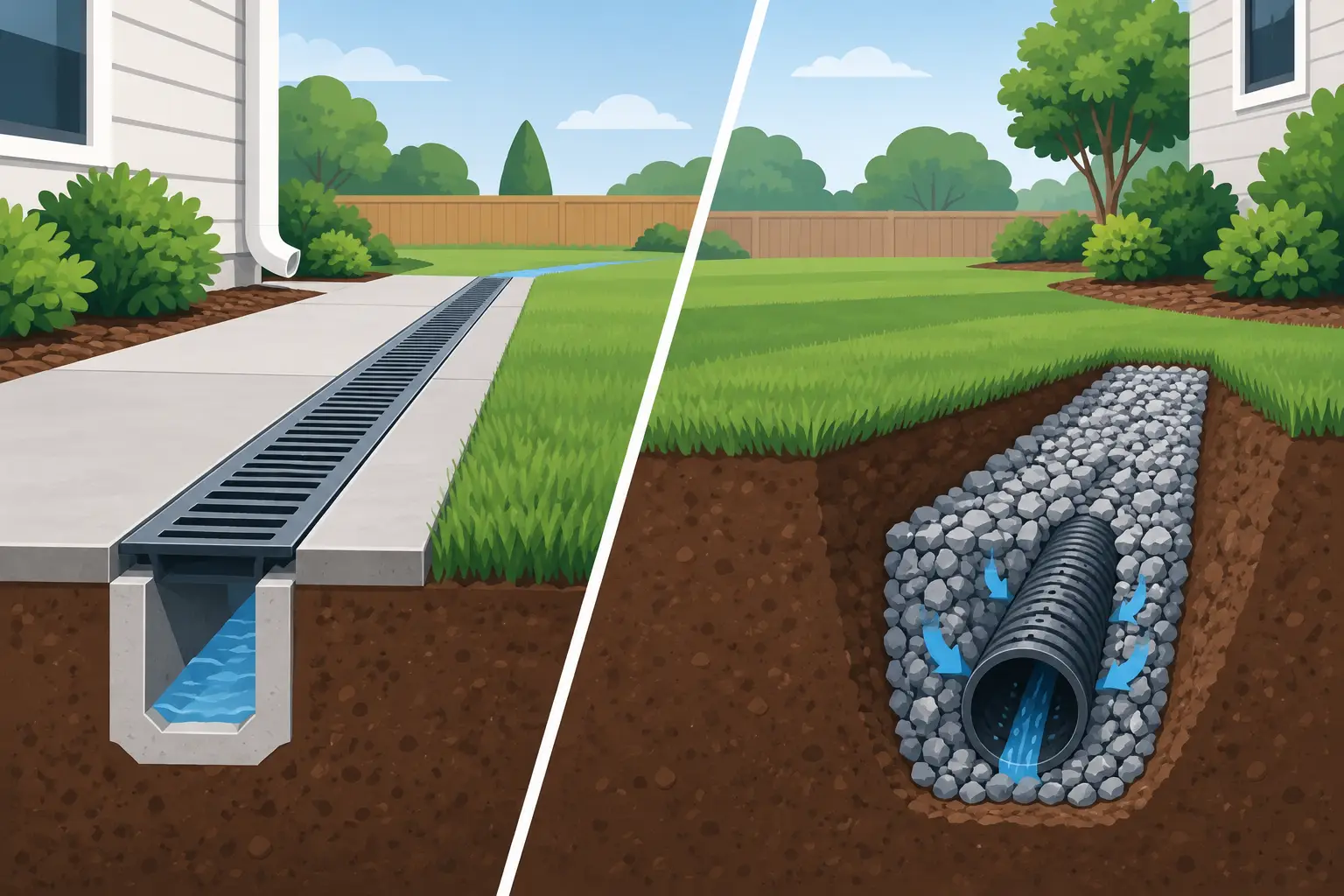
A surface drain is built to collect water that is visibly pooling above ground. You may see it as a grated catch basin in a lawn, a round yard drain, or a long channel drain across a driveway, garage entrance, pool deck, or patio.
Rainwater runs across the surface, enters the grate, and travels through a solid pipe to a proper discharge point. That outlet may be a lower part of the property, a drainage swale, or another approved drainage area. The goal is simple: capture fast-moving water before it spreads where it should not.
A surface drain is often the better choice when water collects in one obvious location. Common examples include a dip in the yard, the bottom of a sloped driveway, water washing toward a garage door, or a patio that holds water after every storm.
Because the inlet is open to the surface, a drain can handle sudden runoff that a buried gravel system may not collect quickly enough. This matters in Lake County, where a heavy afternoon downpour can put a lot of water on the ground in minutes.
Signs a Surface Drain May Be the Better Fit
Look at what happens while it is raining. If you can point to a puddle, a stream crossing the driveway, or water gathering against a wall, surface collection is usually part of the solution. A properly placed grate gives that water a direct path away.
Surface drains do need regular attention. Leaves, mulch, grass clippings, pine needles, and roof grit can block the grate or settle inside the basin. If water stands around a drain that used to work, the issue may be a clogged basin or outlet pipe rather than a failed drainage design.
What a French Drain Does Best
A French drain is designed for water below the surface. It generally consists of a trench lined with drainage fabric, filled with clean gravel, and fitted with a perforated pipe. Water in saturated soil moves through the gravel and enters the pipe, which carries it toward an outlet.
This system is useful when the ground stays soft and wet long after rain has stopped. It can help along a foundation, beside a retaining wall, at the edge of a lawn that remains muddy, or on a slope where groundwater moves downhill toward the home.
Unlike a surface drain, a French drain does not rely on a visible puddle finding a grate. It lowers excess moisture in the surrounding soil. That makes it a better match for broad, damp areas rather than a single point where runoff collects.
A French drain is not a cure-all for every wet yard. If the primary problem is thousands of gallons of roof or driveway runoff rushing across the ground, a buried perforated pipe may be overwhelmed or too slow to capture it. The source of the water still matters.
Signs a French Drain May Be the Better Fit
Consider a French drain when your lawn feels spongy, mower wheels leave ruts, or a low area stays wet for days even though there is no clear stream of water entering it. It can also be appropriate where soil pressure and moisture are affecting a foundation wall or where runoff from a higher property keeps saturating the ground.
Installation requires careful planning. The pipe needs a consistent slope, the trench must be deep enough for the problem, and the discharge point must be able to accept the water. A French drain without a workable outlet can simply move water from one section of the yard to another.
Surface Drain Versus French Drain: The Key Differences
The biggest difference is how each system collects water. A surface drain catches water after it reaches the ground. A French drain intercepts water as it soaks into or moves through the soil.
Surface drains usually use solid pipe after the collection point because the goal is to carry water away without collecting more along the route. French drains use perforated pipe in the drainage area so water can enter from the surrounding gravel. Both may eventually connect to solid pipe leading to an approved outlet.
They also differ in maintenance needs. Surface drain grates and catch basins are easier to inspect, but they collect visible debris. French drains are out of sight, which keeps the yard looking clean but can make a blockage, crushed pipe, root intrusion, or failed outlet harder to identify without inspection equipment.
Cost depends on access, trench length, soil conditions, pipe depth, and the location of the outlet. A small surface drain may be a straightforward project. A French drain can require more excavation, gravel, fabric, and restoration of landscaping. The least expensive option is not always the best value if it does not address the real source of water.
When Your Property Needs Both
Many Florida yards benefit from a combination of the two. For example, a channel drain may collect water at the bottom of a driveway while a French drain handles the saturated soil along the side yard. A catch basin can receive roof runoff at a low point, while a French drain reduces the groundwater that keeps a nearby lawn muddy.
The systems should be designed to work together, not compete for the same water. A surface inlet may feed solid pipe directly to an outlet. A French drain may tie into that route farther downstream, provided the pipe size, slope, and outlet can handle the additional flow.
This is where a quick visual assessment is not always enough. Standing water can be caused by a clogged storm drain, settled soil, a broken underground pipe, a blocked outlet, poor grading, or runoff from a neighboring elevation. Installing more drainage without finding the restriction can waste money and disrupt landscaping for no lasting benefit.
Start With the Water Path
Before choosing a drain, watch the property during a normal rain if it is safe to do so. Notice where water begins, which direction it moves, and where it remains after the rain ends. Check downspouts, driveway edges, patio slopes, yard drains, and the area near the foundation.
Do not cover a problem with topsoil or mulch until you know why the water is there. Raising one low spot can redirect runoff toward a garage, neighbor’s yard, or foundation. Likewise, connecting a drain to the wrong location can create an even bigger issue during the next storm.
If an existing exterior drain is slow or backed up, professional cleaning and a camera inspection can show what is inside the line. A camera can reveal built-up debris, roots, separated fittings, standing water in a sagging pipe, or a collapsed section. That information makes the decision clearer: clean and restore the current system, repair the line, improve grading, or add the right type of drainage.
USA Drain Cleaning helps Lake County homeowners identify blocked exterior drainage lines and explain the findings in plain language. The goal is not to recommend extra work. It is to identify the actual path of the water and correct the problem without leaving a mess behind.
A dry yard does not need the most complicated drainage system. It needs a system matched to the water you have, with a clear route out and enough maintenance to keep it working when the next hard rain arrives.