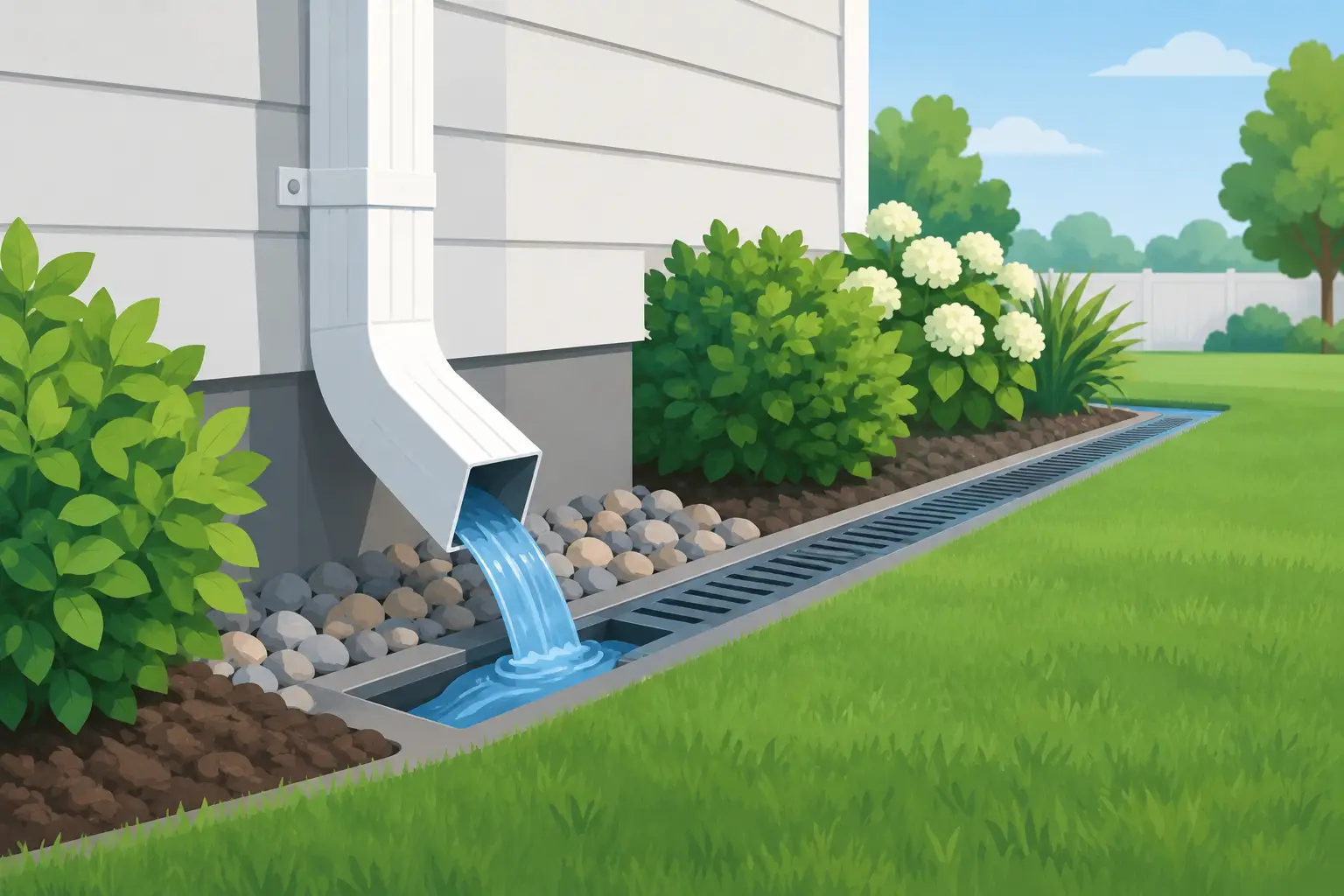
Downspout Drainage That Keeps Water Moving
A hard Florida rain can send hundreds of gallons off a roof in a short time. If that water lands beside the house, downspout drainage can quickly become a foundation, landscape, driveway, or flooding problem. The goal is simple: collect roof runoff, move it away from the home, and give it a clear place to go without creating trouble for a neighbor or the street.
For homeowners in Eustis, Mount Dora, Tavares, Leesburg, and Lady Lake, exterior drainage deserves attention before the next heavy storm. A downspout may look like a small part of the gutter system, but it controls where concentrated roof water ends up. When it is clogged, too short, disconnected, or tied into a blocked underground line, the warning signs often show up in the yard first.
Why Downspout Drainage Matters
Rainwater coming off a roof does not fall evenly across the yard. Gutters gather it and direct it to a few downspouts, concentrating a large volume of water in small areas. When that discharge point is close to the foundation, water can soak the soil along the house, splash against siding, wash out mulch, and settle where it should not.
In Central Florida, saturated ground and sudden storms make the issue more urgent. Water that cannot move through the yard may pool around patios, low spots, walkways, and exterior drains. It can also carry leaves, roof grit, pine needles, and mulch into storm drain openings. Over time, that debris can create a blockage that turns a manageable rain event into standing water.
Good drainage is not about sending water as far away as possible without a plan. It is about directing it to a suitable discharge area where it can spread out, drain naturally, or enter a properly functioning drainage system. The right setup depends on the slope of the property, soil conditions, landscaping, local drainage rules, and where existing storm lines run.
Signs Your Downspouts Are Not Draining Properly
You do not need to wait for visible water damage to spot a downspout problem. Watch what happens during a steady rain and take another look once the weather clears. Overflowing gutters, water spilling from joints, and a downspout that barely releases water can point to a clog in the gutter or vertical pipe.
Other problems happen below ground or at the outlet. A puddle that forms in the same place after every storm, soil washed away near the house, or mulch repeatedly scattered across the yard suggests that roof runoff is not being managed well. Green stains, mildew near the foundation, soft ground, and water entering a garage or lanai are also reasons to investigate.
If a buried downspout line is involved, the surface signs may be less obvious. Water may back up from the bottom of the downspout, bubble from a nearby drain grate, or disappear slowly even after the rain stops. In some cases, roots, crushed pipe, settled soil, or packed debris prevents the line from carrying water to its outlet.
Start With the Simple Checks
Before assuming the issue is underground, look at the parts you can see. Gutters should be clear enough for water to reach each outlet. Leaves and shingle grit often collect at the downspout opening, especially where a roof valley sends extra water into one section of gutter.
Check that each downspout is securely connected from top to bottom. A loose elbow or separated extension can dump water directly beside the foundation. Also look for dents, crushed sections, or sagging extensions that hold water and debris instead of letting it flow.
The outlet matters just as much as the downspout itself. A short splash block may be adequate on a property with a strong slope away from the house and well-draining soil. On a flat lot, though, it may only move the problem a few feet. Flexible corrugated extensions are inexpensive and easy to install, but they can sag, crush, disconnect, and trap debris if they are not supported properly.
Choosing a Downspout Drainage Solution
There is no single fix for every yard. The best option is the one that moves water safely while fitting the property rather than forcing runoff into a spot that already stays wet.
A surface extension can work well when there is open yard space and water can flow away from the home without causing erosion. This is often the simplest solution, but it needs enough distance and slope to make a difference. It should not direct water toward a driveway, neighboring property, septic area, or an area where people walk.
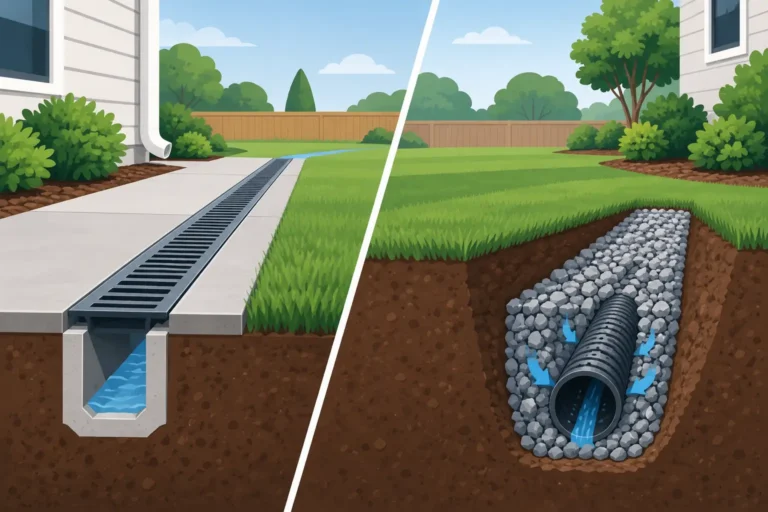
A buried solid drain line offers a cleaner appearance and can carry roof runoff farther into the yard or toward an approved drainage point. Solid pipe is generally better than perforated pipe for transporting downspout water because its job is to carry water, not release it along the way. The line must have proper slope, secure connections, and an accessible cleanout or outlet. Without those details, a hidden line can become a hidden clog.
French drains serve a different purpose. They collect groundwater from saturated soil through perforated pipe and gravel. They can be useful when a yard remains wet even without roof runoff, but they are not automatically the right place to send every downspout. Combining roof water with a French drain can overload it during heavy rain if the system was not designed for that volume.
Some properties use catch basins or yard drains to collect runoff at low points. These can be effective, particularly near patios and driveways, but they require regular cleaning. A basin full of leaves and mulch cannot accept water, no matter how well the rest of the system is installed.
When Underground Lines Need Professional Attention
A buried line that repeatedly backs up is not a problem to solve by guessing. Adding another extension, covering a soggy area with fresh mulch, or repeatedly flushing water through the pipe may hide the symptom without finding the blockage.
A camera inspection can show what is actually inside the line. It may reveal packed leaves, root intrusion, a collapsed section, standing water from poor slope, or a line that was never properly connected to an outlet. Seeing the condition of the pipe helps determine whether cleaning is likely to solve the issue or whether repair is needed.
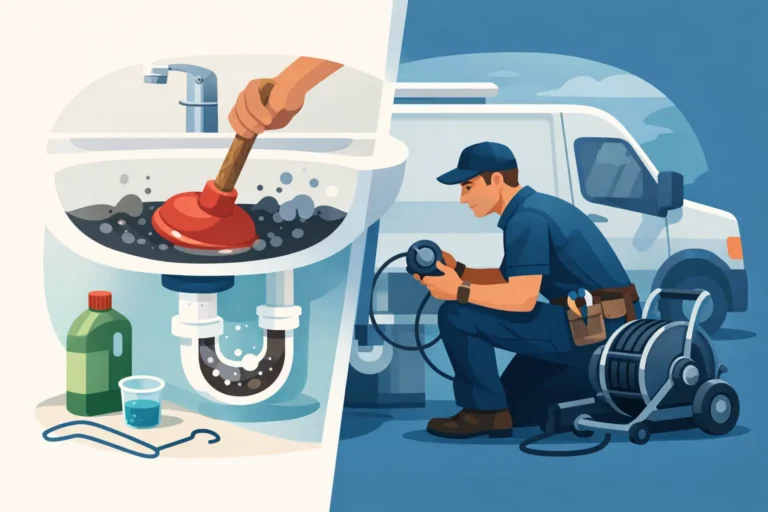
For removable buildup, professional drain cleaning or high-pressure jetting can clear the line more thoroughly than a surface-level rinse. The method should match the pipe material and the condition found during inspection. If a pipe is broken or crushed, forcing more water through it will not create a durable fix.
USA Drain Cleaning approaches exterior drainage problems with that same practical standard: identify the cause, explain what is found in plain language, and recommend only the work that fits the condition of the system. No guessing. No unnecessary work.
Keep Water Moving Between Storms
Downspout drainage needs occasional maintenance, especially after windy weather and during seasons when leaves and roof debris build up. A quick check before the rainy season can prevent a much bigger cleanup later.
Keep gutters and downspout openings clear, and make sure extensions have not shifted during mowing or landscaping. Remove leaves and mulch from yard drain grates. If a buried outlet is visible, confirm that it is open and not covered by soil, grass, or debris. After a heavy rain, walk the property and note where water stands longer than expected.
Be careful with quick fixes that create a new problem. Directing water into a small flower bed can drown plants and erode soil. Pointing a discharge toward the driveway may create slippery areas or send runoff toward the garage. And routing a downspout into a sanitary sewer line is not an appropriate solution.
Act Before Pooling Becomes Damage
Standing water near the house is easier and less expensive to address when it is still a drainage issue, not a repair to landscaping, concrete, or interior finishes. If downspouts overflow, buried lines back up, or a storm drain stays full after rain, a clear diagnosis can save time and prevent unnecessary work.
The next time rain is in the forecast, take a few minutes to watch where your roof water goes. A downspout that carries water away cleanly is doing more than protecting the yard – it is helping protect the home you work hard to maintain.