Can Drain Buildup Cause Leaks? Here’s How
A slow kitchen sink may seem like a small annoyance, but the material causing that slowdown does not always stay harmless. Can drain buildup cause leaks? Yes. Buildup can hold water where it should drain away, increase pressure inside a pipe, hide early damage, and contribute to leaks at weak connections or already worn pipe sections.
For homeowners in Eustis, Mount Dora, Tavares, Leesburg, and Lady Lake, catching the problem early can mean the difference between a drain cleaning visit and water damage inside a cabinet, wall, or yard. The key is separating a simple surface clog from a drain line that needs a closer look.
How drain buildup turns into a leak
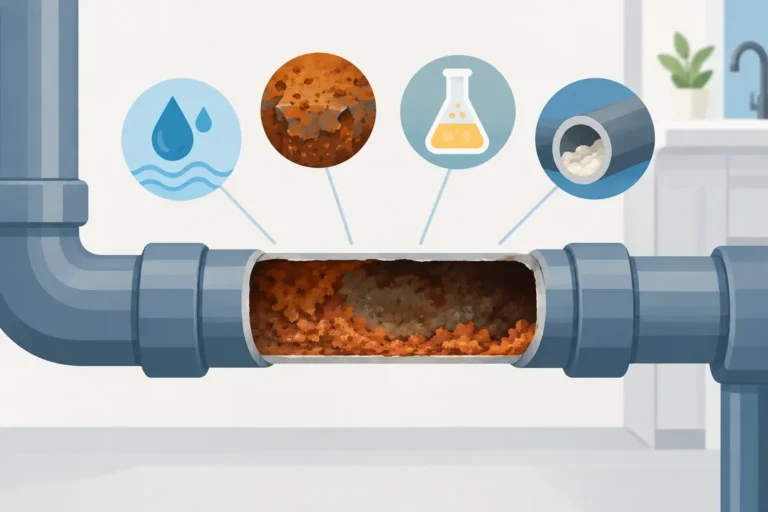
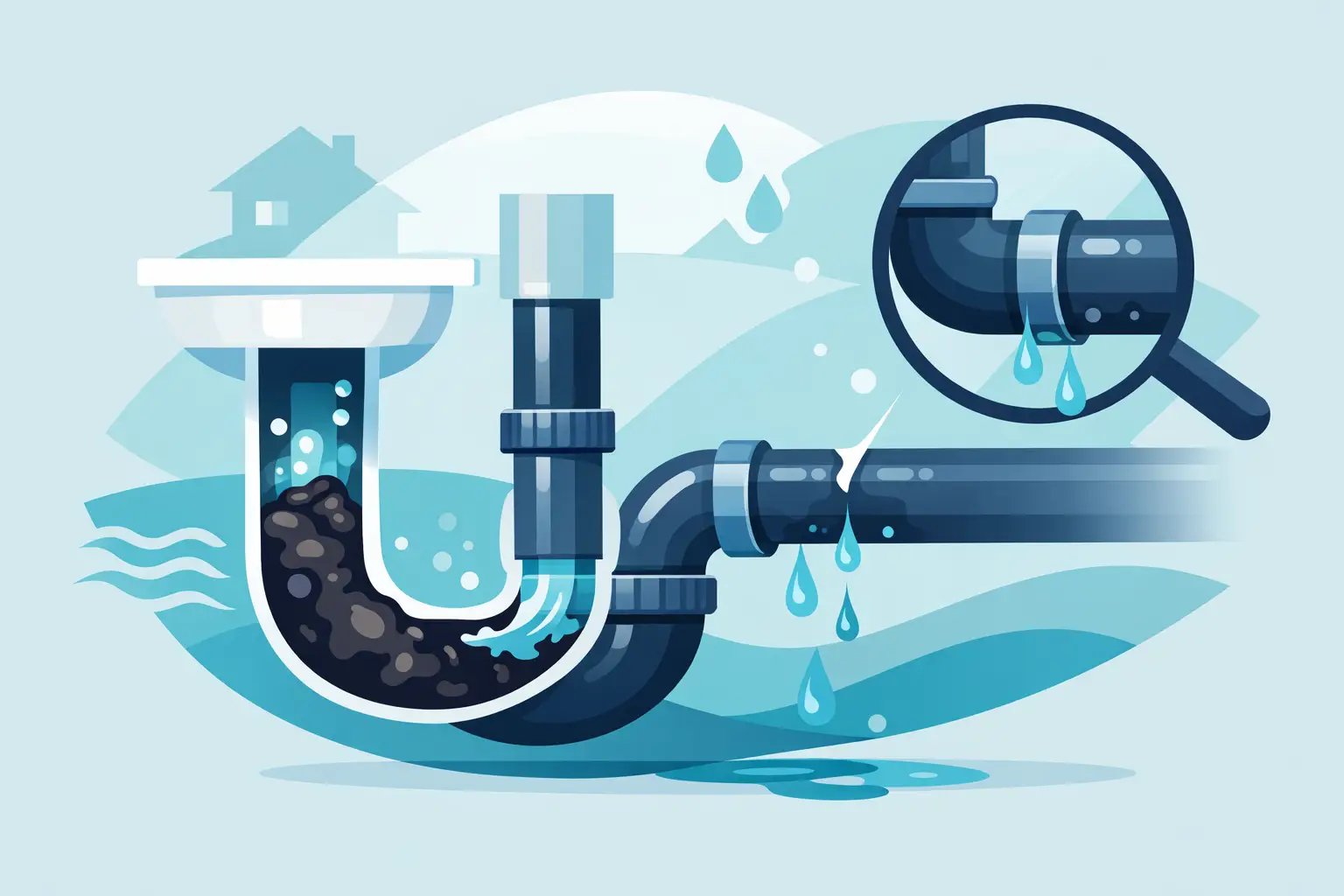
Drain buildup does not usually create a hole in a sound pipe overnight. More often, it adds stress to a system that already has a vulnerable spot. Grease, soap residue, hair, food particles, mineral scale, and paper products cling to the inside of a line. As that layer thickens, water moves more slowly and may back up behind the blockage.
That backup raises the water level in the pipe and keeps fittings, joints, and seals exposed to standing water longer than normal. If a connection is loose, a seal is aging, or a pipe has a small crack, the added pressure and prolonged moisture can reveal the weakness. A drain that once handled everyday use may begin leaking under the sink, around a toilet base, or at a pipe joint in a wall.
Buildup can also cause repeat clogs. Homeowners may clear the visible blockage with a store-bought product or plunger, only to find that the drain slows down again a few weeks later. That is often a sign that residue remains farther down the line. The drain is not fully clean, and the recurring backup continues to put pressure on the plumbing.
Can drain buildup cause leaks in every type of pipe?
It depends on the pipe material, its age, and where the buildup sits. PVC drain pipes are generally resistant to corrosion, but they can still leak at glued joints, threaded fittings, or connections that have shifted. Older metal pipes can be more vulnerable because internal scale and corrosion may narrow the pipe while weakening it from within.
In older Lake County homes, cast iron drain lines may develop rough interior surfaces over time. Waste and debris catch on those rough areas more easily, causing frequent restrictions. If corrosion has already thinned the pipe, a persistent clog or backup can expose a leak that was developing out of sight.
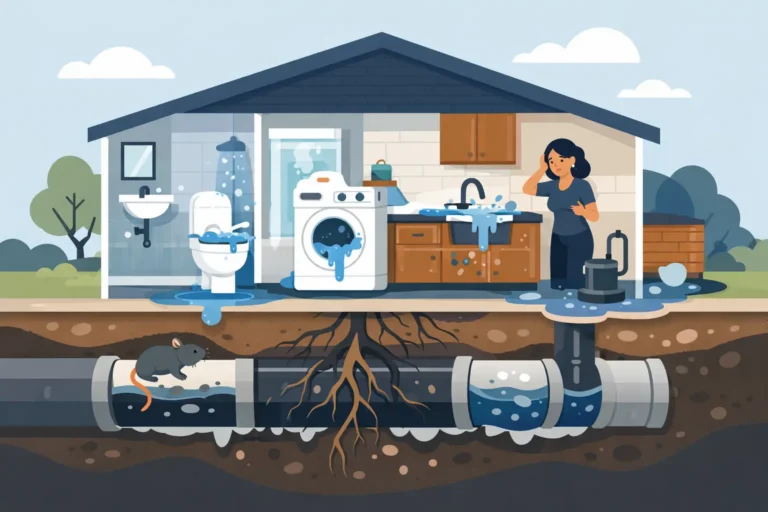
A buildup-related leak is also more likely when a line has been damaged by roots, ground movement, poor installation, or prior repairs. In those cases, the buildup is part of the problem, but it may not be the whole story. No guessing. A camera inspection can show whether the line is simply dirty, cracked, offset, invaded by roots, or holding water because it has lost its proper slope.
Warning signs that buildup may be causing trouble
A drain leak is not always obvious right away. Water can collect inside a vanity cabinet, beneath flooring, behind a wall, or in the soil around an exterior drain line. Pay attention when a slow drain appears along with changes in the area around it.
Common warning signs include:
- A sink, shower, or tub that drains slowly even after basic cleaning
- Gurgling sounds from nearby fixtures when water goes down the drain
- A foul, sewer-like odor near a sink, tub, laundry room, or floor drain
- Damp cabinet bottoms, water stains, peeling paint, or soft flooring
- Water appearing around pipe joints or beneath a toilet after flushing
- More than one fixture backing up or draining slowly at the same time
- A wet or unusually green patch in the yard near a buried sewer line
One slow bathroom sink may be a local hair and soap clog. But if the kitchen sink gurgles when the washing machine drains, or a shower backs up when a toilet flushes, the restriction may be farther down the branch line or main drain. That is when a small problem can become a messy one quickly.
Why chemical drain cleaners can make matters worse
When water is standing in a sink, reaching for a chemical drain cleaner is understandable. The problem is that these products often provide an incomplete fix. They may open a narrow path through soft debris without removing the grease, scale, or sludge attached to the pipe walls.
Some chemical cleaners also create heat and can be hard on certain pipes, older joints, and seals. If the drain is fully blocked, the product can sit in the pipe or fixture instead of moving through the line. That creates a safety concern for anyone who later tries to plunge, disassemble, or professionally clean the drain.
A plunger can be useful for a minor fixture clog, especially when the issue is recent and isolated. But repeated plunging will not remove heavy buildup deep in a line, and forcing pressure against a compromised fitting can sometimes make an existing leak more noticeable. If the same drain keeps failing, the goal should be to find and remove the underlying restriction.
The right fix depends on what is inside the line
Professional drain cleaning is not one-size-fits-all. A technician may use the appropriate cable equipment for a localized clog, while high-pressure jetting can be a better option for removing grease, sludge, scale, and debris along the pipe walls. The right method depends on the pipe condition, blockage type, and location.
For recurring clogs, a camera inspection adds useful answers. It can show whether there is buildup coating the line, roots entering through a joint, a damaged section, or an obstruction that cleaning alone will not solve. Seeing the condition of the pipe helps avoid unnecessary work and lets the homeowner make an informed decision.
This matters because clearing a blockage and repairing a leak are related but separate jobs. If a camera shows a sound pipe with heavy buildup, thorough cleaning may restore normal flow and reduce the risk of future backups. If it shows a cracked or collapsed line, cleaning may offer only temporary relief. A clear explanation of the findings should come before recommending the next step.
Don’t overlook exterior and storm drains
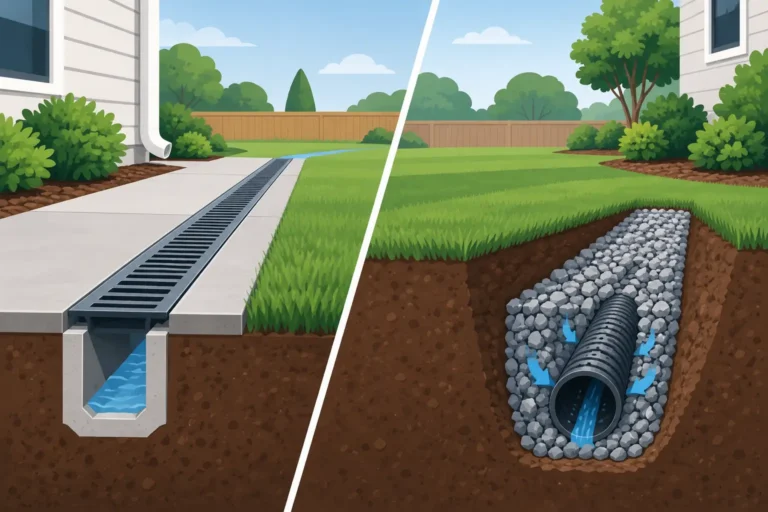
Not all drain buildup happens under a sink. Leaves, mulch, soil, roof grit, and yard debris can block exterior drains and stormwater inlets. During Florida’s heavy rain, that material can prevent water from moving away from the home. The result may be standing water near a driveway, patio, foundation, or low area of the yard.
While a blocked storm drain does not cause a plumbing leak in the same way as a clogged kitchen line, it can create water intrusion problems that look similar. Water may seep into a garage, saturate landscaping near the foundation, or find its way through weak exterior seals. If water pools after ordinary rainfall, the drain needs attention before the next hard storm.
When to call for drain service
Call for professional help when a drain repeatedly clogs, several fixtures are affected, you see moisture around pipes, or you suspect a leak may be hidden. Acting before a full backup can protect cabinets, flooring, drywall, and personal belongings.
USA Drain Cleaning helps Lake County homeowners identify what is actually causing the problem, using camera inspections when needed and professional cleaning equipment to address buildup beyond the surface. You should know what was found, what was done, and whether the pipe itself needs further attention.
If a drain is slow today, treat it as useful information rather than something to keep working around. A straightforward inspection and proper cleaning can restore flow, reduce strain on your plumbing, and give you a clear path forward before water ends up where it does not belong.