Do Gutter Drains Clog? What Florida Homes Need
A hard Florida rain can reveal a gutter drainage problem in minutes. Water pours over the gutter edge, shoots out near a downspout connection, or pools beside the foundation instead of moving safely away from the house. So, do gutter drains clog? Yes. Gutters, downspouts, underground drain pipes, and storm drain grates can all become blocked, often by a combination of leaves, roof grit, pine needles, mulch, and soil.
The trouble is that a clog is not always visible from the ground. Your gutters may look clear along the roofline while the downspout outlet or buried drainage line is packed with debris. Finding where water stops moving matters. No guessing. No unnecessary work.
What Homeowners Mean by Gutter Drains
“Gutter drain” can describe several connected parts of your home’s drainage system. The gutter catches rainwater from the roof. Downspouts carry it down the exterior wall. At the bottom, water may discharge onto a splash block, flow into a surface drain, or enter an underground pipe that carries it toward a yard drain, swale, curb, or drainage area.
Any point in that path can clog. A gutter can fill with leaves and roof sediment. A downspout can catch a wad of wet debris at an elbow. An underground pipe can collect dirt, roots, or washed-in mulch. A storm drain grate can become covered by grass clippings and leaves during yard work.
In Lake County, heavy rainfall makes these restrictions more noticeable. A small blockage that seems harmless during a light shower can create overflowing water when a summer storm sends a large volume off the roof at once.
Why Gutter Drains Clog
Most gutter drain clogs build gradually. Leaves are the obvious cause, but they are rarely the only one. As organic material breaks down, it turns into a dense, muddy layer that traps roof shingle grit and dirt. Water can still pass through for a while, which is why many homeowners do not spot the issue until the system is overwhelmed.
Downspouts are especially vulnerable where they bend or connect to another section. Wet leaves, seed pods, nests, and roofing granules can settle at these narrow points. If a downspout feeds a buried line, that connection is another common collection spot.
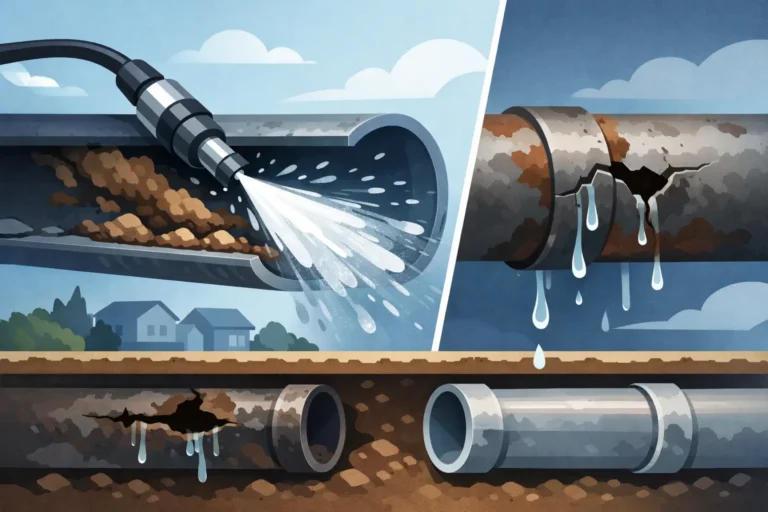
Underground gutter drain pipes present a different challenge. Dirt can enter through loose joints, damaged pipe, or an uncovered discharge point. Tree roots may grow toward moisture and work their way into cracked or separated pipe sections. In older systems, a sagging section of pipe can hold water and sediment rather than draining fully after each storm.
A clogged exterior drain is not always caused by poor maintenance. It may be a pipe condition problem. That distinction affects the right repair and helps prevent spending money on a cleaning that cannot solve a broken or collapsed line.
Signs Your Gutter Drain Is Blocked
Overflowing gutters during rain are the clearest warning sign, especially if water spills over in just one area. But clogs can create quieter symptoms as well.
Look for water backing up from the top of a downspout, damp streaks on siding, or gutter sections that stay full long after the rain has stopped. You may also see water bubbling from a pop-up emitter, pooling around a downspout, or draining much more slowly than it used to.
At ground level, watch for soft soil, mulch that keeps washing away, standing water near a storm drain, and water collecting along the driveway or near the foundation. A musty smell in a garage, crawlspace, or lower wall area can also point to repeated moisture exposure.
Do not ignore water that seems to disappear into the ground right beside the house. It may be moving through a clogged underground drain line, or it may be saturating the soil around the foundation because the intended drainage route has failed.
Why a Clogged Gutter Drain Can Become a Bigger Problem
A gutter system has one basic job: move roof water away from the home in a controlled way. When it cannot, the water finds another path. That can mean overflowing onto walkways, running behind fascia boards, eroding landscaping, or collecting near the slab.
Not every overflow causes immediate structural damage. A brief spill during an unusually severe storm may simply indicate that the system was handling more water than normal. Repeated overflow, however, deserves attention. Constant water exposure can damage exterior wood, stain surfaces, undermine soil, and create slick areas around entryways.
Blocked storm drainage can also make a yard less usable after rain. If water stands around a patio, driveway, or low spot for days, mosquitoes, soggy turf, and muddy runoff often follow. For homes with exterior drains, restoring flow can make a noticeable difference the next time the forecast turns wet.
What You Can Safely Check Before Calling for Help
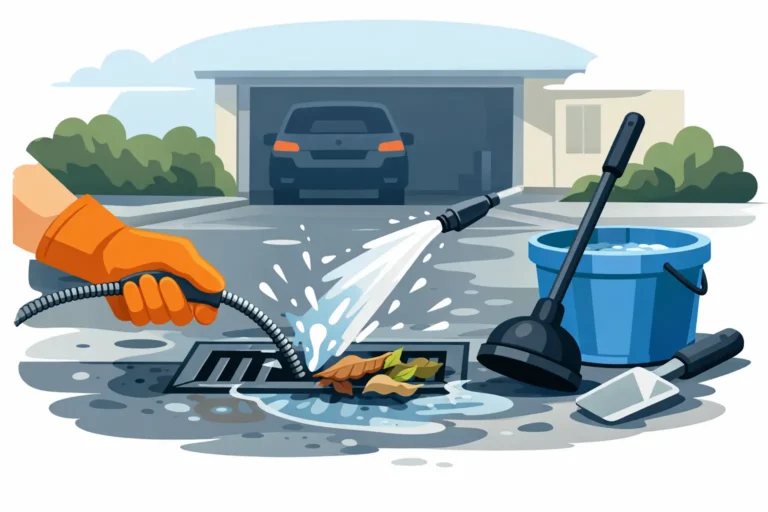
A basic visual check can tell you a lot, provided you can do it safely. During dry weather, look for leaves or mud at the gutter outlet and at the bottom of each downspout. Check whether the drain grate at ground level is buried under lawn debris or mulch. Clear loose material by hand while wearing gloves.
You can also run a garden hose into the gutter or downspout and observe where the water exits. Water should move steadily and appear at the discharge point without backing up. If it rises in the downspout, spills from a joint, or never reaches the outlet, there is likely a restriction farther along.
Avoid climbing onto a roof or leaning a ladder against an unstable gutter. Also avoid forcing a rigid tool into a buried pipe. That can disconnect a fitting, damage older pipe, or push debris deeper into the line. Chemical drain cleaners are not a good answer for exterior drainage clogs. They do little against leaves, sediment, or roots and can create an unnecessary hazard.
When Professional Drain Cleaning Makes Sense
A professional inspection is worthwhile when gutter drain problems keep returning, water backs up from a buried line, or you cannot identify where the blockage is. The goal should be to find the exact cause rather than simply wash water through the system once.
A camera inspection can show whether the issue is packed debris, root intrusion, standing sediment, a separated joint, or damaged pipe. That information matters because the solutions are different. A line full of leaves and mud may respond well to professional cleaning or high-pressure jetting. A crushed or offset pipe may need repair after the blockage is removed.
For homeowners in Eustis, Mount Dora, Tavares, Leesburg, and Lady Lake, USA Drain Cleaning can inspect exterior drain lines and explain what the camera finds in plain language. You should know what is blocking the line, what work is recommended, and whether the pipe itself is in good condition before authorizing more than necessary.
How to Keep Gutter Drains Flowing
Regular maintenance is usually less expensive and less stressful than dealing with water where it should not be. Clean gutters often enough to prevent layers of debris from turning into sludge. The right schedule depends on nearby trees, roof shape, and how much debris collects after storms, but many homes benefit from checking them in spring and again before the heaviest rainy periods.
Keep the area around downspout outlets and storm drain grates clear after mowing, trimming, or spreading mulch. Make sure splash blocks, extensions, and pop-up emitters have not shifted or become buried. If your property has underground downspout lines, flush them periodically and pay attention to slower flow before a major storm exposes it.
Gutter guards can reduce large leaf buildup, but they are not a guarantee that the drainage system will stay clear. Fine roof grit, pollen, and small debris can still collect, and guards themselves need occasional inspection. They are a maintenance aid, not a substitute for checking water flow.
The best time to address a slow gutter drain is before the next downpour. A clear path for rainwater protects the areas around your home that are hardest and most expensive to dry out later.