7 Signs of a Mainline Backup at Your Home
When water rises in the shower as the washing machine drains, the problem is rarely just a stubborn shower clog. It is one of the clearest signs of a mainline backup: wastewater is having trouble leaving your home through the main sewer line.
A mainline backup can become messy quickly, but early warning signs give you a chance to act before sewage reaches living areas. For homeowners in Eustis, Mount Dora, Tavares, Leesburg, and Lady Lake, paying attention to changes in more than one drain can prevent a small drainage issue from becoming an urgent cleanup.
7 Signs of a Mainline Backup at Home
A clog in one sink usually affects one sink. A blockage in the main line affects the shared pipe that carries wastewater from multiple fixtures out of the house. That is why the symptoms often appear in places that seem unrelated.
1. Several drains are slow at the same time
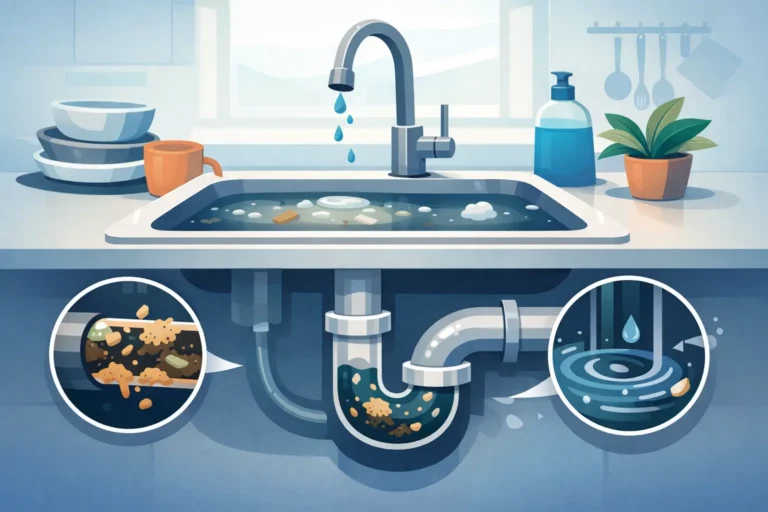
A bathroom sink that drains slowly may have hair, soap residue, or buildup near that fixture. But if the kitchen sink, bathtub, shower, and toilets are all draining more slowly than usual, the restriction may be farther down the system.
Do not assume every slow drain needs a separate treatment. When multiple fixtures change at once, the main line deserves a closer look. Pouring chemical drain cleaner into each drain can damage some pipes and often does little for a blockage deeper in the line.
2. Water backs up into the tub or shower
The shower or bathtub is often the lowest drain inside the home. When the main sewer line cannot move wastewater forward, water may come back through that low opening.
You might flush a toilet and see dirty water appear in the tub. You may run the washing machine and hear the shower drain gurgle before water begins pooling. Stop using water fixtures when this happens. More flushing, laundry, dishwashing, or showering can add to the backup and send more water onto the floor.
3. Toilets gurgle, bubble, or flush unpredictably
A toilet should flush with a steady pull and refill normally. Bubbling in the bowl, gurgling sounds after a flush, or water that rises and falls without a clear reason can mean air is trapped by a blockage in the drainage system.
A single toilet with a weak flush can have a local issue. Toilets that act strangely while another fixture is draining point more strongly to a mainline problem. For example, if flushing the hall bathroom toilet causes the nearby shower drain to gurgle, the two fixtures may be competing for space in a restricted line.
4. You smell sewer gas indoors or near the yard
A lingering sewer odor is never something to ignore. It can come from a dry trap or a fixture-level issue, but it may also indicate wastewater sitting in a partially blocked main line.
Pay attention to where and when the smell appears. An odor that becomes stronger after running water, flushing, or doing laundry is useful information for a drain technician. If the smell is outdoors near the sewer cleanout or a consistently wet patch of lawn, it may point to a problem in the line outside the home.
5. The problem keeps returning after a temporary fix
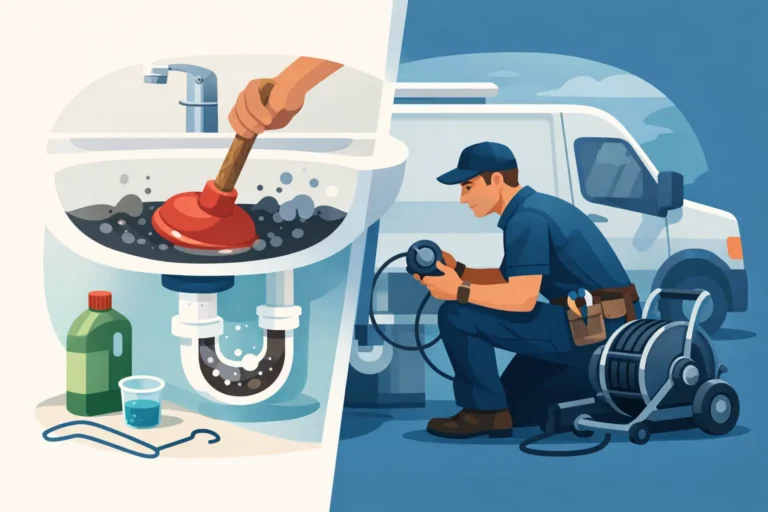
Repeated clogs are among the most frustrating signs of a mainline backup. A plunger or small drain snake may open a narrow path through soft buildup, allowing water to drain for a short time. If the underlying obstruction remains, the same symptoms return.
This pattern is common with grease buildup, heavy scale, root intrusion, or a damaged section of pipe. The drain may seem fixed on Friday and start backing up again the next time the household runs several loads of laundry. Temporary relief is not the same as a clear, healthy line.
6. Drains react when you use another fixture
Your drains should work independently during normal household use. If one fixture reacts when another runs, take notice.
Common examples include the toilet bubbling when the sink drains, water rising in the tub when the dishwasher runs, or a shower drain making noise during a washing machine cycle. These connections are especially telling because they show that the problem is not isolated to one branch drain.
7. Sewage or wastewater appears at the cleanout
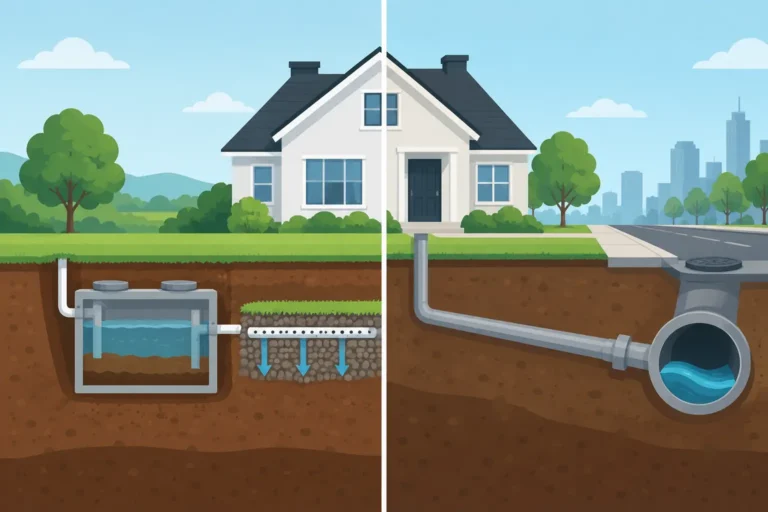
Many homes have an exterior sewer cleanout, often a capped pipe near the house or along the route to the sewer connection or septic system. If wastewater is coming out around that cap, the main line is likely blocked downstream of that point.
Do not remove the cap yourself if there is active pressure or visible wastewater. A backed-up line can release sewage suddenly. Keep people and pets away from the area, avoid running water inside, and arrange for professional service.
What Causes a Main Sewer Line to Back Up?
The cause depends on the age of the home, the pipe material, the layout of the property, and whether the home connects to a municipal sewer or uses a septic system. No guessing. No unnecessary work. The right repair starts with identifying what is actually inside the line.
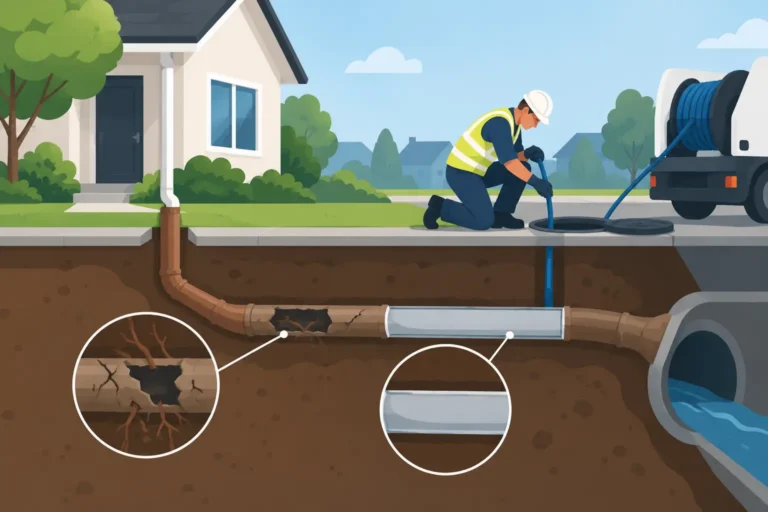
In Lake County, tree roots are a common concern. Roots seek moisture and can enter small openings at pipe joints or cracks. Once inside, they catch toilet paper and other debris, gradually forming a blockage. Older lines may also have separated joints, corrosion, offsets, cracks, or sections that have sagged and hold water and waste.
Inside the pipe, grease, soap residue, paper products, and items that should never be flushed can narrow the passage over time. In homes with septic systems, a drainage backup can also relate to a full tank, a filter issue, or trouble beyond the house line. A mainline inspection helps separate a pipe blockage from a septic-system concern.
What to Do When You Notice the Warning Signs
The first step is simple: reduce water use immediately. Do not run the dishwasher, washing machine, shower, or faucets, and do not keep flushing to test whether the toilet will clear. Every gallon sent down the drain can worsen the backup.
If wastewater has reached a floor, keep children and pets away from the area. Sewage should be treated as contaminated. Avoid trying to clear a serious backup with chemical products, especially if you may need a technician to work on the line afterward.
Next, note the symptoms. Which fixtures are affected? Did the trouble begin after laundry, a shower, heavy rain, or a recent clog? Are there odors, gurgling sounds, or water at the exterior cleanout? These details help narrow down the source quickly.
Why a Camera Inspection Makes the Difference
A mainline backup is not a situation where homeowners should have to accept a vague answer. Professional drain cleaning can restore flow, but the best next step depends on why the line clogged in the first place.
A video camera inspection allows the technician to see the condition of the pipe from the inside. It can reveal roots, thick buildup, standing water, broken pipe, bellies in the line, or a foreign object. That matters because the solution for greasy buildup may be high-pressure jetting, while a broken or root-damaged pipe may need a different plan.
Camera findings also make the conversation straightforward. You can see what is causing the issue, understand the recommended work, and make a decision based on the actual condition of your line. USA Drain Cleaning uses diagnostic inspections and professional-grade cleaning equipment to address the blockage at its source, not simply push it farther down the pipe.
When to Call for Help
Call for professional drain service promptly if wastewater is backing up into a tub, shower, sink, floor drain, or exterior cleanout. The same applies when several fixtures are slow, toilets are gurgling, or a clog returns after you have already tried a basic fix.
A quick response can limit water damage and reduce the chance of a full indoor sewage backup. It also gives you a clearer picture of whether you are dealing with roots, buildup, a damaged line, or another drainage issue.
Your home should not make you guess where wastewater is going. When drains begin reacting together, stop using excess water and get a clear diagnosis before a manageable warning becomes a bigger cleanup.