How to Locate Sewer Odor Source in Your Home
A sewer smell that appears for a few minutes and then disappears is still worth tracking down. When you need to locate a sewer odor source, the strongest smell is not always where the problem began. Odors can move through drain pipes, wall openings, cabinet gaps, and air-conditioning pathways before reaching the room where you notice them.
The good news is that many odor causes are simple to check. Others point to a drain line issue that needs a closer look. Start with a careful process, avoid pouring harsh chemicals down the drain, and pay attention to when and where the smell returns.
Start by Narrowing Down Where the Odor Appears
Walk through the home and notice which rooms smell strongest. Check bathrooms, the kitchen, laundry room, garage, and any utility closet with a floor drain. Then pay attention to timing. Does the odor show up after a shower, after running the dishwasher, when the washing machine drains, or only after heavy rain?
Those details help separate a local fixture problem from a larger drainage issue. A smell limited to one guest bathroom that rarely gets used often has a different cause than an odor that appears at several drains whenever water runs.
Do not overlook outside areas. If you smell sewage near a cleanout, along a drain line route, or around an exterior storm drain, make a note of it. In Lake County, heavy rain can expose drainage and sewer line problems that stay hidden during dry weather.
Check the Most Common Indoor Causes First
A dry P-trap
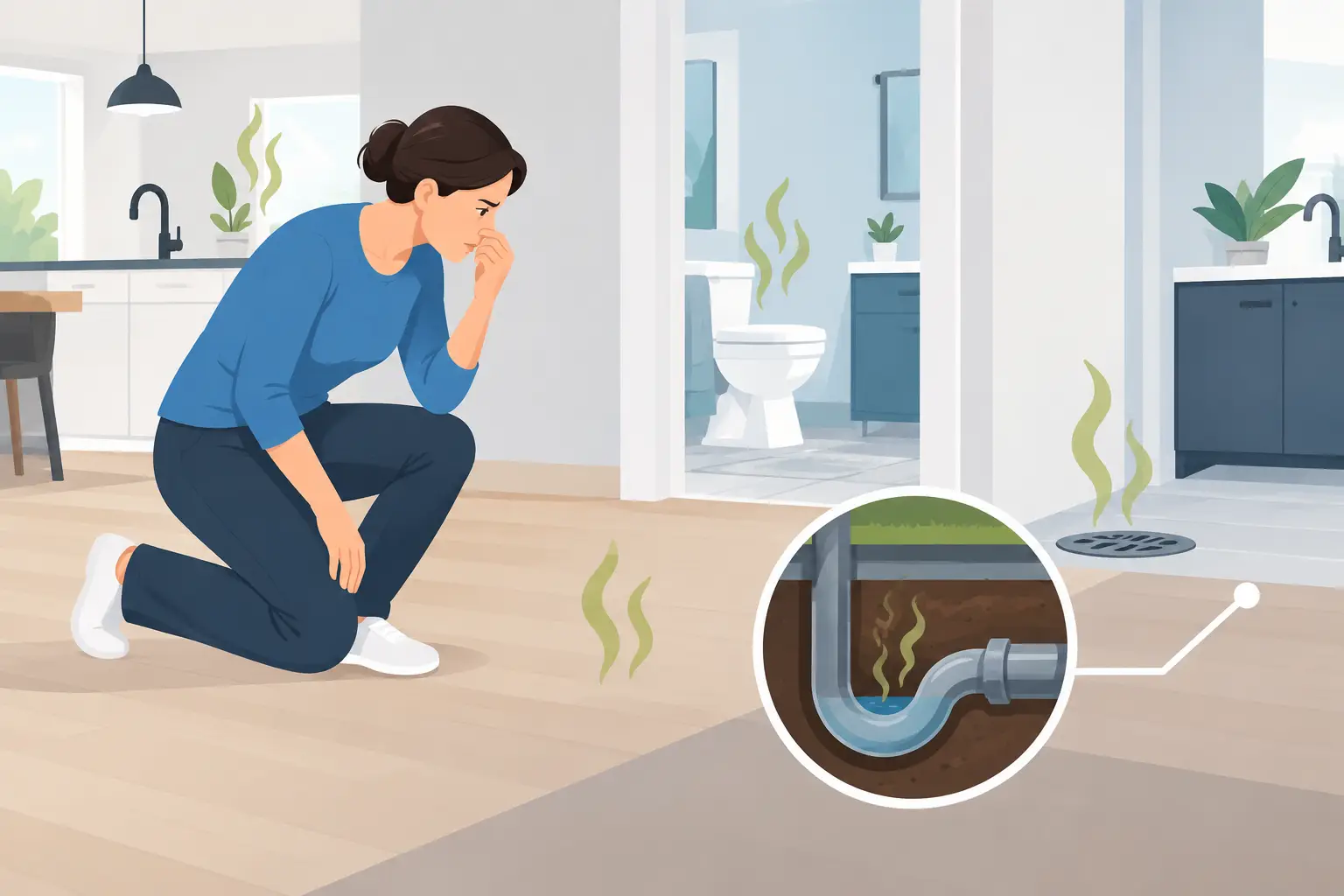
Every sink, shower, tub, and floor drain should have a curved section of pipe called a P-trap. It holds water, creating a seal that keeps sewer gas from entering the house. In an infrequently used shower, spare bathroom, floor drain, or laundry drain, that water can evaporate.
Pour a few cups of water into the drain and wait a day or two. For a floor drain that dries out regularly, a small amount of mineral oil after adding water can slow evaporation. If the odor goes away and stays gone, the trap was likely the issue. If it returns quickly, there may be a venting or drain problem pulling water out of the trap.
Debris in an overflow or drain opening
Bathroom sink overflows, shower drains, garbage disposals, and dishwasher connections can collect soap residue, hair, food particles, and bacteria. That buildup can smell unpleasant, but it usually has a musty or rotten odor rather than the distinct smell of sewer gas.
Clean removable stoppers and strainers, then flush the fixture with warm water. Avoid relying on chemical drain cleaners. They can damage some pipes, create a safety concern if another product is added later, and will not solve a blockage farther down the line.
A loose seal around a toilet
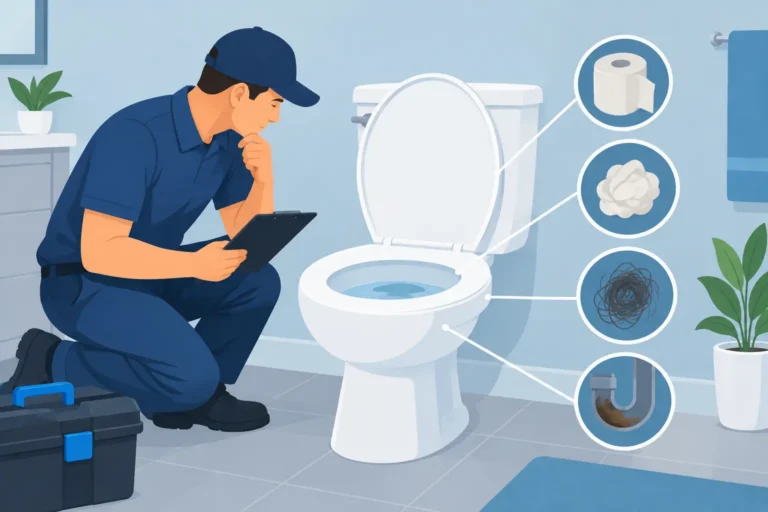
A sewer odor around the base of a toilet may mean the wax ring or toilet seal is no longer sealing properly. You may also notice slight movement when the toilet is used, moisture at the base, or staining on nearby flooring. Do not ignore this symptom. A failed seal can allow odor into the room and may lead to water damage beneath the flooring.
If the toilet rocks, feels loose, or leaks, stop trying to mask the smell and have the seal evaluated. Caulk around a toilet base is not a repair for a failing seal.
Look for Clues That Point to a Drain Line Problem
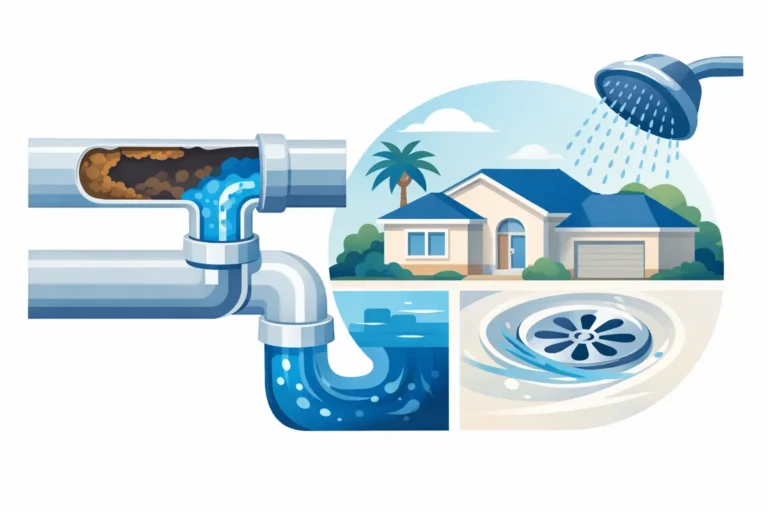
A sewer odor becomes more concerning when it comes with slow drains, recurring clogs, gurgling, or water backing up in an unexpected fixture. For example, if flushing a toilet makes the shower drain gurgle, the issue may be in a shared branch line or the main sewer line rather than at the shower itself.
Watch for patterns such as these:
- More than one fixture drains slowly or backs up.
- The smell gets stronger after laundry, showers, or dishwasher cycles.
- Toilets bubble, drains gurgle, or water levels change in nearby fixtures.
- A clog returns soon after it has been plunged or treated.
- Odor or damp ground appears near the exterior cleanout or sewer line path.
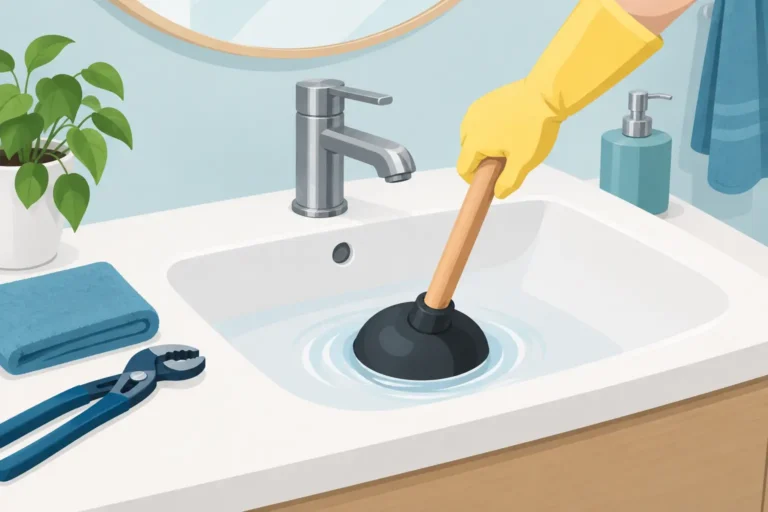
These symptoms can result from pipe buildup, a partial blockage, root intrusion, a damaged pipe, or a venting issue. A plunger may improve a minor fixture clog, but it cannot show what is happening inside the line. Repeated do-it-yourself treatments can delay the real diagnosis while the underlying restriction gets worse.
Why Drain Vents Can Cause Sewer Smells
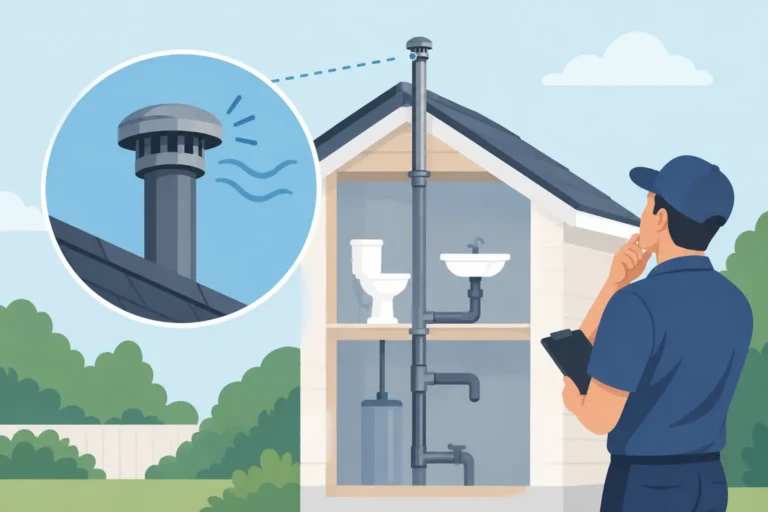
Plumbing vents allow air to move through the drainage system so water can flow properly and P-traps can keep their water seals. If a vent is blocked, improperly connected, or damaged, it can create pressure changes that pull water from traps or allow odors to enter through weak points.
Vent problems are not always easy to confirm from inside the home. The odor may seem to come and go with wind, rainfall, or fixture use. Because roof work and vent diagnosis can involve safety risks, this is not a problem to solve by climbing onto the roof without the right experience.
A professional inspection can help determine whether the issue is a vent condition, a trap that is losing water, or a restriction in the drain line. The right repair depends on the cause. No guessing. No unnecessary work.
How to Locate a Sewer Odor Source Without Making It Worse
Do a simple check before scheduling service: run water briefly in every rarely used drain, inspect under sink cabinets for dampness, and look around toilets for movement or moisture. Keep a short record of which fixtures were running when the smell appeared. That information can save time during diagnosis.
Do not mix drain products, pour bleach into a drain with another cleaner, or use excessive amounts of chemical cleaner in an attempt to remove the odor. These products can produce dangerous fumes, damage plumbing components, and make a professional drain service more difficult and unsafe.
If the odor is strong enough to cause headaches, dizziness, nausea, or eye irritation, get household members and pets into fresh air and arrange prompt professional help. Sewer gas odors can have several causes, and the home should not be treated as normal until the source is identified.
When a Camera Inspection Is the Right Next Step
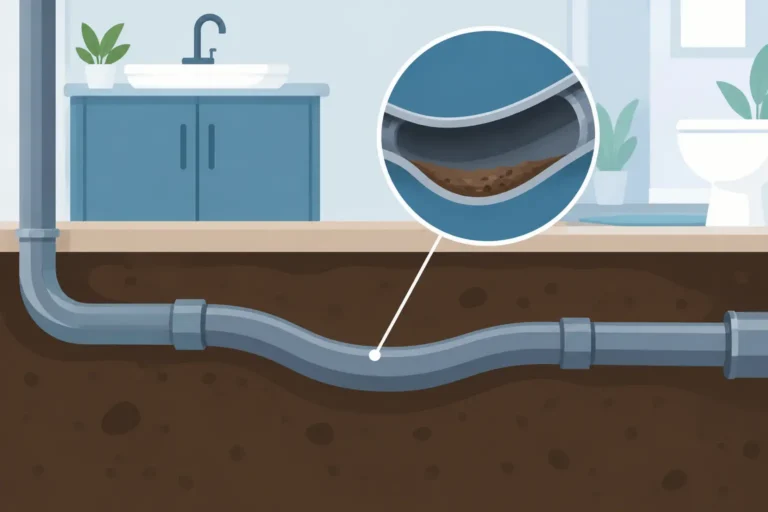
A video camera drain inspection is useful when the odor keeps returning, multiple fixtures are involved, or a drain has a history of recurring clogs. A technician sends a camera through the drain line to see the actual condition of the pipe. Instead of assuming the problem is grease, roots, or a simple clog, you can see whether there is buildup, a blockage, a break, standing water, or intrusion in the line.
That visibility matters when deciding what work is needed. High-pressure jetting may remove heavy buildup that a basic cable only opens through the middle. Root intrusion may require a different approach. A damaged or separated pipe cannot be permanently repaired by clearing it alone.
USA Drain Cleaning uses camera inspections to show homeowners what is in the line and explain the findings in plain language. The goal is to identify the source of the odor and the condition causing it, then provide a clear recommendation and quote before unnecessary work begins.
Do Not Forget Exterior and Storm Drain Odors
Not every outdoor foul smell is coming from the sanitary sewer. A blocked storm drain, standing water, decaying leaves, lawn debris, or organic buildup in an exterior drain can produce a strong odor around patios, driveways, and yards. After Florida’s heavy rains, exterior drainage systems may hold water longer than they should.
If water pools near a drain, check for visible leaves and debris at the grate. Remove only what is easy and safe to reach. If the line remains blocked or water repeatedly stands near the home, professional storm drain cleaning can clear the underground obstruction and help restore proper flow.
A persistent sewer odor is your home’s way of telling you something needs attention. Start with the easy checks, trust the patterns you notice, and get a clear diagnosis when the smell keeps coming back. A clean, properly flowing drain system should not leave you wondering what you are breathing in.