Understanding Pipe Bellies and Drain Problems
A drain can be cleared and still have a problem waiting a few feet down the line. That is often the frustrating reality behind recurring clogs, slow drains, gurgling fixtures, and backups that seem to return without warning. Understanding pipe bellies can help homeowners recognize why a quick drain-clearing treatment sometimes is not enough.
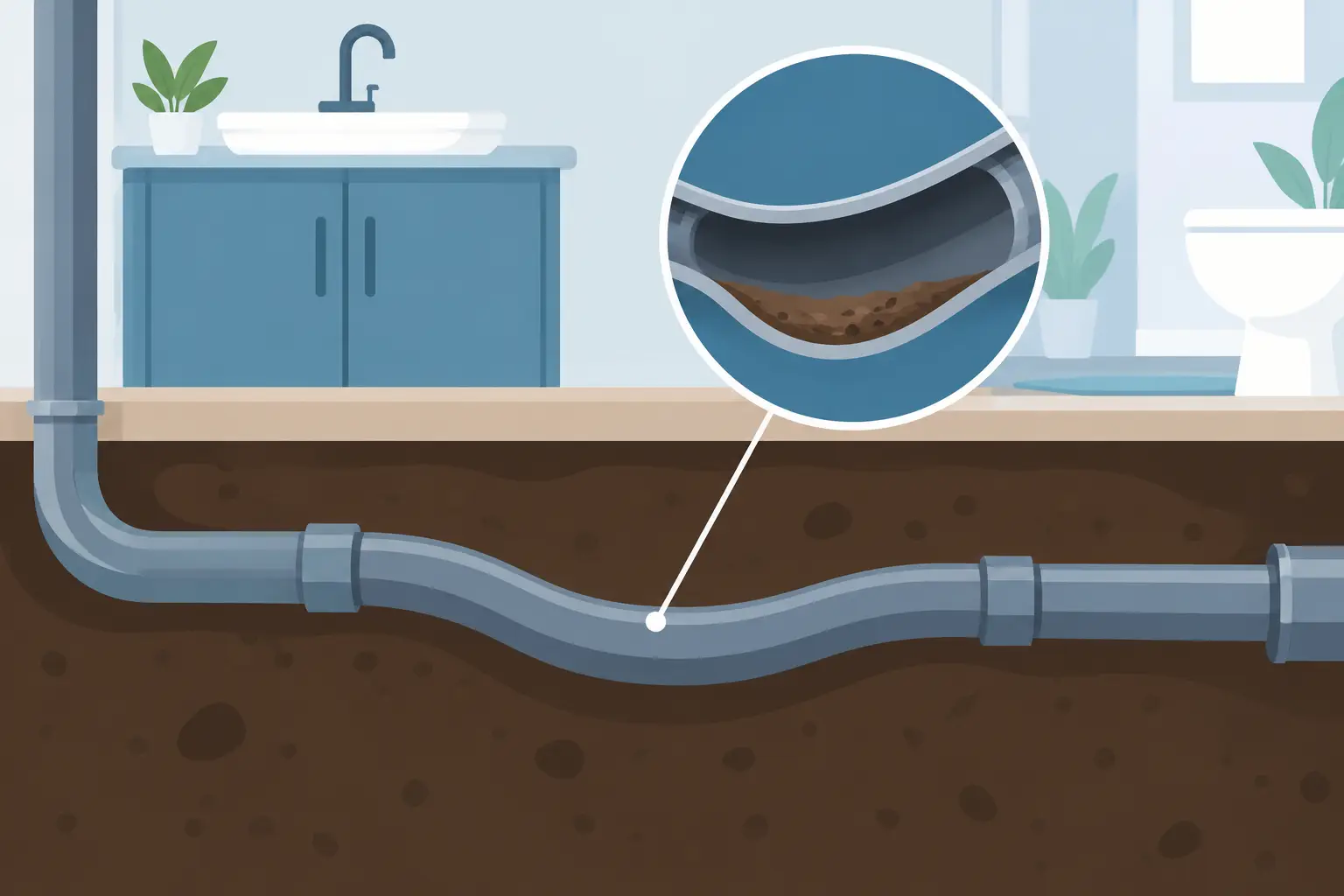
A pipe belly is a low spot in an underground drain or sewer line. Instead of maintaining a steady downward slope, part of the pipe sags or settles. Water, waste, toilet paper, grease, and debris can collect in that dip rather than flowing fully through the line. Over time, that standing material creates repeat blockages and can make the entire drainage system less reliable.
What Is a Pipe Belly?
Drain lines depend on gravity. When they are installed with the proper slope, wastewater moves from your home toward the sewer connection or septic system. A pipe belly interrupts that path. Think of it as a shallow dip in a long run of pipe: water may pass through, but solids tend to settle at the bottom.
Not every low spot causes an immediate backup. A minor belly may allow water to drain normally most of the time, especially when the line is recently cleaned. The trouble starts when paper, grease, soap residue, or waste collects in the low area. Once that buildup narrows the pipe, the next flush or load of laundry can push the system into a slow drain or backup.
Pipe bellies are usually found in buried main sewer lines, though they can occur in other underground drainage piping. They are not typically visible from inside the home. A professional camera inspection is the practical way to identify one and determine how much of the line is affected.
Why Pipe Bellies Happen in Lake County Homes
Underground pipes can shift for several reasons. Soil movement is a common cause. Florida’s sandy soils, changing moisture levels, heavy rain, and settling around a home can all affect the ground supporting a buried line. Older pipe materials may also shift at joints or lose support over time.
A pipe can develop a belly after poor installation as well. If a line was not bedded and supported correctly, portions of it may settle after the work is complete. Construction activity, driveway work, large roots, or ground disturbance near the line can contribute to movement too.
It is easy to assume roots are the only cause of an underground drain problem. Roots are common, but they are different from a belly. Roots enter through joints, cracks, or damaged pipe and create an obstruction. A belly is a grade problem – the pipe itself no longer maintains a consistent slope. The two conditions can occur together, especially when standing water in a low area creates a place for debris and roots to catch.
Signs a Low Spot May Be Affecting Your Drains
A pipe belly does not have one symptom that proves the diagnosis. Instead, homeowners often notice a pattern of drainage problems that return after apparently successful cleaning.
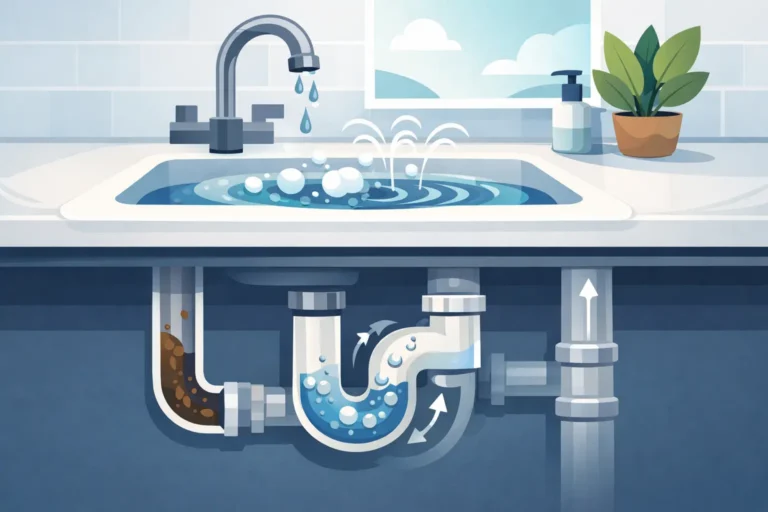
A main warning sign is a recurring clog in more than one fixture. For example, the toilet may bubble when the washing machine drains, or the bathtub may drain slowly after the dishwasher runs. Those symptoms can point to a restriction in the main line rather than a simple clog at one sink.
You may also notice foul drain odors, frequent gurgling, or water backing up into a shower or tub. These lower fixtures are often the first place wastewater appears when the main line cannot carry flow away fast enough. If the issue is worse after high water use, such as laundry day or when guests are visiting, a partially blocked low spot is one possible reason.
The most telling sign is repeated trouble shortly after a drain has been snaked or cleared. Cleaning can remove the debris sitting in the belly, so the line may work well for a while. But if the low spot remains, material can collect there again. No guessing. No unnecessary work. The next step should be finding out what is happening inside the pipe.
Why a Camera Inspection Matters
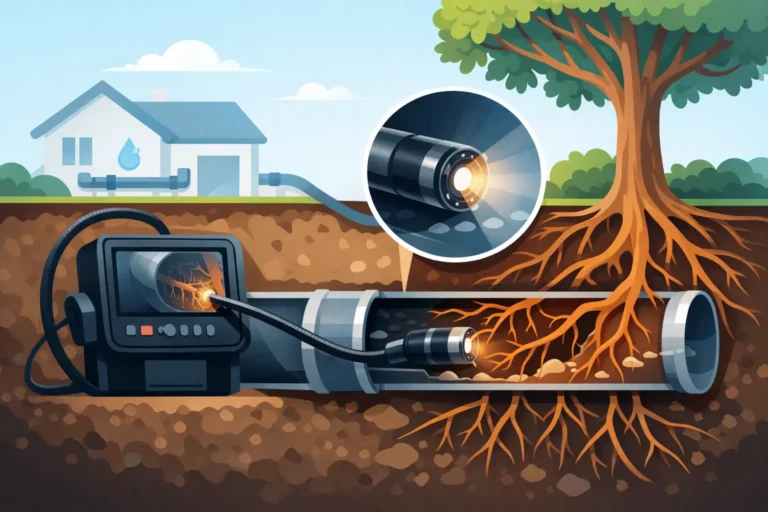
A drain camera inspection lets a technician see the inside condition of the line instead of making a repair recommendation based only on symptoms. The camera can reveal standing water in a sagging section, buildup, root intrusion, cracked pipe, separated joints, or other damage that may be causing the same recurring problem.
During an inspection, the technician can explain what appears on the camera and where the concern is located. Depending on access and equipment, the line can also be located above ground to help identify the affected area. That gives a homeowner a clearer basis for deciding what work makes sense.
A camera image alone does not always tell the full story about pipe slope or the exact depth of a belly. Water can hide part of the pipe, and heavy buildup can limit visibility. In some cases, cleaning the line first provides a better view. But a camera inspection is still far more useful than repeatedly treating a recurring clog without knowing whether the pipe has a structural issue.
Can Drain Cleaning Fix a Pipe Belly?
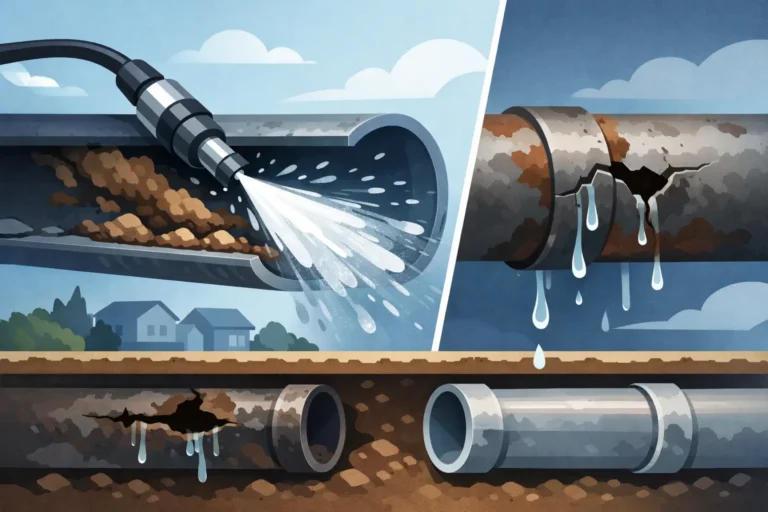
Drain cleaning can restore flow when debris has collected in a belly. Professional-grade high-pressure jetting can be especially effective for removing sludge, grease, paper buildup, and root debris from a drain line. That may be the right solution when the low spot is minor and the pipe is otherwise in good condition.
However, cleaning does not raise a sagging pipe back into place. If a belly holds enough water and waste to cause frequent blockages, or if the pipe is broken, severely settled, or repeatedly invaded by roots, repair or replacement of the affected section may be the more durable option.
That does not mean every pipe belly requires immediate excavation. The right recommendation depends on the severity of the sag, the pipe material and condition, how often it clogs, and whether the homeowner is dealing with backups or simply occasional slow drainage. A clear camera inspection helps separate a maintenance issue from a repair issue.
What to Do When You Suspect a Pipe Belly
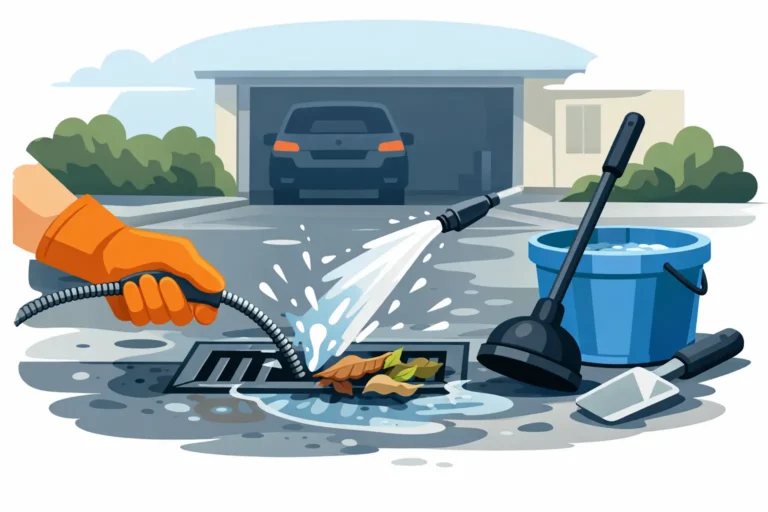
If multiple drains are slow, gurgling, or backing up, avoid repeatedly using chemical drain cleaners. These products rarely solve a main-line problem and can leave harsh chemicals sitting in a pipe or fixture. They may also make the work less safe for whoever has to inspect the line later.
Try to limit heavy water use until the problem is checked. Running the washing machine, taking long showers, or flushing repeatedly can turn a partial blockage into a messy backup. If sewage is coming up through a tub, shower, or floor drain, stop using water in the home and arrange for professional service promptly.
When scheduling service, explain whether the problem is recurring, which fixtures are involved, and how long the line stays clear after previous drain cleaning. Those details help narrow down whether a camera inspection should be part of the visit. USA Drain Cleaning uses camera diagnostics to show homeowners the condition inside the line and explain the available next steps in plain language.
A Clear Diagnosis Saves Repeat Repairs
A recurring drain problem is not something homeowners should have to keep paying to clear without answers. Sometimes the solution is thorough cleaning. Sometimes it is root removal, repair of a damaged section, or correction of a pipe belly that keeps catching debris.
The useful next move is not to assume the worst. It is to get a clear look at the line, understand what is causing the trouble, and choose work that fits the actual condition of the pipe. That approach protects your home, your time, and your budget.