Storm Drain Cleaning Before Florida Rain
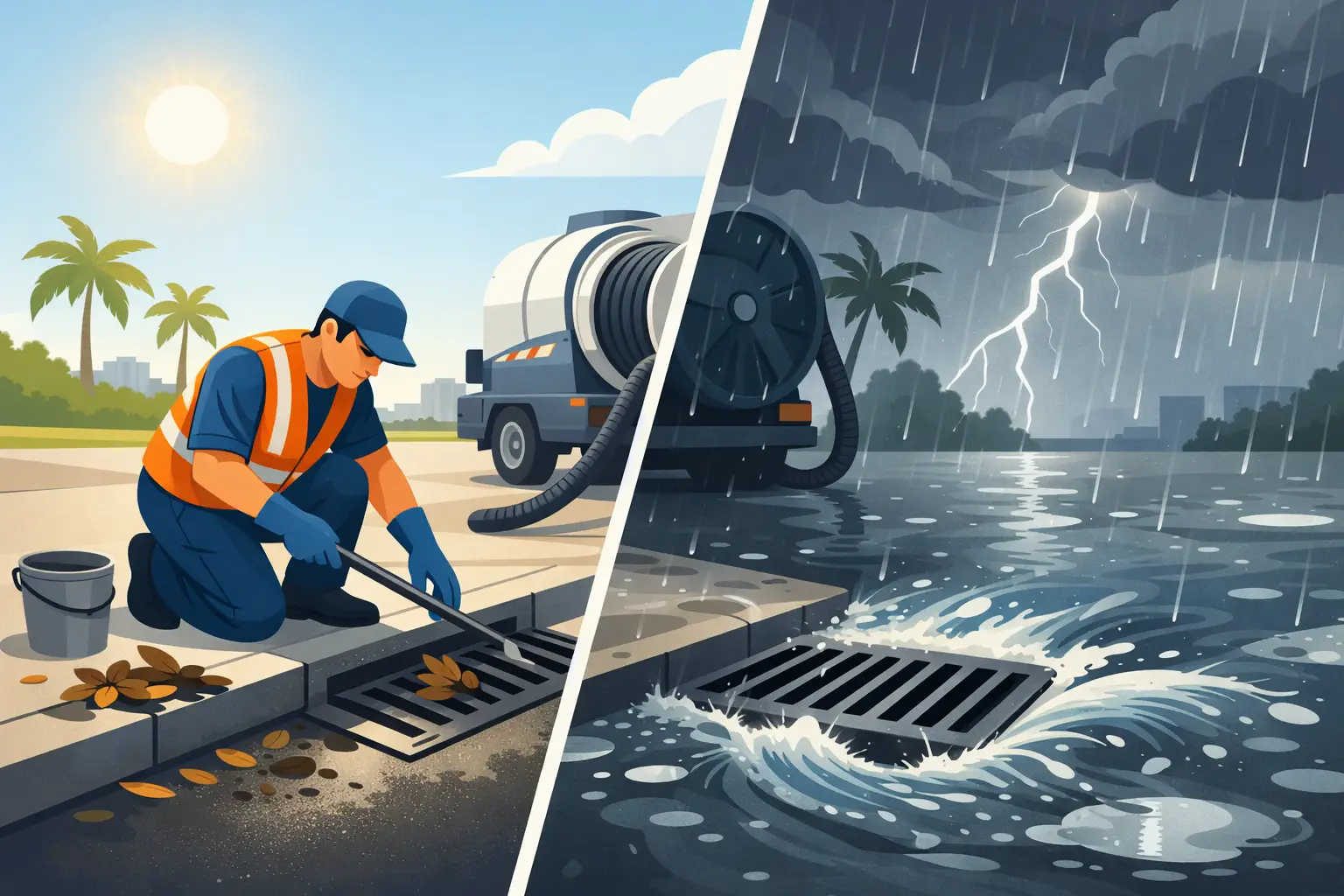
A hard Lake County rain can turn a small drainage problem into standing water across a driveway, patio, or lawn within minutes. Storm drain cleaning removes the leaves, pine needles, sand, mulch, and yard debris that keep exterior drains from carrying water away as designed. When water has nowhere to go, it can collect near your foundation, wash out landscaping, and make walkways slick.
For homeowners in Eustis, Mount Dora, Tavares, Leesburg, and Lady Lake, exterior drainage deserves attention before the next heavy storm, not after water is already rising. A clear grate does not always mean a clear drain. Debris can settle farther down the line, and roots, compacted soil, or damaged pipe can stop water below the surface.
Signs Your Storm Drain Needs Attention
The most obvious sign is water pooling around a drain after rain has stopped. A working storm drain should begin moving water away promptly. If a puddle remains for hours, or if the water level rises around the grate during a storm, there may be a blockage in the basin or drainage line.
Pay attention to water traveling in the wrong direction, too. Runoff flowing toward the garage, pool deck, front door, or foundation is a warning that the drain cannot keep up or the surrounding grade is directing more water than the system can handle. The solution depends on the cause. Cleaning may restore normal flow, but a crushed pipe, root intrusion, or grading issue needs a closer look.
Other common warning signs include muddy or sunken areas near the drain, a grate that stays covered by leaves after routine yard work, and water spilling out of a catch basin rather than entering it. You may also notice mosquitoes gathering around water that should have drained away. These problems are easy to put off during dry weather, but Florida storms rarely give much notice.
What Blocks Outdoor Drainage Systems
Outdoor drains handle more than rainwater. Every storm carries material from the yard and nearby hard surfaces into the system. In Lake County, sand and loose soil can settle at the bottom of a catch basin. Oak leaves, palm fronds, grass clippings, and pine needles can form a dense mat near the grate. Mulch washed from garden beds is another frequent problem.
Some blockages develop below ground. Tree roots naturally seek moisture and can enter small openings in older or damaged drainage pipe. Once inside, roots catch debris and gradually reduce the space available for water. Pipe sections can also shift, crack, or collapse due to age, soil movement, or heavy vehicles crossing above them.
That is why simply pulling leaves off the surface is sometimes enough, and sometimes it is not. If the drain repeatedly backs up after you clear the grate, the restriction is likely farther down the system. No guessing. No unnecessary work. The right repair starts with identifying where the water stops moving and why.
Safe Steps Homeowners Can Take
Between professional visits, a little routine attention can prevent many simple clogs. After storms and major yard work, remove loose debris from the drain grate by hand while wearing gloves. Keep mulch, soil, and grass clippings from piling against the opening. If a nearby downspout discharges close to the drain, check that its outlet is secure and not dumping a concentrated stream that erodes the area or carries too much debris at once.
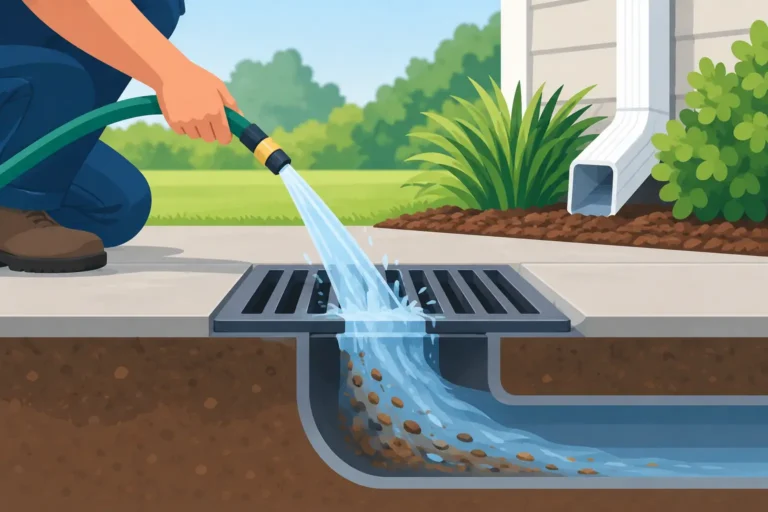
You can also test a drain during dry weather with a moderate flow from a garden hose. Watch how quickly the water enters and whether it appears at the intended outlet location. Stop if water begins backing up. Continuing to force water into a blocked line can overflow the basin and send runoff toward the house.
Avoid using chemical drain cleaners in outdoor drainage lines. They rarely solve a blockage made of sand, soil, roots, or packed yard debris, and they can create hazards for people, pets, plants, and technicians. It is also wise not to probe deeply with sharp metal tools. A tool can damage a pipe, catch on roots, or push a compacted blockage farther down the line.
When Professional Storm Drain Cleaning Makes Sense
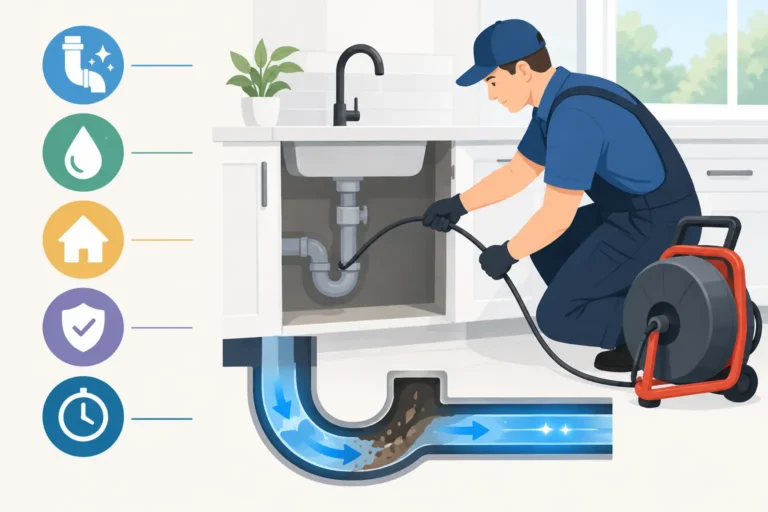
Call for help when water repeatedly pools despite basic surface cleanup, when a drain has stopped accepting water, or when you suspect a buried line is blocked. Professional equipment can clear material that a homeowner cannot safely reach, including packed sediment and buildup along the pipe walls.
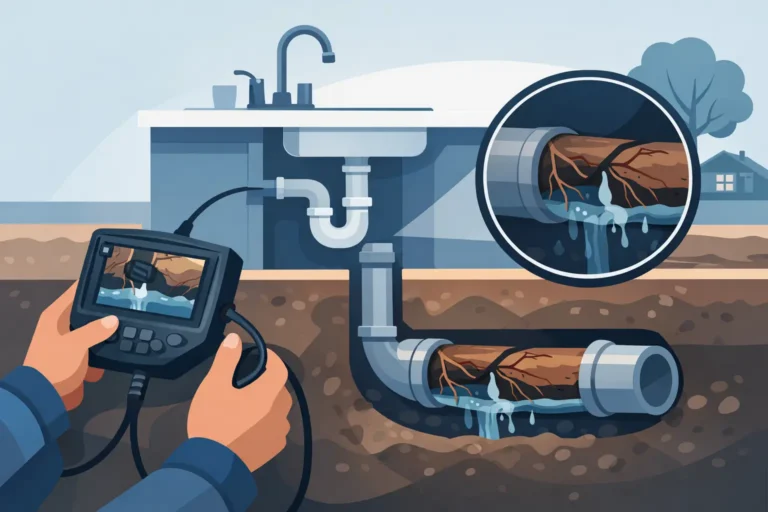
A camera inspection is especially useful for recurring problems. Instead of treating every backup as a simple clog, a technician can inspect the line and show you whether the issue is roots, a separated connection, a belly in the pipe, or a heavy buildup of debris. That information matters because the most effective solution for one condition may be the wrong approach for another.
For example, high-pressure jetting can be a strong option for clearing accumulated debris and restoring flow in an otherwise sound line. But if a camera shows broken or collapsed pipe, cleaning alone will not create a lasting fix. A clear explanation of the findings helps you decide what work is justified for your property and budget.
Professional service is also worthwhile when the drain is close to the foundation, a driveway, a pool area, or an electrical feature. Flooding in these areas can create more than an inconvenience. Addressing the drainage problem early is often less disruptive than repairing damaged landscaping, cleaning muddy water from a garage, or dealing with moisture near the home.
A Practical Maintenance Schedule for Lake County Homes
Storm drain maintenance is not one-size-fits-all. A home beneath mature trees may need the grate checked every few weeks during leaf drop. A newer home with open yard space may only need a seasonal inspection and a check after major storms. The important part is matching the schedule to what reaches your drain.
For most homes, inspect exterior drains at the start of the rainy season, after severe weather, and after landscaping projects. New mulch, sod work, trimming, pressure washing, and driveway cleaning can all move material toward a catch basin. If your property has had a past drainage issue, do not wait for the same symptoms to return. A preventive cleaning and inspection can confirm that the line is still open before the weather changes.
Keep the area around each drain accessible. Avoid covering grates with decorative rock, landscape fabric, planters, or thick layers of mulch. These choices may look tidy, but they make it harder to spot trouble and can reduce the drain’s ability to collect runoff when rain is falling fast.
Storm Drain Cleaning Protects More Than the Yard
Exterior drainage is easy to overlook because most of it works quietly below ground. Yet a blocked storm drain can affect the parts of your property you use every day: the driveway, lawn, walkway, garage, and foundation area. The goal is not to overreact to every puddle. It is to notice the difference between normal runoff after a hard storm and water that is not draining as it should.
If you are seeing repeated pooling, overflow, or a drain that appears clear but still will not carry water away, a professional inspection can replace uncertainty with a straightforward answer. USA Drain Cleaning can assess the condition of the line, explain what the camera shows in plain language, and clean the blockage when cleaning is the right solution. Take a look at your exterior drains before the next forecast calls for heavy rain – a few minutes of attention now can spare your property a much bigger mess later.