Tree Roots in Sewer Pipes Can Cause Backups
A toilet that bubbles when the washing machine drains is not a normal minor clog. Neither is a tub that backs up after several days of slow draining. In many older Lake County homes, tree roots in sewer pipes are the reason water and waste can no longer move freely to the sewer or septic system.
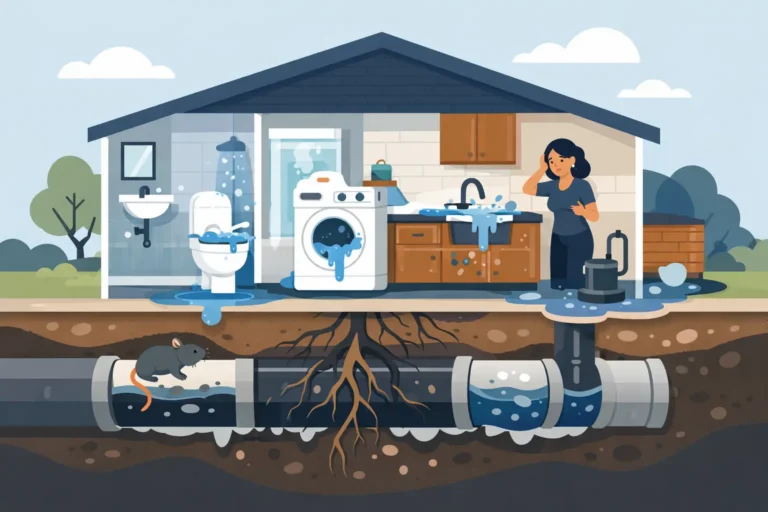
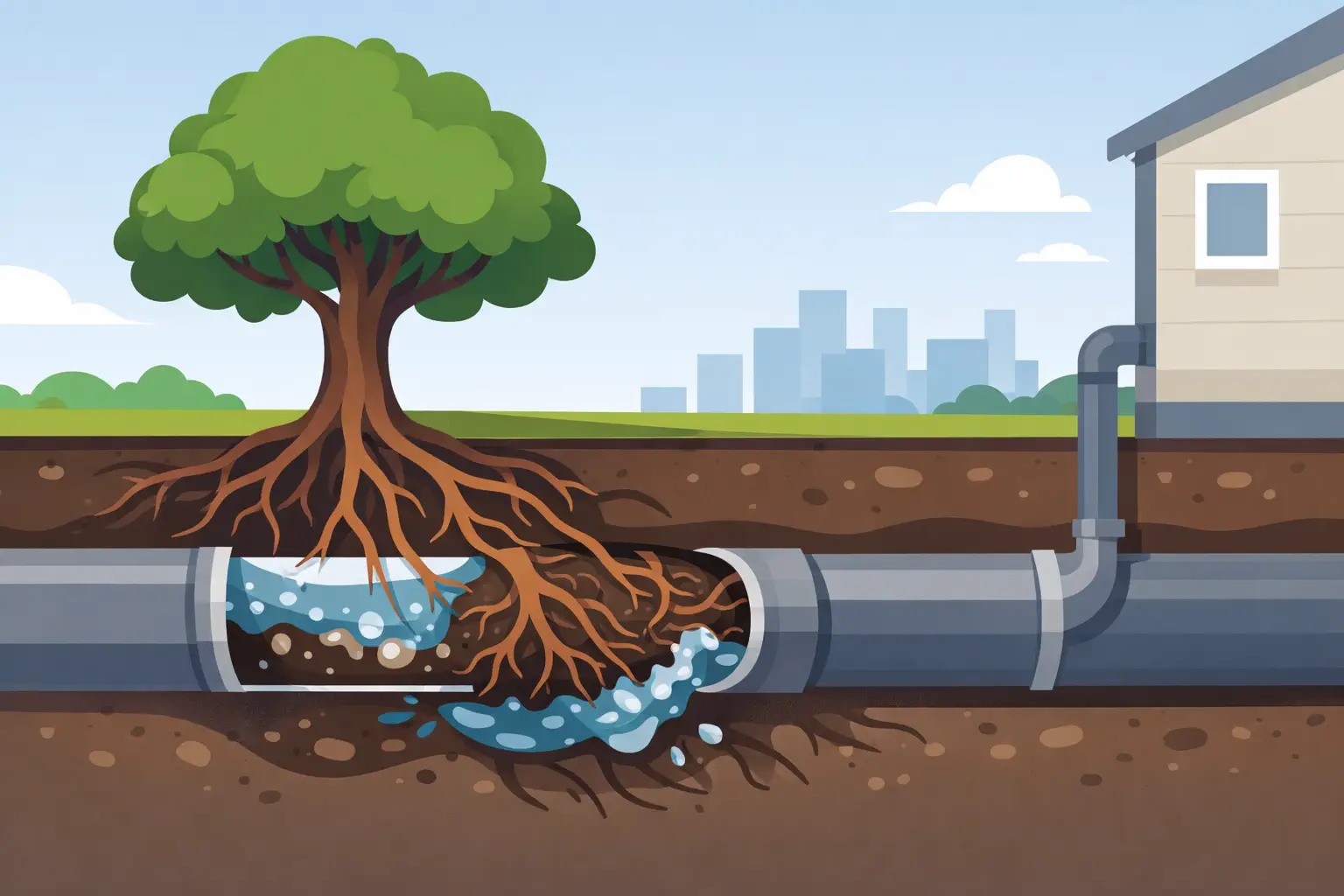
Roots do not usually crush a healthy pipe overnight. They find a small opening at a pipe joint, crack, offset connection, or aging section of line. Once inside, they have moisture and nutrients, so they continue growing. What starts as a thin strand can turn into a dense mass that catches paper, grease, and other debris until the line repeatedly blocks.
Why Tree Roots Get Into Sewer Pipes
Tree roots naturally grow toward reliable sources of water. A sewer line with a minor leak or loose joint can provide exactly that. Older homes may have clay, cast-iron, or concrete pipe sections with joints that have shifted over time. Even newer pipe can have trouble if a connection was damaged, the ground settled, or a previous repair was not sealed correctly.
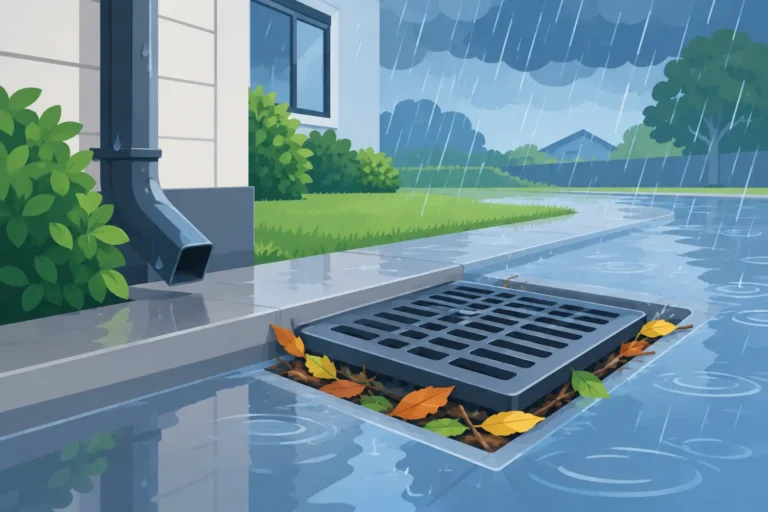
The problem is often worse during dry periods, when roots search harder for moisture. Heavy Florida rain can also expose the issue. Wet soil may shift around aging pipe, and a partially blocked line can quickly become a full backup when a busy household sends more water through it.
A tree does not need to sit directly over the sewer line to cause trouble. Roots can extend well beyond the visible canopy. That is why guessing based on where a tree stands is not enough. The line needs to be inspected before anyone decides what work is needed.
Signs of Tree Roots in Sewer Pipes
Root intrusion usually affects the main sewer line, which serves more than one fixture. A clog limited to one sink may be local to that drain. When several fixtures act up together, the issue is more likely farther down the system.
Watch for slow drains that keep returning after plunging or using a basic drain cleaner. You may also hear gurgling from a toilet or shower when another fixture drains. A toilet may flush weakly, water may rise in a tub or shower, or there may be a sewer odor around drains, the yard, or an exterior cleanout.
The clearest warning is a backup at the lowest point in the home. In many houses, that is a shower, tub, or floor drain. If flushing a toilet sends dirty water into the tub, stop using water fixtures as much as possible. Running the dishwasher, doing laundry, or taking another shower can turn a contained drainage issue into water damage inside the home.
Some homeowners notice a greener strip of grass near the sewer route. That can suggest a leak, but it is not proof. A camera inspection provides a much clearer answer than yard clues or repeated drain treatments.
Why a Camera Inspection Comes First
A main line can clog for several reasons: roots, grease buildup, flushed items, a collapsed pipe, or a low spot where waste collects. The symptom may look the same from inside the house. Clearing a line without seeing its condition can restore flow for a while, but it may not explain why the blockage happened or how soon it could return.
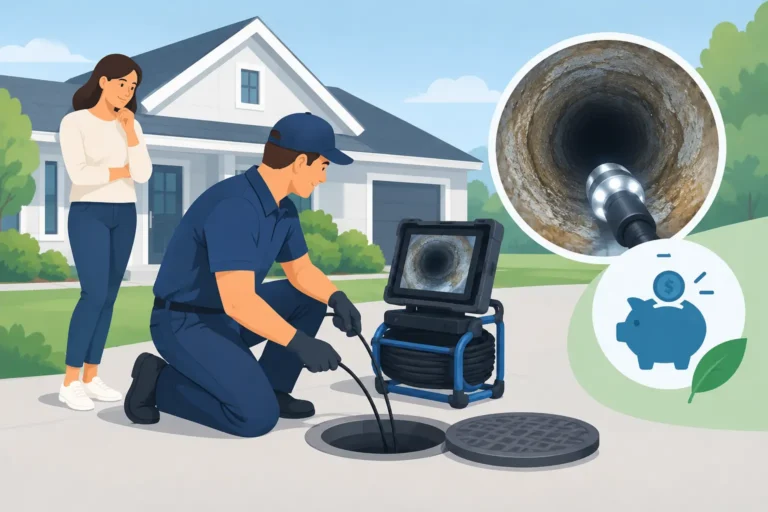
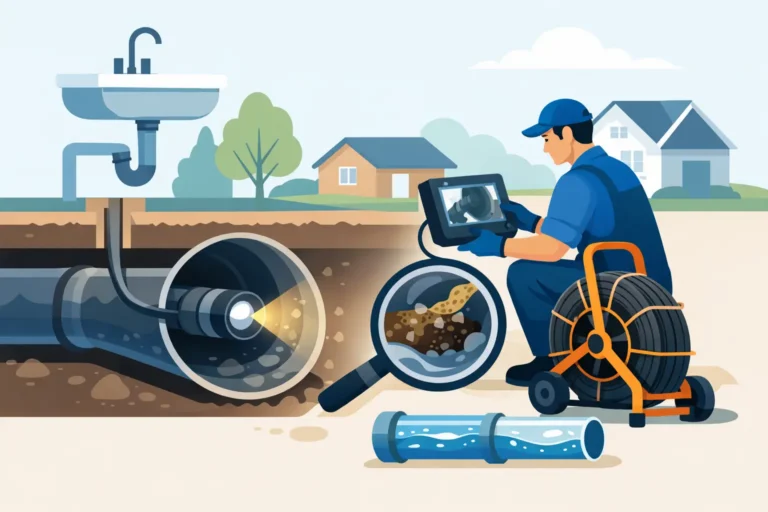
A professional video camera inspection shows what is inside the pipe and where the problem is located. It can reveal fine roots at a joint, a thick root mass, cracked pipe, separated connections, or a section that has shifted out of alignment. The technician can explain the findings in plain language and help you understand whether cleaning is likely to solve the immediate problem or whether the pipe itself needs repair.
That distinction protects your budget. There is no reason to recommend replacing a line that can be cleaned and maintained. On the other hand, repeatedly cutting roots from a pipe with major breaks or collapse can become an expensive cycle. No guessing. No unnecessary work.
Removing Roots Is Not Always the Same as Fixing the Pipe
For many root blockages, professional drain cleaning can reopen the line. Mechanical root-cutting equipment can cut through roots, while high-pressure jetting can wash away loose root material, sludge, and buildup left along the pipe walls. The best method depends on the pipe material, the location of the blockage, and the pipe’s overall condition.
Cleaning restores flow, but it does not make roots disappear permanently if there is still an opening in the pipe. Roots can grow back through the same joint or crack. That does not mean cleaning was the wrong choice. It may be a sensible, lower-cost option when the pipe is generally intact and the homeowner understands that periodic service may be needed.
Repair becomes more worth considering when a camera shows severe cracking, separated joints, a crushed section, or heavy recurring intrusion in the same area. Depending on the line and access, the repair may involve replacing a damaged section, restoring connections, or addressing a larger portion of the sewer line. The right recommendation depends on what the camera shows, not on a one-size-fits-all sales pitch.
What Not to Do When You Suspect Roots
Avoid pouring harsh chemical drain cleaners into a main-line backup. These products rarely remove a root mass, can sit in standing water, and may create a hazard for anyone who later works on the drain. They can also damage certain pipes or fixtures when used repeatedly.
Be cautious with rented drain machines as well. Sewer cables can be difficult to control, especially in older lines with offsets, damaged joints, or dense roots. A cable may punch a small opening through the blockage without fully clearing the buildup behind it. The drains may seem better for a few days, then clog again when debris catches on the remaining roots.
Do not keep using water after sewage appears in a tub, shower, or floor drain. Turn off appliances that drain automatically if possible, including the dishwasher and washing machine. Keep children and pets away from the affected area, and arrange for professional help before the backup spreads.
How to Reduce Future Root Problems
You cannot control every root in your yard, and removing a mature tree is not automatically the answer. Tree removal can be costly, affect shade and drainage, and still may not solve a damaged sewer line. The practical focus is the pipe’s condition and a maintenance plan that fits it.
If roots have been removed from an older line, keep the inspection findings and note the location of the intrusion. Ask whether follow-up cleaning on a set schedule makes sense for your pipe. Some homes benefit from periodic maintenance, while others can go much longer after a thorough cleaning. It depends on the amount of root activity, the type of pipe, and whether defects remain.
Avoid flushing wipes, paper towels, hygiene products, or heavy grease. These materials are not what brings roots into a pipe, but they give existing roots more material to catch. A line with early root intrusion may keep flowing if it is treated carefully. The same line can back up quickly when a large amount of debris reaches the root mass.
When to Call for Drain Service
Call for help when multiple drains are slow, you hear gurgling, odors keep returning, or a backup appears in a tub or shower. These are signs that the issue may be beyond a single fixture drain. A camera inspection and professional cleaning can identify whether roots are involved and show the actual condition of the line before you commit to repairs.
For homeowners in Eustis, Mount Dora, Tavares, Leesburg, and Lady Lake, USA Drain Cleaning focuses on finding the source of the problem, explaining what the camera shows, and completing the work without leaving a mess behind. A clear diagnosis gives you a better chance of choosing the right fix the first time.
If your drains are sending warnings now, do not wait for the next load of laundry or heavy rain to test the line. Addressing a slow, recurring problem while water is still moving is usually far less stressful than cleaning up after a sewer backup.