Climate Resilient Yard Drainage for Florida Homes
A Lake County downpour can turn a small drainage problem into standing water around the house in less than an hour. Climate resilient yard drainage is not about making a yard perfectly dry during every storm. It is about giving rainwater a clear, maintained path away from your home, driveway, and low-lying areas before it has a chance to create damage.
For homeowners in Eustis, Mount Dora, Tavares, Leesburg, and Lady Lake, that means planning for intense rainfall, seasonal debris, and the way Florida soil holds water. A drain that worked fine last year can become a problem after leaves, mulch, pine needles, roots, or sediment build up inside it. The good news is that many exterior drainage issues give clear warning signs before water reaches the garage, patio, or foundation.
What climate resilient yard drainage means
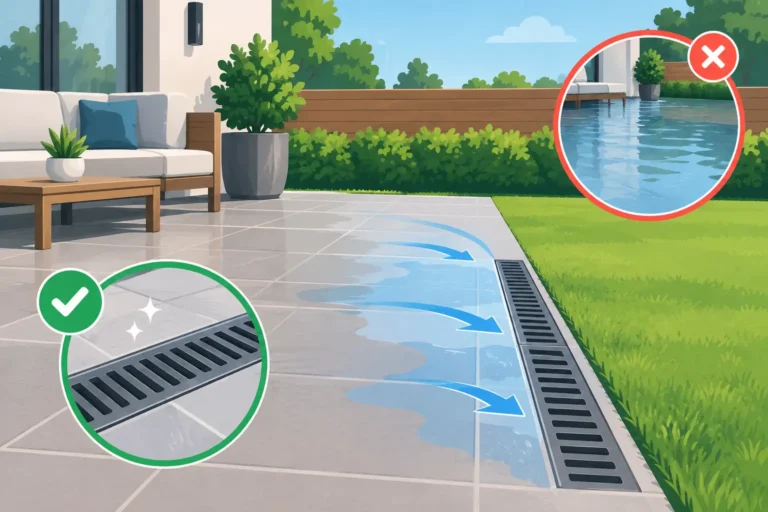
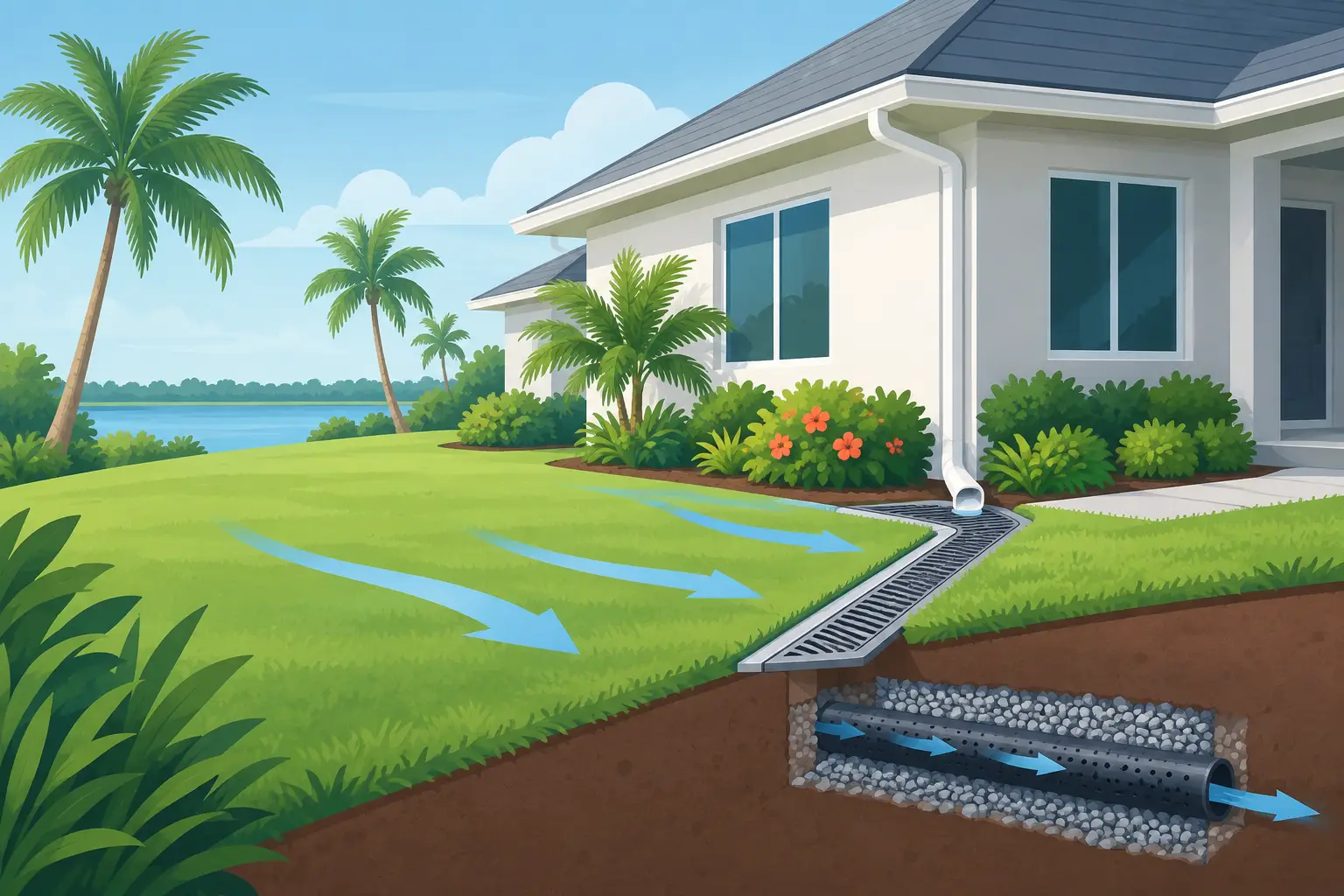
A climate-resilient drainage setup can handle more than a light afternoon shower. It accounts for the heavy, fast-moving rain common in Central Florida and directs runoff where it can safely go. That may include yard drains, catch basins, swales, downspout extensions, driveway channels, or underground drain lines.
The goal is simple: keep water moving away from structures and avoid sending it toward a neighbor’s property. Every yard is different. A flat lot, a sloped driveway, mature tree roots, a screened patio, and compacted soil can all change where water collects. That is why a drain opening alone is not proof that the system is working. The pipe below it must also be open, correctly connected, and able to carry water to a proper discharge point.
When exterior drainage is maintained, rainwater has somewhere to go. When it is blocked or undersized, water backs up at the lowest point. That may be near a storm drain, along a walkway, at the edge of a driveway, or beside the home.
Watch for the early signs after a storm
The best time to inspect your yard drainage is shortly after a heavy rain, when the problem is easiest to see. Look for water that remains pooled long after nearby areas have dried. Pay attention to water flowing toward the house, mulch washing out of beds, soft or eroded spots in the lawn, and water spilling over a drain grate instead of entering it.
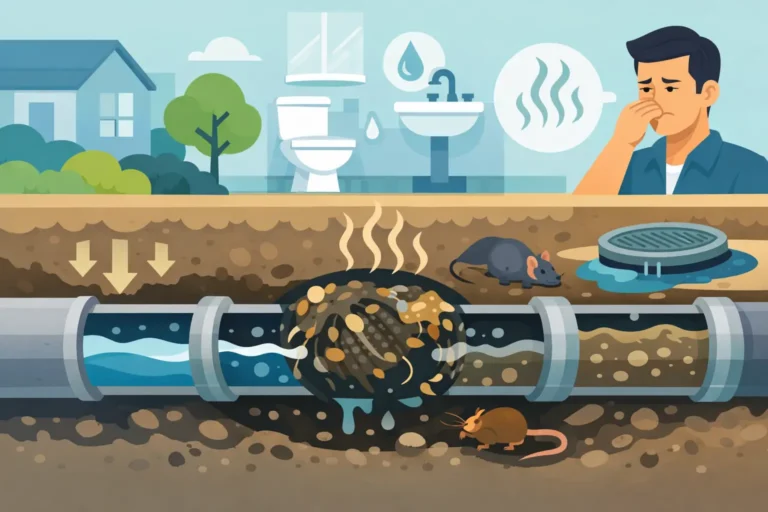
A foul odor near an exterior drain can also point to stagnant water and organic buildup. If a drain seems to take water slowly, the blockage may be farther down the line than you can reach from the grate. Mud, leaves, roof grit, and small roots can collect inside bends and low sections of pipe until the flow is restricted.
Do not ignore water at the base of an exterior wall simply because it disappears after the storm. Repeated saturation can contribute to soil movement, damaged landscaping, mosquito-friendly puddles, and moisture issues around the home. Water that enters a garage or floods a patio is a more urgent signal, but it does not have to reach that point before action is worthwhile.
Start with the water you can control
Keeping a yard drainage system clear is often more practical than installing a larger system after a failure. Before the rainy season and after major storms, remove leaves, pine needles, mulch, and visible debris from drain grates and catch basins. Keep landscaping from growing over drain openings. If you use decorative rock or loose mulch near a grate, make sure it is not washing into the basin.
Check gutters and downspouts, too. A clogged gutter can dump water over one spot near the foundation, while a disconnected downspout can send roof runoff directly onto a walkway or planting bed. Downspouts should discharge in a way that does not create a new low spot or overwhelm a nearby drain.
It also helps to avoid piling soil, sod, or landscape edging where it changes the yard’s natural slope. A small grade change can redirect water toward the house. If you are adding a patio, replacing a driveway, or installing a new planting bed, consider drainage as part of the project instead of treating it as an afterthought.
When cleaning is enough and when it is not
Some drainage problems are simple. A grate packed with leaves may clear once the debris is removed. But a recurring backup usually means there is more going on underground. A drain line may be filled with sediment, clogged by roots, crushed, separated, or holding standing water because it was installed with poor slope.
This is where guessing can get expensive. Digging up part of a yard without knowing the pipe’s condition can damage landscaping and still leave the actual obstruction in place. Chemical drain products are not a good answer for outdoor drainage lines either. They may not move heavy debris or roots, and they can create unnecessary safety concerns around pets, children, and plantings.
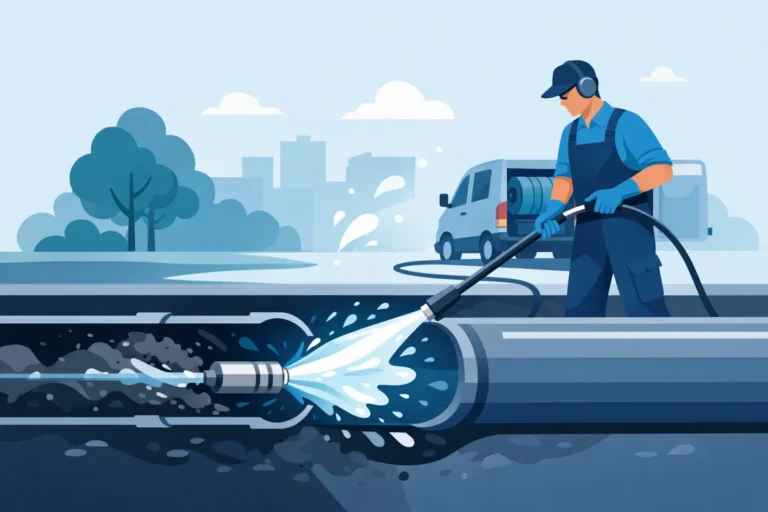
A camera inspection provides a clear look inside the drain line. It can show whether the issue is a packed blockage, root intrusion, a broken section, or a pipe that needs repair rather than cleaning. No guessing. No unnecessary work. Once the cause is identified, professional cleaning with the right equipment can remove buildup from the line instead of simply opening a small channel through it.
High-pressure jetting can be particularly useful for exterior drain lines with sludge, soil, and organic debris. It is not the right solution for every damaged pipe, which is why the condition of the line should be checked first. A clear explanation of what is in the pipe and what the repair options are lets you make a decision based on the actual problem.
Design for Florida rain, not a normal day
Give water a safe route
If water regularly collects in the same place, the solution may involve more than cleaning. A qualified drainage professional may recommend restoring a blocked line, adding a catch basin, extending a downspout, or correcting the grade around a problem area. The best option depends on where the water starts, how quickly it accumulates, and where it can legally and safely discharge.
Do not assume that sending more water into one existing drain is always the answer. A small line may handle ordinary rainfall but back up during a hard storm. Likewise, directing water toward the street can create hazards or violate local requirements depending on the property and drainage layout. The right approach manages water on the property without creating a problem elsewhere.
Protect the areas that matter most
Prioritize drainage near the foundation, garage door, driveway, walkways, pool deck, and patio. These locations affect safety and can lead to more expensive repairs if water repeatedly reaches them. A soggy lawn farther from the home may be inconvenient, but water against the structure deserves faster attention.
Tree roots are another Florida reality. Large, established trees add value and shade, but roots naturally seek moisture and can enter weak joints or damaged drainage pipes. If a line clogs again soon after cleaning, a camera inspection can determine whether roots are part of the issue. Repeatedly clearing the same line without identifying why it clogs is usually a temporary fix.
Know when to call for help
Call for professional drainage service when water is backing up through a yard drain, standing water repeatedly forms near the home, a drain overflows during normal rainfall, or you suspect an underground line is blocked. It is also wise to schedule an inspection before storm season if a drain has a history of slow flow or recurring debris buildup.
USA Drain Cleaning helps Lake County homeowners identify exterior drainage problems with straightforward diagnostics, including camera inspections when needed. The purpose is not to sell work a system does not need. It is to find the blockage or damaged section, explain what is happening in plain language, and complete the work correctly while respecting your property.
A few minutes spent checking drains after rain can prevent a much longer cleanup later. Keep water moving, address repeat problems below the surface, and give your yard a better chance to handle the next Florida storm.