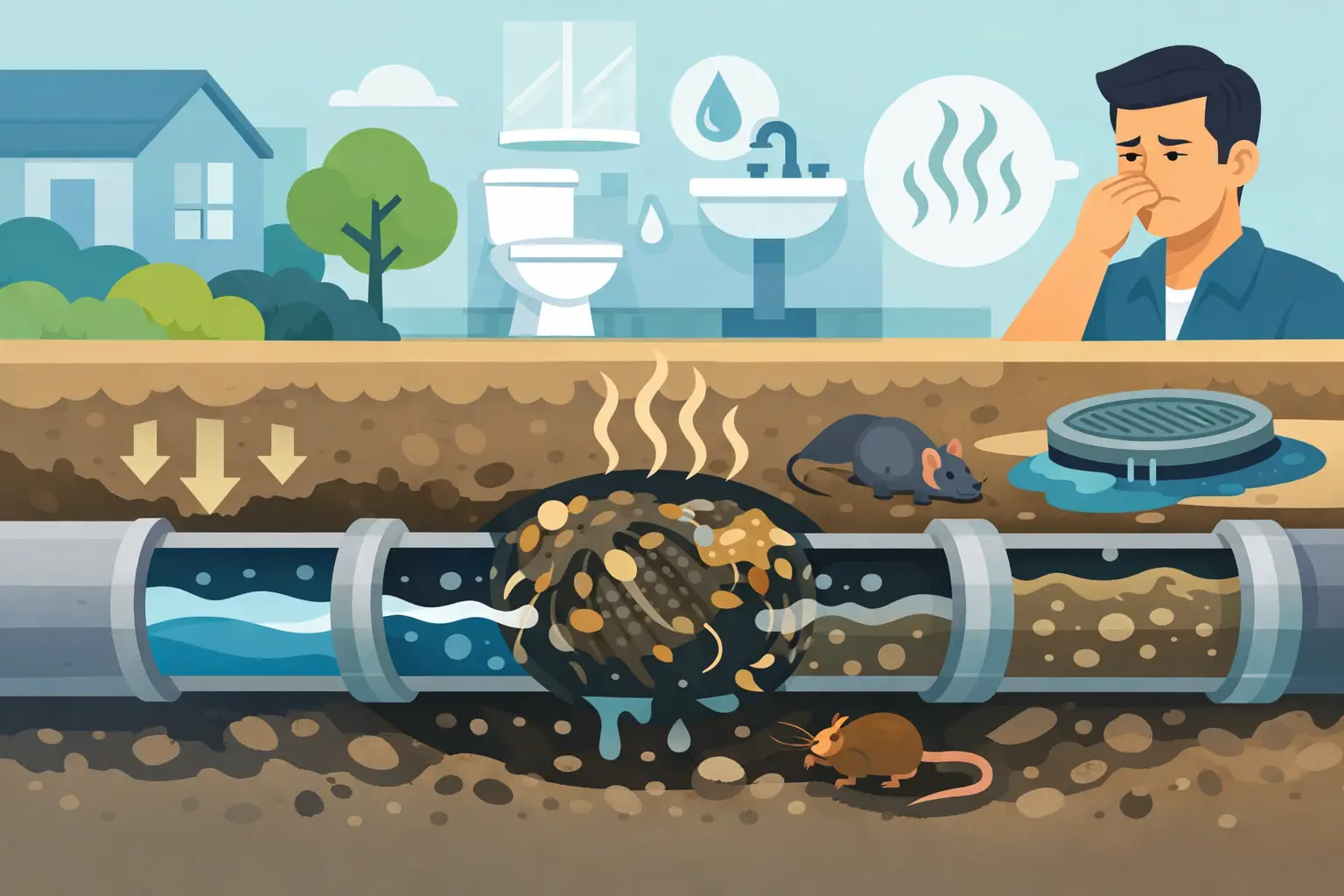
Common Sewer Line Blockages and Their Signs
A kitchen sink that drains slowly may be a simple fixture clog. But when the toilet bubbles while the washing machine drains, or wastewater appears in a tub or shower, the problem may be farther down the line. Common sewer line blockages affect the pipe that carries wastewater away from your entire home, so the warning signs often show up in more than one room.
For Lake County homeowners, acting early can mean the difference between a straightforward drain cleaning visit and a messy backup inside the house. The goal is not to guess at the cause or pour another chemical into the drain. It is to identify what is obstructing the line, clear it properly, and understand whether the pipe itself needs attention.
What Makes a Sewer Line Different From a Drain Clog?
A sink, shower, or toilet has its own branch drain. A blockage close to that fixture usually affects only that one area. Your main sewer line is the larger pipe where those smaller drains meet before wastewater leaves the home.
When the main line is restricted, water has fewer places to go. It may drain slowly from several fixtures, make gurgling sounds, or back up through the lowest drain in the home. In many homes, that is a first-floor shower, tub, or floor drain.
A main-line issue does not always begin as a full stoppage. Buildup can narrow the pipe gradually, allowing some water through until a heavy laundry load, a long shower, or several fixtures being used at once exposes the restriction.
The Most Common Sewer Line Blockages
Grease, soap, and household buildup
Cooking grease is liquid when it goes down the sink, but it cools and sticks to pipe walls. Over time, grease catches food particles, soap residue, and other debris. The opening inside the pipe becomes smaller, and water begins moving more slowly.
This is especially common in kitchen lines, but the buildup can travel into the main sewer line. Garbage disposals do not make grease safe for drains, and hot water does not carry it away permanently. It simply moves the problem farther down the pipe.
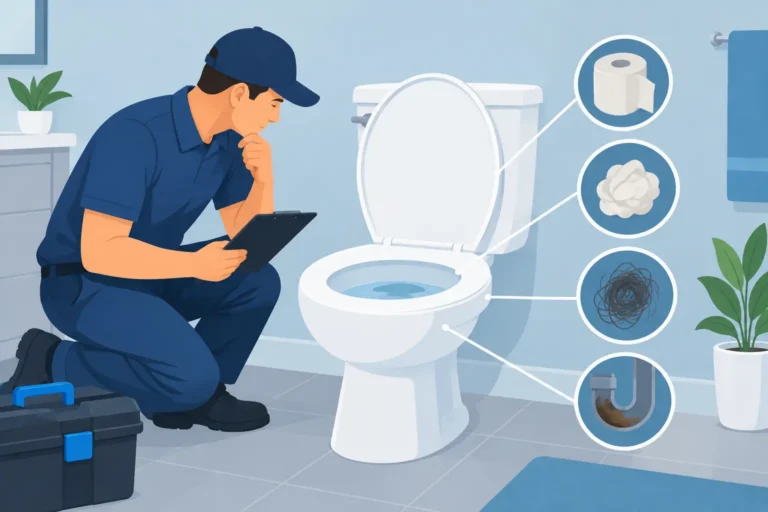
Bathroom products also contribute. Soap scum, hair, toothpaste residue, and wipes labeled as flushable can combine into a dense blockage. Toilet paper is designed to break apart in water. Wipes, paper towels, cotton products, and hygiene items are not.
Tree root intrusion
Roots naturally seek moisture, and a sewer pipe can provide it through small cracks, loose joints, or aging connections. Once roots enter, they can grow inside the pipe and trap paper and waste moving through the line.
Root intrusion is a common concern for homes with mature landscaping, older sewer pipes, or trees near the route from the house to the street or septic system. Florida’s long growing season can keep roots active for much of the year. Clearing the roots restores flow, but a camera inspection can also show whether there is a damaged joint or break that will allow them to return.
Pipe scale, corrosion, and a damaged line
Some sewer problems are caused less by what went into the pipe and more by the condition of the pipe itself. Older cast-iron lines can develop rough internal scale and corrosion. That rough surface catches debris more easily than a smooth pipe.
A pipe may also settle, crack, separate at a joint, or develop a low area where waste and water collect. In those cases, repeated cleaning may keep the line usable for a time, but it cannot correct a collapsed section or improper slope. This is where seeing the inside of the pipe matters. No guessing. No unnecessary work.
Foreign objects and heavy paper use
A child’s toy, a small object dropped into a toilet, excessive paper, or products that should never be flushed can cause a sudden blockage. Unlike gradual buildup, these clogs often appear quickly and may stop the line completely.
If the problem started immediately after a specific event, tell the technician. That detail can help narrow down what the camera or cleaning equipment needs to find.
Warning Signs You Should Not Ignore
One slow sink is frustrating, but it does not automatically mean the sewer line is blocked. The signs become more concerning when multiple fixtures react to one another. A toilet that gurgles when the shower runs, water rising in the tub after flushing, or several drains slowing down at the same time all point toward a possible main-line restriction.
Unpleasant sewer odors are another warning sign. Odors can come from a dry trap or a local drain issue, so they are not proof of a sewer blockage by themselves. But odors combined with slow drainage, bubbling, or recurring clogs deserve prompt attention.
Watch for these situations around the property as well: unusually green or wet patches above a buried sewer line, standing wastewater outdoors, or frequent backups after routine household water use. If wastewater is entering a shower, tub, or floor drain, stop using water fixtures as much as possible until the line is checked. Running the dishwasher or doing another load of laundry can make the backup worse.
Why Chemical Cleaners Usually Make Things Worse
Store-bought chemical drain cleaners may seem like the fastest answer to a slow drain. For a main sewer line blockage, they are rarely a dependable fix. The cleaner may not reach the obstruction in a strong enough concentration, especially if the line is holding water.
Harsh chemicals can also sit in the pipe, create fumes, and complicate the work for anyone who later needs to service the drain. They can be particularly hard on older plumbing. A temporary improvement is not the same as removing the material that is narrowing the line.
A plunger can help with a simple toilet or fixture clog. Beyond that, repeated plunging, snaking from a small access point, or adding more chemicals can delay a proper diagnosis. If the problem keeps returning, the cause needs to be seen and addressed.
How Professionals Find the Real Cause
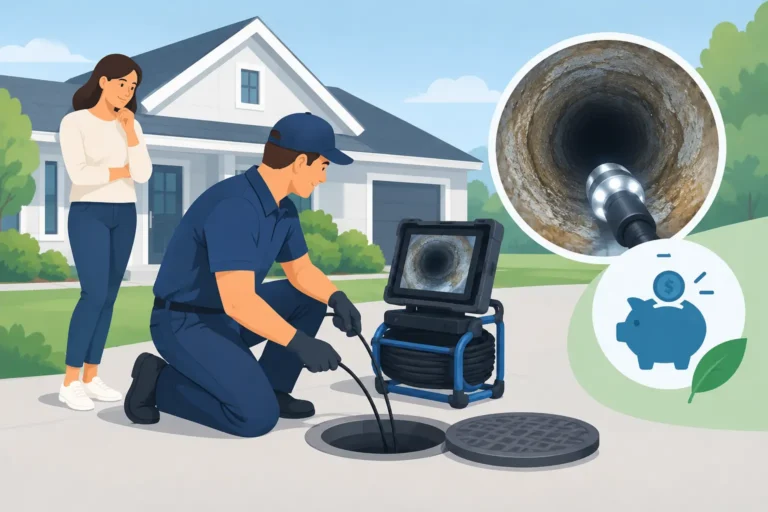
The right cleaning method depends on what is in the line and what shape the pipe is in. A professional sewer camera inspection allows a technician to look through the pipe and locate buildup, roots, a foreign object, or structural damage. It also helps confirm whether the blockage is on the home’s side of the system or farther out.
Camera findings should be explained in plain language. Homeowners deserve to know whether the pipe has grease buildup that can be cleaned, roots that need to be removed, or damage that calls for a different repair plan. A clear diagnosis protects your budget because work is based on what is actually there.
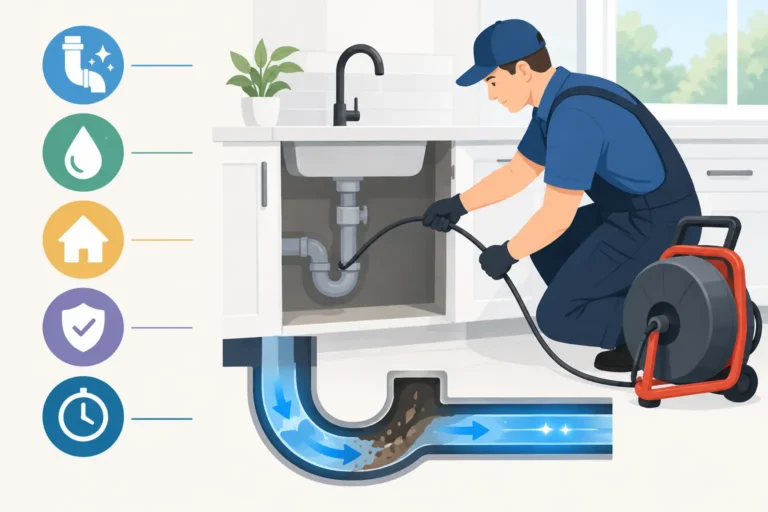
For many buildup and root-related blockages, professional-grade high-pressure jetting can clean pipe walls more thoroughly than a basic cable machine alone. A cable may open a path through a clog, while jetting can wash away accumulated grease, sludge, and loose debris. The best option depends on the pipe material, the blockage, and camera findings.
Reducing the Risk of Another Backup
Good habits will not prevent every sewer problem, particularly one caused by roots or a failing pipe. They do reduce the household buildup that makes a partial blockage become a full backup.
Keep grease, oils, coffee grounds, and food scraps out of kitchen drains. Use sink strainers where they make sense, and place wipes, paper towels, cotton products, and hygiene items in the trash rather than the toilet. If you have a history of roots or older pipes, periodic inspection and cleaning may be a practical form of maintenance rather than waiting for an emergency.
Outside, pay attention to drainage near cleanouts and storm drains after heavy rain. Stormwater systems and sewer lines are different, but standing water around the home can create its own urgent drainage concerns. Keeping exterior drains clear helps protect driveways, yards, and low areas from avoidable pooling.
When It Is Time to Call for Help
Call for professional drain service when more than one fixture is draining slowly, wastewater is backing up, odors persist with other symptoms, or a clog returns soon after you clear it. These are not problems to wait out. A blockage can worsen without much warning once the pipe is nearly closed.
USA Drain Cleaning helps Lake County homeowners get a clear answer with camera diagnostics, thorough cleaning, and straightforward explanations of what was found. The practical next step is simple: stop adding water to a suspected main-line backup, protect the affected area, and have the line inspected before a small restriction turns into a larger cleanup.