Drain Auger Versus Jetting: Which Is Right?
A kitchen sink that backs up again two weeks after being cleared is not just frustrating. It is a clue that the first fix may not have reached the real problem. When homeowners ask about drain auger versus jetting, the right answer depends on what is inside the pipe, where the blockage sits, and whether the line is otherwise in good condition.
Both methods are professional drain-cleaning tools, and each has a place. An auger can break through a focused obstruction. High-pressure jetting can wash away buildup along the inside of a pipe. The goal is not to use the biggest tool available. It is to identify the cause, clear it safely, and avoid paying for unnecessary work.
What a Drain Auger Does Best
A drain auger, often called a drain snake, uses a flexible cable with a cutting or retrieval head. A technician feeds it through the drain or cleanout and works it toward the blockage. As the cable turns, it can bore through material, break apart a clog, or pull certain debris back out.
For a single, concentrated blockage, an auger is often the practical first choice. It may be the right approach when a bathroom sink is stopped by hair, a toilet has a localized obstruction, or a main line has roots that need to be cut open so water can flow again.
An auger is also useful when a line is too fragile, damaged, or uncertain for high-pressure cleaning. Older pipes, pipes with suspected breaks, and lines with severe root damage should be evaluated before any cleaning method is selected. Clearing a path is helpful, but protecting the pipe matters just as much.
The limitation is that an auger typically creates an opening through the blockage. It does not always scrub the full pipe wall clean. If grease, soap residue, scale, sludge, or roots remain around that opening, the drain may keep flowing for now but clog again later.
When High-Pressure Jetting Makes More Sense
High-pressure jetting uses a specialized hose and water pressure to clean the interior of a drain line. The jetting nozzle moves through the pipe while directing water forward to break up material and backward to flush debris out. It is especially effective on buildup that coats the pipe rather than forming one solid plug.
Jetting is often a stronger long-term option for kitchen lines with grease, main drains with sludge, pipes affected by scale, and recurring clogs that return after snaking. Instead of simply punching a hole through the obstruction, it can remove much more of the material that allows the clog to rebuild.
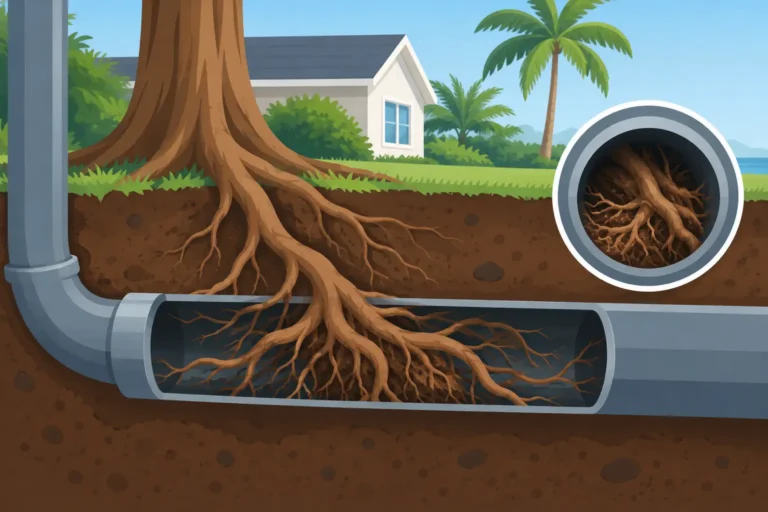
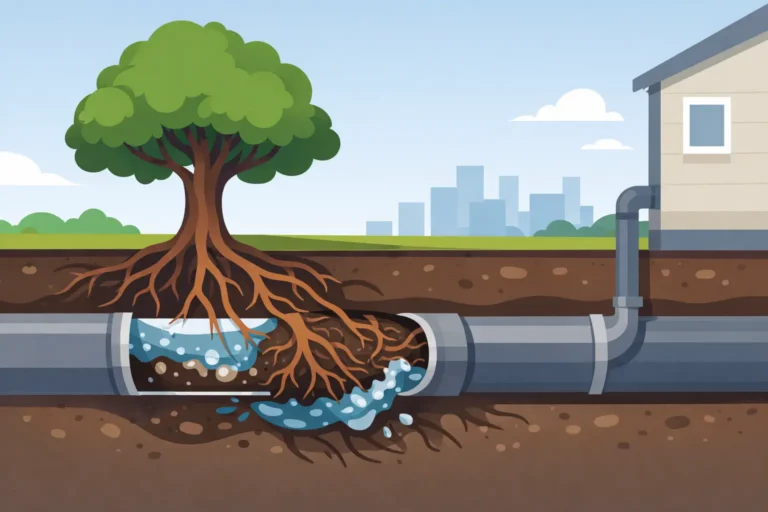
For Lake County homeowners, jetting can be particularly useful in homes with long drain runs, mature trees near sewer lines, or a history of repeat backups. Roots may be cut with an auger, but a properly selected jetting service can help flush the loosened debris and clean the line more thoroughly afterward.
Jetting is not automatically the answer to every backup. It requires the right equipment, a suitable access point, and reasonable confidence that the pipe can handle the process. A cracked, collapsed, disconnected, or badly deteriorated pipe will not be repaired by water pressure. In those cases, cleaning without first understanding the pipe condition can be the wrong move.
Drain Auger Versus Jetting: The Real Difference
The simplest way to think about drain auger versus jetting is this: an auger breaks through or removes a blockage, while jetting cleans the inside of the pipe more completely. One is not universally better than the other.
An auger is often best for a specific obstruction or an immediate need to restore flow. Jetting is often best for recurring clogs and heavy buildup that need a deeper cleaning. In some situations, both are appropriate. A technician may use an auger to open a heavily blocked line, then jet it to remove the remaining grease, scale, or root debris.
The correct choice depends on symptoms. A shower drain that slows down because of hair near the opening is different from multiple fixtures gurgling when the washing machine drains. The first may be a small branch-line clog. The second can point to a main-line restriction that deserves a more complete diagnosis.
Why a Camera Inspection Can Save You Money
A camera inspection takes the guesswork out of the decision. A small camera is guided through the drain line to show where the blockage is and what is causing it. It can reveal grease buildup, root intrusion, standing water, pipe offsets, cracks, bellies, or a collapsed section of pipe.
That information matters because the same symptom can come from very different problems. Water backing up into a tub could be caused by a soft blockage that jetting can clean. It could also be caused by roots, a damaged line, or a pipe that has shifted underground. Treating all of those conditions the same way is how homeowners end up paying for repeated service calls without getting a lasting answer.
A camera also helps confirm the result after the drain has been cleaned. You should be able to understand what was found, what work was performed, and whether the pipe is now clear or has a condition that needs attention later. No guessing. No unnecessary work.
Common Problems and the Method That May Fit
A recurring kitchen drain clog usually points to grease and food residue coating the pipe. An auger may restore flow, but jetting is often the more thorough choice when the problem comes back.
Tree roots in a sewer line are different. An auger with the proper cutting head can reopen the line, especially during an active backup. Jetting may then help remove loosened root debris and clean the surrounding buildup. If roots return frequently, a camera inspection can show whether there is a crack or joint opening that is allowing them in.
For a toilet that will not flush because of one lodged item, an auger is usually the more direct tool. High-pressure jetting is not the normal response to a localized toilet obstruction.
Exterior drainage calls for the same careful approach. Standing water near a yard drain, driveway drain, or storm drain may come from leaves, soil, roof debris, or a crushed section of pipe. Jetting can be very effective for clearing accumulated mud and debris from an otherwise sound exterior drain. But if water still pools after cleaning, the issue may be drainage slope, a damaged pipe, or an outlet that needs to be located and inspected.
Do Not Let a Temporary Fix Hide a Bigger Issue
Store-bought chemical cleaners and repeated plunging can seem like the lower-cost choice, especially when water starts moving again. The problem is that they do not show what is happening farther down the line. Harsh chemicals can also be rough on certain pipes and create a hazard for anyone working on the drain afterward.
Pay attention when clogs recur, several fixtures drain slowly, toilets bubble, drains smell foul, or water appears in a tub or shower when another fixture runs. Those signs often mean the issue is beyond one fixture. Waiting can turn a slow drain into a messy main-line backup.
USA Drain Cleaning approaches these calls by looking for the source first, then explaining the options in plain language. Sometimes that means an auger. Sometimes it means jetting. Sometimes the camera shows that cleaning alone is not the honest answer.
If a drain is backing up repeatedly, ask what caused it and whether the pipe was inspected after it was cleared. A clear explanation and the right tool can protect your home, your schedule, and your budget far better than another temporary opening in the line.