Does Rain Affect Sewer Lines? What Homeowners See
A hard Lake County rain can turn a drain problem that seemed minor on Tuesday into a backup by Thursday. So, does rain affect sewer lines? Yes, but usually not because rainwater should be flowing through your indoor plumbing. Rain often exposes an existing weakness: a partial main-line clog, tree root intrusion, a damaged pipe, or an overwhelmed exterior drainage system.
If toilets bubble, tubs drain slowly, or water appears at a floor drain after a storm, the problem deserves attention. Waiting for the next dry spell may make the symptoms disappear temporarily, but it does not remove the blockage or repair the pipe.
How rain can affect sewer lines
Your home’s sewer line is designed to carry wastewater from sinks, showers, toilets, and appliances to the public sewer connection or septic system. In a properly sealed, properly flowing line, rain outside should have little effect on it.
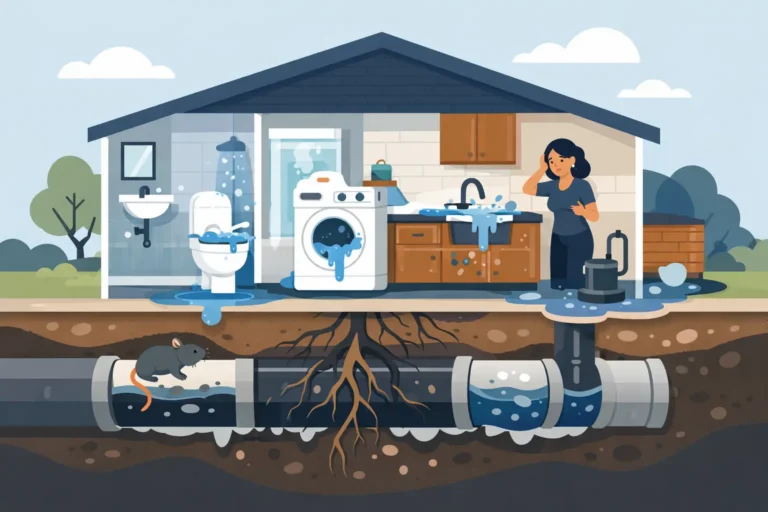
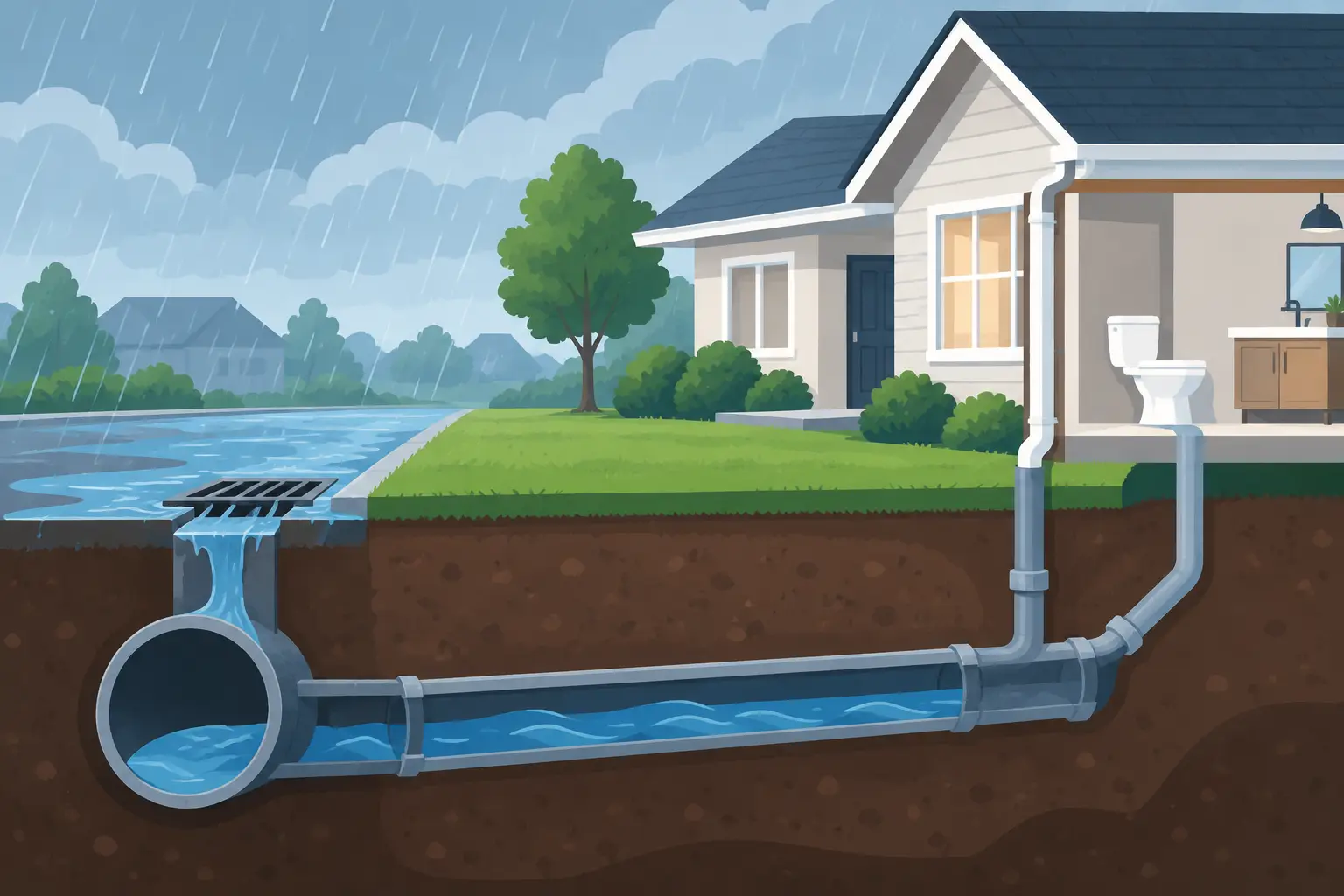
The trouble starts when the pipe has a crack, separated joint, failed connection, or intrusion from tree roots. Saturated soil can allow groundwater to enter through those openings. That added water increases the amount moving through a line that may already be restricted by buildup or roots. A pipe that could barely keep up under normal use may begin draining slowly or back up when heavy rain adds pressure to the situation.
Rain can also affect the larger sewer system beyond your property. In some areas, heavy storms place extra demand on municipal sewer infrastructure. If the public system is stressed and your private line already has a blockage, wastewater has fewer places to go. The result can be gurgling fixtures, slow drains, or a main-line backup inside the home.
That does not mean every rainy-day backup is the city’s fault. Many are caused by a condition in the homeowner’s own sewer lateral – the pipe running from the house to the connection point. A camera inspection is the practical way to separate a private-line issue from a larger system concern. No guessing. No unnecessary work.
Signs rain is exposing a sewer-line problem
A single slow bathroom sink after a storm may be a local drain clog. When several fixtures react at once, the main sewer line becomes more likely. Pay attention to the pattern, especially during or shortly after heavy rain.
Common warning signs include toilets that gurgle when a shower or washing machine drains, water rising in a tub or shower when a toilet is flushed, multiple slow drains, and sewage odors near floor drains or outside cleanouts. You may also notice water or sewage around a cleanout cap, especially if the line is blocked downstream.
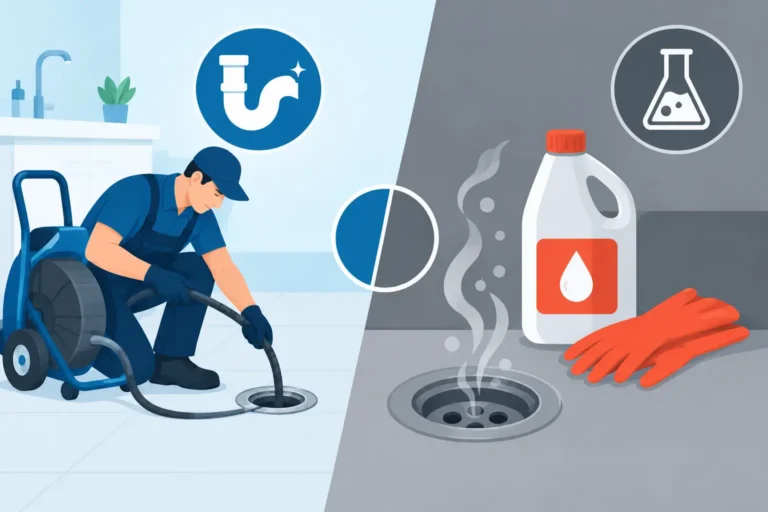
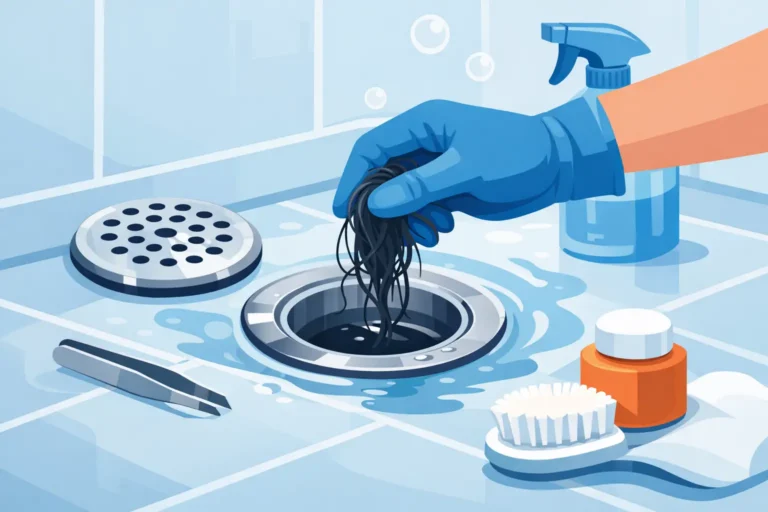
A backup that occurs only during wet weather is still a real backup. The rain may be the trigger, but the underlying problem could be roots, pipe damage, grease and scale buildup, or a low section of pipe where waste and debris collect. Repeated symptoms are a reason to inspect the line rather than repeatedly pour chemical drain cleaner into a fixture.
Why tree roots are a frequent culprit in Florida yards
Roots naturally seek moisture. Even a small opening at a pipe joint can provide it. Once roots enter a sewer line, they catch paper, waste, and other debris moving through the pipe. The blockage grows gradually, which is why many homeowners first notice it during a period of heavy rain or higher household water use.
Clearing roots can restore flow, but the condition of the pipe still matters. If roots return quickly, there may be a damaged joint, crack, or pipe section that needs closer evaluation. A camera inspection shows where the roots are, how extensive they are, and whether cleaning is likely to provide a lasting result.
Sewer lines and storm drains are not the same thing
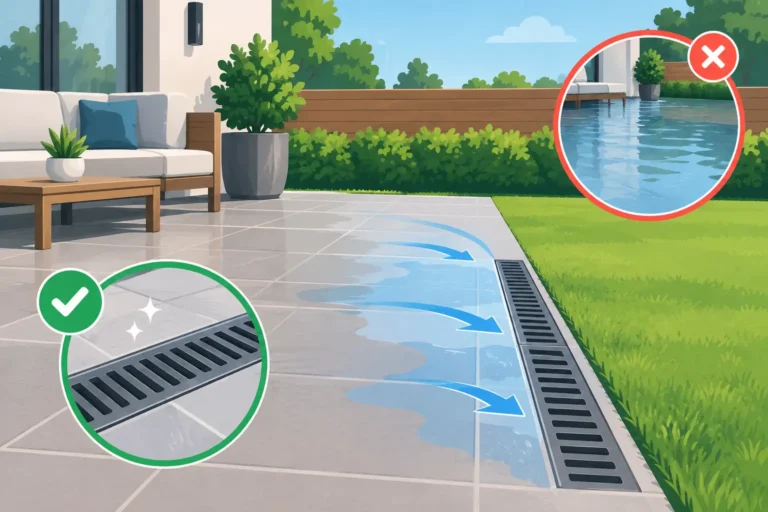
This distinction matters after Florida storms. Your sewer line carries wastewater from inside the house. Storm drains, yard drains, catch basins, gutters, and exterior grates are meant to move rainwater away from the home and driveway.
When an exterior storm drain is blocked with leaves, mulch, sand, or yard debris, water can pool near the foundation, patio, driveway, or garage. That standing water does not necessarily mean the sewer line is clogged. But it can create its own urgent drainage problem and may saturate the soil around underground pipes.
If rainwater is coming up through an indoor drain, that is different from a puddle around an exterior grate. Both need the right diagnosis, but they are not repaired the same way. Clearing a storm drain will not remove roots from a sewer lateral, and cleaning a sewer line will not fix a catch basin packed with debris.
What to do when drains act up during a storm
Start by reducing the amount of water entering the plumbing system. Avoid running the dishwasher, washing machine, showers, and multiple faucets if you suspect a main-line blockage. Continued water use can turn a slow-drain issue into a mess on the floor.
Check the lowest fixtures in the home, such as a first-floor shower, tub, laundry drain, or floor drain. These are often the first places wastewater appears when the main line cannot carry flow away. If sewage is backing up, keep people and pets away from the area and avoid trying to clear it with harsh chemicals.
You can safely look for obvious exterior drainage issues from a distance. Remove loose leaves from around a surface grate only if it can be done without standing in deep water or opening a system you are not familiar with. Do not remove a sewer cleanout cap during an active backup unless a professional advises you to do so. Pressurized wastewater can spill out quickly.
For a recurring problem, write down what happened: which fixtures were affected, whether it began during rain or afterward, and whether water pooled outside. Those details help a drain professional narrow down the cause and choose the right equipment.
Why a camera inspection is worth it
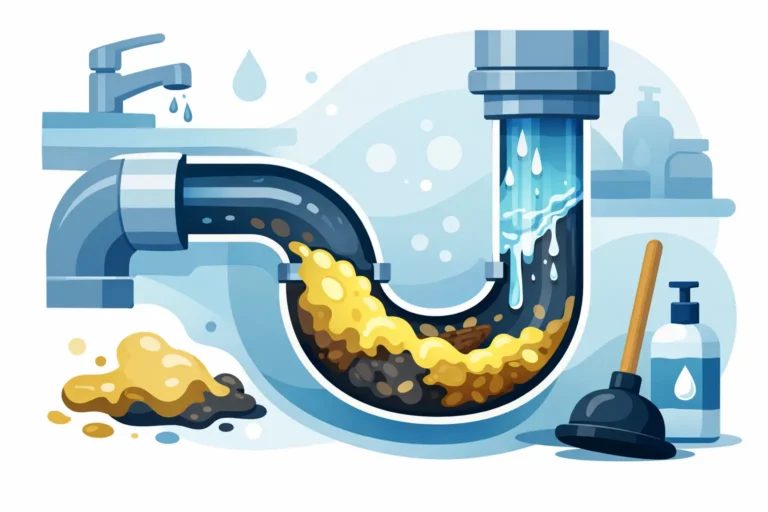
A main-line clog can have several causes that look identical from inside the house. Water may drain slowly whether the issue is roots, heavy buildup, a broken pipe, or a belly in the line. Clearing the line without knowing what is inside can provide short-term relief while leaving the actual cause untouched.
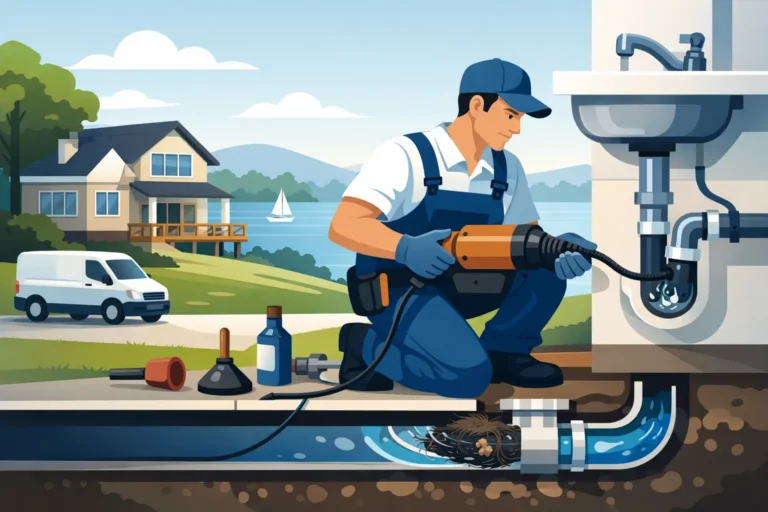
A video camera inspection allows the technician to see the pipe’s condition and location of the blockage. It can reveal root intrusion, cracked or offset sections, grease accumulation, settled debris, and standing water in a low area of pipe. The findings should be explained in plain language so you can make a decision based on what the line actually needs.
For many blockages, professional-grade drain cleaning or high-pressure jetting can remove the material restricting flow far more thoroughly than a temporary surface-level treatment. If the camera shows pipe damage, you will have a clear reason to discuss repair options instead of paying for repeated cleanings without answers.
When to call for help right away
A sewage backup, multiple fixtures draining poorly, wastewater around a cleanout, or repeated rain-related clogs are all reasons to schedule professional service promptly. The same applies if exterior water remains pooled around a storm drain long after rainfall stops.
USA Drain Cleaning helps Lake County homeowners identify whether the issue is in a drain, main sewer line, or exterior drainage system. The goal is straightforward: locate the cause, explain what was found, complete the appropriate work, and leave the property clean.
Heavy rain does not automatically mean your sewer line has failed. It can, however, be the moment a hidden restriction becomes impossible to ignore. Addressing the pattern early, before the next strong storm rolls through Eustis, Mount Dora, Tavares, Leesburg, or Lady Lake, can protect your home from a much more disruptive backup.