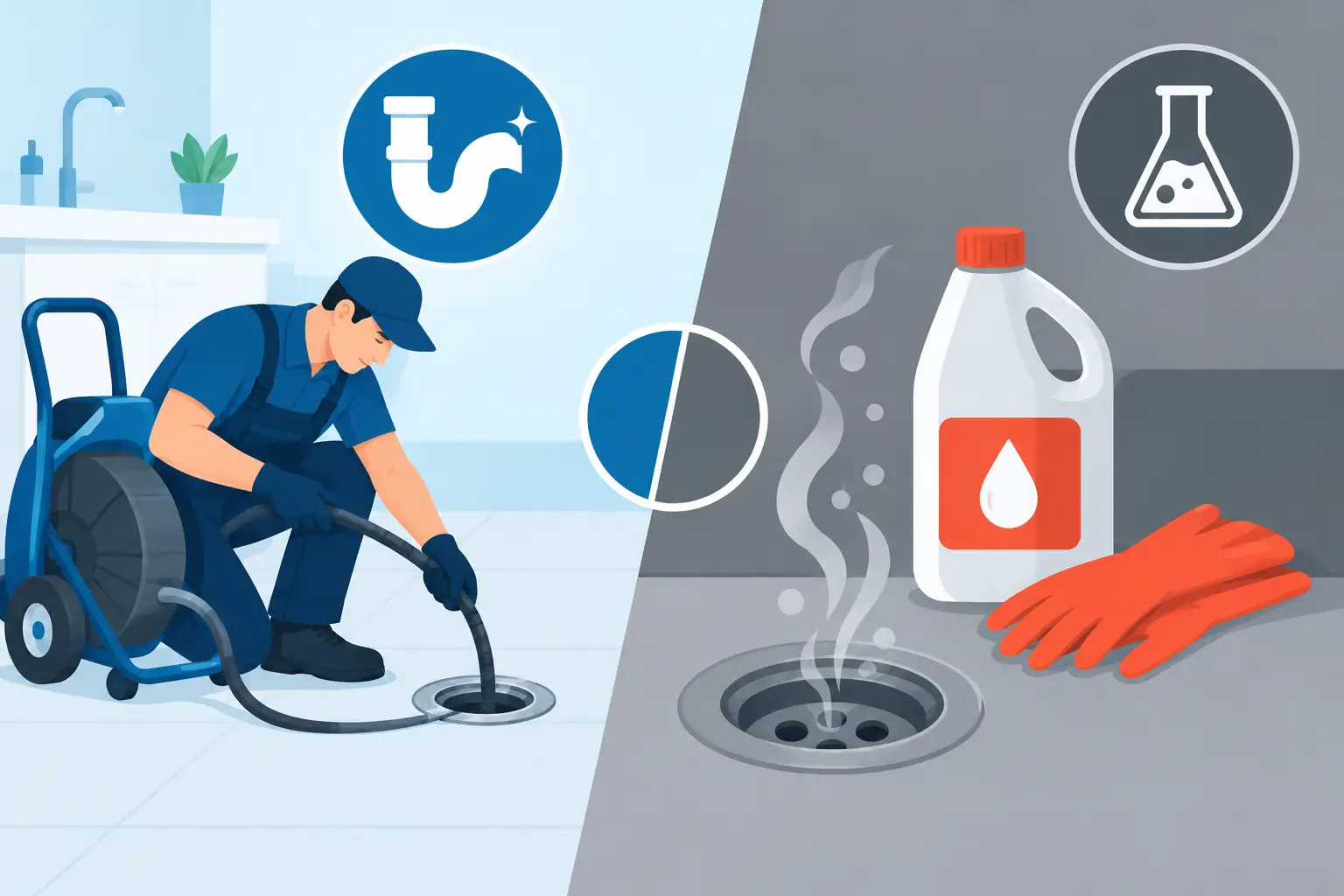
Professional Drain Cleaning Versus Chemicals
A bottle of drain cleaner can feel like the quickest answer when water is standing in the kitchen sink or the shower will not drain. But professional drain cleaning versus chemicals is not simply a question of convenience. It is a question of what is blocking the pipe, how far into the system the problem goes, and whether a short-term fix could create a bigger repair later.
For Lake County homeowners, recurring clogs can come from ordinary soap and grease buildup, but they can also point to roots in a main line, a damaged pipe, or a blocked exterior drain after heavy rain. No guessing. No unnecessary work. Knowing the difference helps you make a safer choice for your home and budget.
Professional Drain Cleaning Versus Chemicals: The Main Difference
Chemical drain cleaners attempt to dissolve or break apart a blockage using highly reactive ingredients. They may work on a small, soft clog close to the drain opening, such as hair mixed with soap residue in a bathroom sink. They do not identify what caused the clog, where it is located, or whether the pipe itself has a problem.
Professional drain cleaning begins with the condition of the drain, not an assumption. A technician can assess the symptoms, use the right equipment to clear buildup or a blockage, and recommend a camera inspection when the cause is unclear or the issue keeps returning. This approach is designed to restore flow while finding the reason water stopped moving in the first place.
That distinction matters when a drain seems to clear, then slows again a week later. The bottle may have opened a small channel through the clog without removing the buildup along the pipe walls. A professional cleaning is meant to remove the obstruction more thoroughly.
When a Chemical Cleaner May Be Reasonable
There are limited situations where a chemical product may be a reasonable first try. If one bathroom sink has started draining slowly, the issue is new, and there are no other warning signs, a homeowner may choose to use a product according to its directions. Never mix cleaners, and do not combine them with bleach, vinegar, ammonia, or another household product. Dangerous fumes and heat can result.
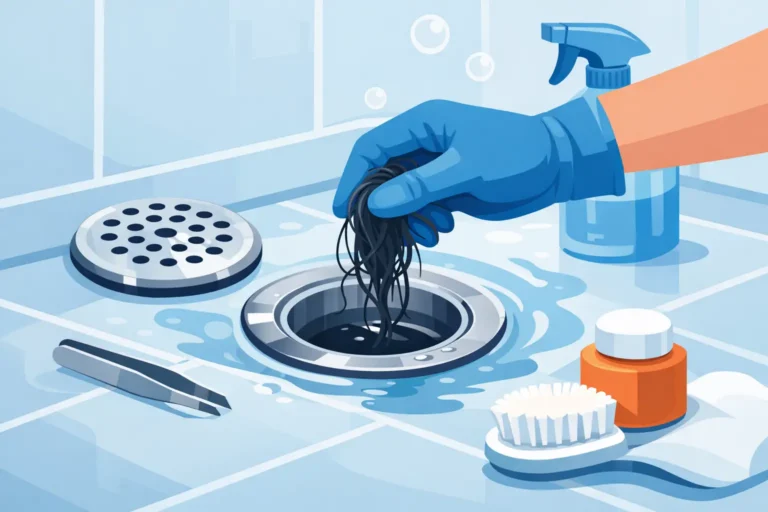
A plunger, drain snake designed for light use, or careful removal of visible hair from a stopper is often a better first step for a simple fixture clog. These options do not introduce harsh chemicals into the plumbing system.
Even then, pay attention to the result. If the drain remains slow, backs up again, gurgles, or produces a foul odor, stop adding products. Repeated treatments do not usually solve the underlying problem, and they can make the next step more difficult.
The Risks of Repeated Chemical Use
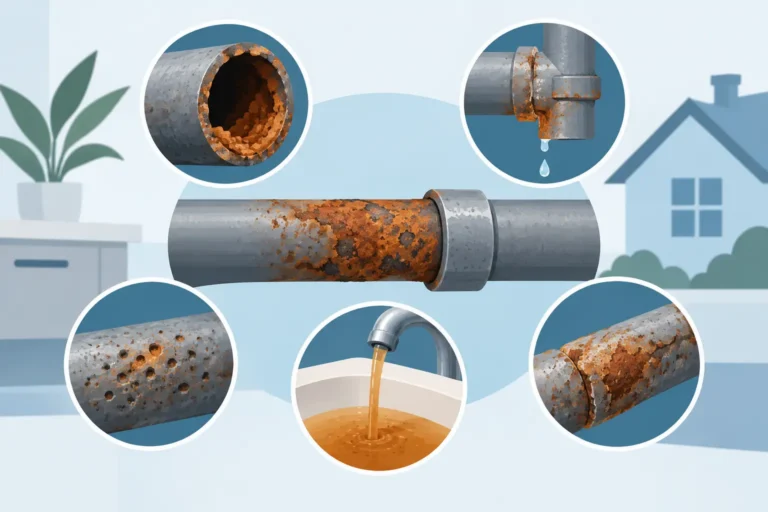
Most chemical cleaners are marketed as easy solutions, but their convenience comes with trade-offs. Strong products create heat or use caustic ingredients to attack organic material. When they sit in a drain because the blockage is too dense or too deep, that same reaction can be hard on older pipes, pipe joints, and certain plumbing materials.
Chemicals also present a safety concern. Splashback can injure skin and eyes, and fumes can be unpleasant or harmful in a small bathroom or kitchen. A partially clogged drain may hold the product in place, leaving a hazardous liquid in the line when someone later tries to plunge it or remove a trap.
This is especially important to tell a drain technician. If chemicals have been used, say so before work begins. It allows the technician to take the proper precautions and protect everyone in the home.
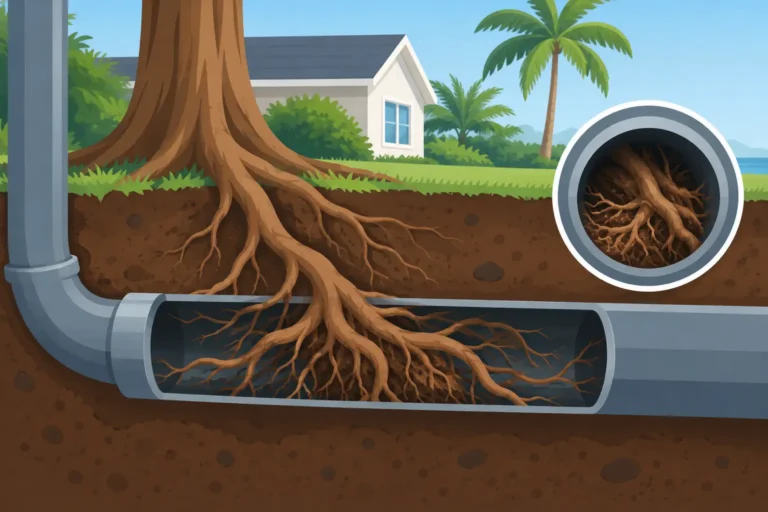
Chemical cleaners are also ineffective against many common causes of serious drainage trouble. They will not cut through tree roots in a sewer line, repair a cracked pipe, remove a heavy layer of hardened scale, or clear leaves and mud from a storm drain. Pouring more product into those situations can delay the work that actually needs to be done.
Signs You Need More Than a Bottle
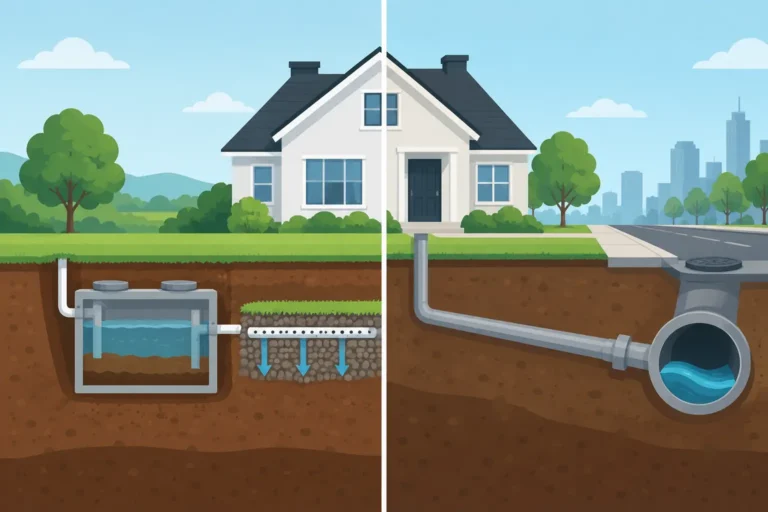
One slow sink may be a local clog. Multiple slow fixtures are different. When a toilet bubbles while the shower runs, water backs up into a tub, or several drains stop working at once, the issue may be in a shared branch line or the main sewer line. That calls for a professional assessment.
Recurring clogs are another clear sign. If you are buying drain cleaner every month, the drain is telling you the blockage was never fully removed. Grease, soap film, hair, food particles, wipes, and mineral buildup can collect over time until water has very little room to pass.
Call for service when you notice any of these conditions:
- Water backing up from one fixture when another fixture is used
- Gurgling sounds from toilets, sinks, or tubs
- Sewage odors indoors or near an exterior cleanout
- Drains that clog repeatedly after temporary clearing
- Standing water around a yard drain, driveway drain, or storm drain
- A sudden backup after heavy rain
Exterior drainage deserves the same attention as indoor plumbing. In Eustis, Mount Dora, Tavares, Leesburg, and Lady Lake, heavy rain can quickly expose a blocked storm drain. Leaves, mulch, sediment, and yard debris can keep water from draining away from driveways and low areas. Chemical drain cleaner is not a practical or responsible answer for an exterior drain filled with debris.
What Professional Cleaning Can Do Differently
Professional equipment is selected based on the blockage and the pipe. Mechanical drain cleaning can break apart and remove localized clogs. High-pressure jetting can clean grease, sludge, and buildup from pipe walls more thoroughly than a product that only contacts part of the obstruction.
For a recurring or severe issue, a video camera inspection adds another level of clarity. The camera can show whether the line has roots, buildup, a damaged section, a sagging area that collects waste, or another obstruction. Instead of recommending work based on a guess, the technician can explain what the camera found in plain language.
That transparency helps homeowners decide what makes sense. Sometimes the answer is a straightforward cleaning. Other times, cleaning reveals a pipe condition that needs further attention. The goal is not to sell work you do not need. It is to give you a clear picture of the problem and a quote for the appropriate solution.
Choosing the Right Response for Your Drain
Start with the symptoms, not the product under the sink. A new, minor slow drain with no backup elsewhere may respond to basic cleaning at the fixture. A stubborn drain, a repeat clog, or a backup affecting more than one area deserves professional attention before chemicals make the situation messier.
Avoid treating your drains as a disposal system. Keep grease out of kitchen sinks, use strainers where hair is a problem, and do not flush wipes, paper towels, or hygiene products. These habits will not prevent every clog, but they reduce the buildup that causes many service calls.
When the problem is already there, fast action can prevent water damage and reduce disruption in the home. USA Drain Cleaning provides straightforward residential drain service with clear findings, professional equipment, and clean workmanship. You should know what is causing the problem, what work is recommended, and what to expect before the job moves forward.
A drain that keeps asking for chemicals is usually asking for a real diagnosis. Get the cause identified, clear the blockage properly, and give your plumbing a better chance to stay flowing.