Residential Sewer Scope Guide for Homeowners
A main sewer line can be failing long before wastewater comes up in a tub or toilet. Slow drains, recurring clogs, gurgling fixtures, and sewage odors often start as small warnings. This residential sewer scope guide explains what a camera inspection can show, when it makes sense to schedule one, and how to use the findings to make a clear repair decision.
For Lake County homeowners, a sewer scope is not just a tool for a major emergency. It can also remove the guesswork when a drain keeps acting up, when buying an older home, or when you want to know whether roots, buildup, or a damaged pipe is behind the problem.
What Is a Residential Sewer Scope?
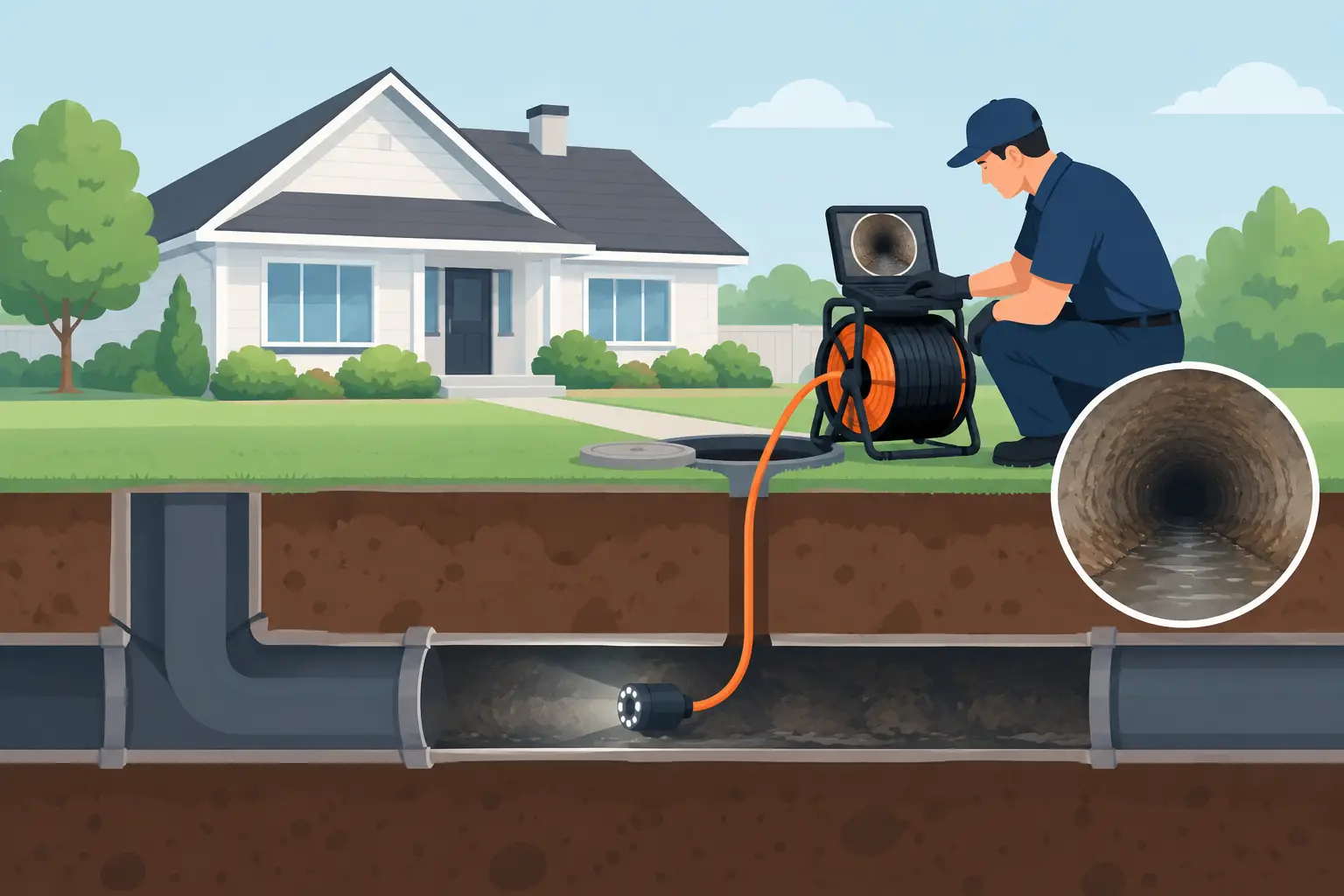
A sewer scope is a video camera inspection of the pipe that carries wastewater from your home to the sewer connection or septic system. A technician feeds a small waterproof camera through an accessible drain opening, often a cleanout near the home. The camera sends a live view of the inside of the line to a monitor.
The purpose is simple: identify the actual condition of the pipe instead of assuming the problem is a basic clog. The inspection can show where a blockage is located, what it is made of, and whether the pipe itself is cracked, shifted, sagging, or invaded by roots.
A camera scope does not automatically mean your line needs replacement. Many problems are caused by grease, soap residue, paper buildup, or roots that can be removed with professional drain cleaning or high-pressure jetting. The value of the inspection is knowing which situation you have before authorizing work.
When a Sewer Camera Inspection Makes Sense
One slow bathroom sink may be a local fixture drain issue. But when several drains are slow at the same time, or a toilet bubbles when the washing machine drains, the main line deserves attention. Those symptoms suggest water is meeting resistance farther down the system.
A sewer scope is especially useful when you notice recurring trouble after conventional drain clearing. If the same line clogs again within weeks or months, there may be a cause that a basic cable cannot resolve permanently. Roots can grow back, heavy buildup can remain on pipe walls, and a broken section can catch debris over and over.
Consider a camera inspection if you are dealing with any of these situations:
- Multiple drains backing up or draining slowly
- Gurgling sounds from toilets, tubs, or sinks
- Sewage odors indoors or around the yard
- A clog that returns after being cleared
- Mature trees near the path of the sewer line
- A home with older plumbing materials or an unknown line history
- Wet, unusually green, or sunken spots in the yard
- A home purchase where you want a clearer picture of the underground plumbing
For a home purchase, a sewer scope can be a practical due-diligence step. A standard home inspection may identify visible plumbing concerns, but it usually cannot see inside the buried lateral line. An inspection gives the buyer useful information before a hidden problem becomes their responsibility.
What the Camera Can Reveal
Roots in the Sewer Line
Tree roots are drawn to moisture. Even a small opening at a pipe joint can give roots a path inside, where they expand and catch toilet paper and other debris. In Central Florida, established trees and mature landscaping make root intrusion a common concern for some properties.
A camera can show whether roots are light and limited or dense enough to block the pipe. Cleaning may restore flow, but the long-term plan depends on why the roots entered. If the pipe has separated joints or cracks, clearing roots alone may not be the final answer.
Buildup, Grease, and Foreign Material
Not every main-line clog involves a broken pipe. Grease, wipes, excessive paper products, and mineral or sludge buildup can narrow the pipe over time. The camera helps distinguish a line that needs thorough cleaning from one with structural damage.
This matters because temporary relief is not the same as a clean line. A small opening through a heavy blockage may get water moving for the moment, yet leave enough material behind for another backup. Professional-grade cleaning equipment can remove more of the underlying buildup when the pipe condition allows it.
Cracks, Offset Joints, and Collapsed Sections
The camera may reveal cracks, separated connections, a section that has shifted out of alignment, or a pipe that has partially collapsed. These are structural issues. Drain cleaning can clear debris around the damaged area, but it cannot restore a pipe that no longer holds its proper shape.
A technician should explain what was found, where it appears to be, and how it affects flow. Ask whether the condition requires immediate repair, monitoring, further locating, or cleaning first. The answer depends on the severity of the defect and whether wastewater is backing up into the home.
Bellies and Low Spots
A belly is a low section of pipe where water and debris collect instead of moving freely. It can happen when soil settles or a line loses proper slope. A camera can often show standing water or repeated accumulation in the same location.
Not every low spot calls for urgent excavation. If the line still drains well and does not repeatedly clog, monitoring may be reasonable. If it holds waste and causes frequent backups, repair may be the more durable option.
What a Good Sewer Scope Appointment Looks Like
A useful inspection is more than running a camera into a drain and naming a problem. The technician should first listen to what has been happening in your home: which fixtures are affected, how often the issue occurs, and whether there has been a previous backup.
Next comes access. Many homes have an exterior cleanout, though some inspections may require another suitable entry point. The technician should protect the work area, explain the process, and avoid creating a mess inside or outside the home.
During the scope, you should be able to see the findings or have them explained in plain language. A clear diagnosis includes the location of the issue, the likely cause, and the options that fit the condition of the line. No guessing. No unnecessary work.
If cleaning is recommended, ask what method is appropriate and why. A cable machine may be useful for certain obstructions, while high-pressure jetting can be better for removing heavy buildup from the pipe walls. Jetting is not the right choice for every severely damaged or fragile line, which is another reason the camera view matters.
Questions to Ask After the Inspection
You do not need plumbing experience to make a good decision. Ask the technician to show you the concern and describe it without technical shorthand. Then focus on the practical questions: Is this blockage removable? Is the pipe damaged? Will cleaning likely provide lasting relief? What signs would mean the problem has progressed?
Also ask whether the recommendation addresses the cause or only the immediate symptom. For example, clearing roots may be the right immediate step, but a cracked joint that keeps inviting roots may need a future repair plan. Honest recommendations should separate what is urgent from what can be scheduled or monitored.
Be cautious with anyone who recommends major replacement without showing evidence from the line. At the same time, do not ignore a documented collapse or severe break just because water happens to be draining that day. Underground pipe problems can change quickly once debris starts catching in the damaged area.
Preparing Your Home for a Sewer Scope
Most homeowners do not need to do much. Clear access to the exterior cleanout if you know where it is, move vehicles away from the area, and let the technician know about pets, gates, or any recent plumbing work. If the line is actively backed up, limit water use until the appointment so the problem does not worsen.
It also helps to write down what you have noticed. Mention whether the issue started after heavy use, whether it affects every fixture, and whether the home is connected to municipal sewer or a septic system. Those details help narrow the diagnosis before the camera enters the line.
USA Drain Cleaning uses camera inspections to show homeowners what is happening inside the pipe, then explains the next step clearly. The goal is not to sell work you do not need. It is to identify the source of the trouble and handle it correctly.
A Clear View Leads to Better Decisions
A sewer scope cannot prevent every plumbing problem, but it replaces assumptions with evidence. When drains keep clogging, a main line backs up, or an older home raises questions, seeing inside the pipe can protect both your property and your budget.
If something looks wrong, address it before a small restriction turns into wastewater on the floor. A straightforward inspection and an honest explanation can give you the information needed to choose the right repair, cleaning, or maintenance plan with confidence.