Drain Blockage Causes Every Homeowner Should Know
A kitchen sink that drains slowly after dinner is frustrating. A toilet that gurgles when the washing machine empties is a different kind of warning. Drain blockage causes are not always sitting near the fixture you can see, and knowing the difference can help Lake County homeowners avoid a messy, expensive backup.
Some clogs form from everyday use and respond well to professional cleaning. Others point to a damaged, root-filled, or heavily built-up sewer line that needs a closer look. No guessing. No unnecessary work. The goal is to find where the restriction is, what created it, and what will keep it from coming back.
Common Drain Blockage Causes Inside the Home
Most household drain problems begin gradually. Water takes a little longer to leave the sink, shower, or tub. You may notice a sour odor from a drain or hear bubbling after running water. Those early symptoms are often caused by material collecting along the inside of a pipe.
Grease and food residue in kitchen lines
Cooking grease may go down the drain as a liquid, but it cools quickly inside the plumbing. It sticks to pipe walls and catches soap residue, food particles, and debris passing through later. Over time, the opening narrows until the sink drains slowly or stops altogether.
Even homes with garbage disposals can develop this problem. A disposal helps break up small scraps, but it does not make grease, coffee grounds, fibrous vegetables, eggshells, or large food waste safe for the drain. The best prevention is simple: let grease cool in a container and throw it away, and use the sink strainer to keep food out of the line.
Hair, soap scum, and personal-care products
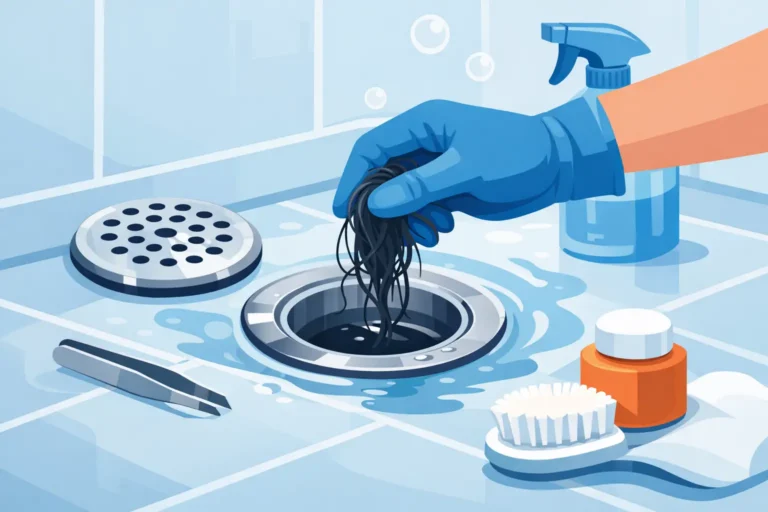
Bathroom sink, tub, and shower clogs commonly involve hair. Hair tangles around the drain stopper or catches farther down the pipe, where it combines with soap scum and body oils. Thick lotions, shaving products, and some beauty products can add to the buildup.
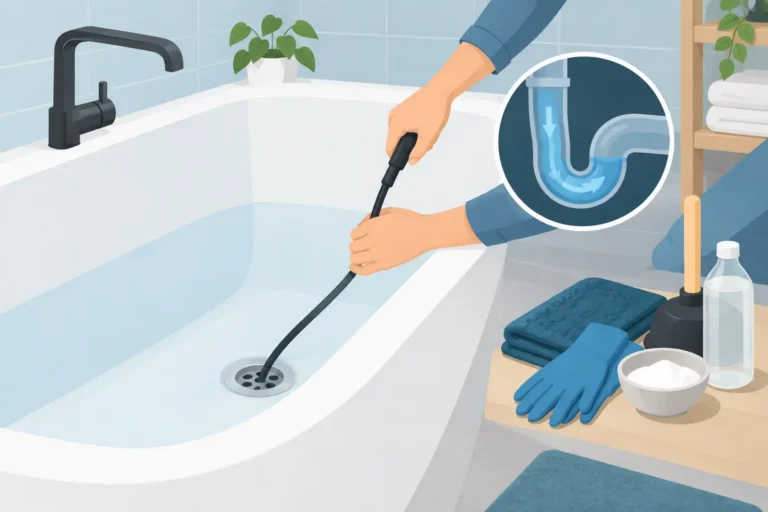
A surface hair catcher can reduce what enters the drain, but it will not remove accumulation already in the line. If a shower keeps backing up shortly after you pull hair from the drain cover, the blockage may be deeper than it appears.
Toilet paper, wipes, and foreign objects
Toilets are built to handle human waste and toilet paper. Products labeled “flushable” can still cause trouble, especially when they collect at bends in the pipe or encounter an existing buildup. Paper towels, facial tissues, cotton products, dental floss, and hygiene items do not break down the same way toilet paper does.
One toilet clog does not always mean the main sewer line is blocked. But when flushing one toilet makes another fixture gurgle, or water rises in a tub or shower, the issue may be farther down the system. That is a situation where it is wise to stop running water and get the line checked before sewage backs up indoors.
Drain Blockage Causes Beyond the Fixture
When several drains are slow, the cause is usually not a simple clog at one sink or shower. Main-line problems need a broader diagnosis because the pipe may be restricted, damaged, or blocked outside the home.
Pipe buildup and aging plumbing
Years of grease, soap, mineral scale, and waste can coat the inside of drain lines. In older homes, corrosion or rough pipe interiors can make buildup cling more easily. The drain may work most of the time, then clog repeatedly because the remaining opening is too narrow to handle normal water flow.
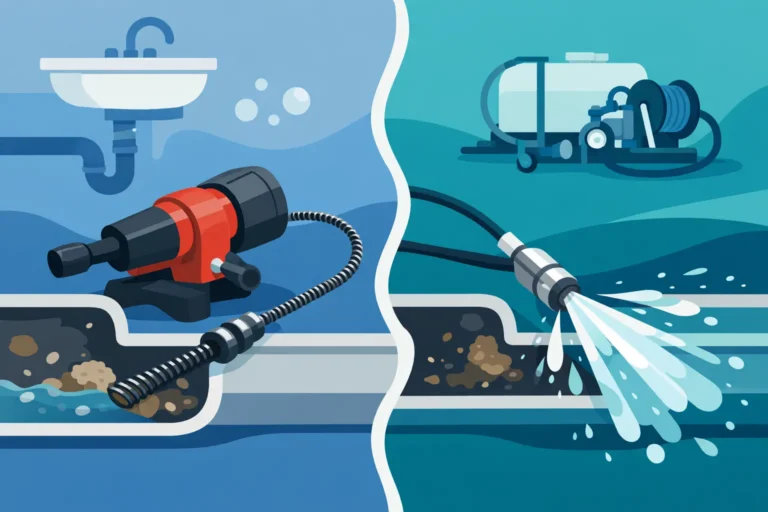
A quick surface clearing may restore drainage for a while, but it does not always remove the material lining the pipe. Professional-grade high-pressure jetting can clear stubborn buildup from the line walls when it is appropriate for the pipe condition. The right method depends on the age and condition of the plumbing, which is why diagnosis comes first.
Tree root intrusion
Roots seek moisture, and even a small opening at a pipe joint can attract them. Once roots enter a sewer line, they can spread through the pipe and catch toilet paper and other debris. The result may be recurring clogs that seem to disappear after cleaning, only to return a few months later.
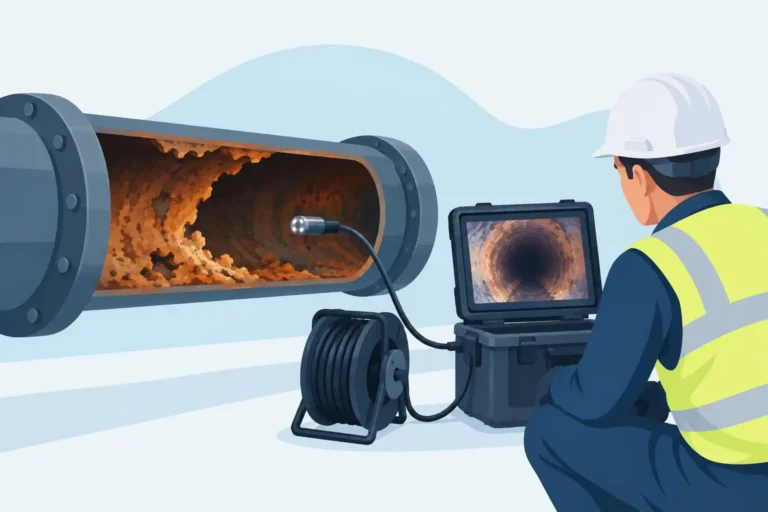
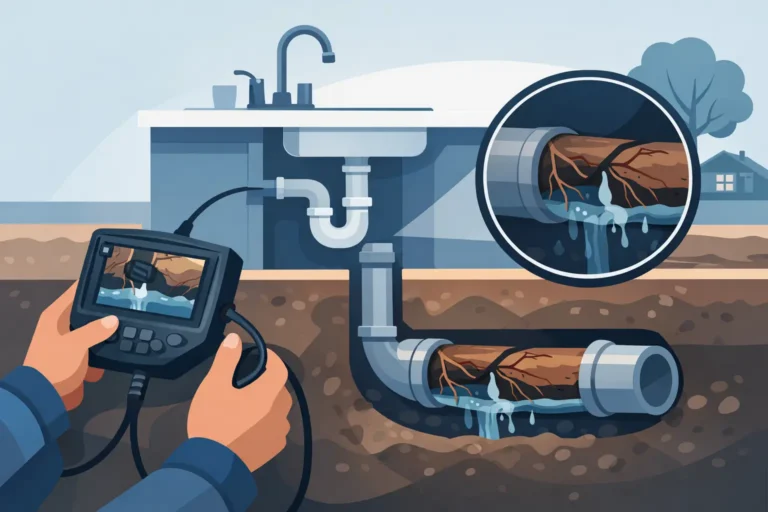
Root intrusion is especially important to consider when a home has mature trees and repeated main-line backups. Cleaning can remove roots and restore flow, but a camera inspection shows whether roots are the only issue or whether the pipe also has cracked sections, separated joints, or damage that needs attention.
Broken, shifted, or sagging pipes
Not every recurring clog is caused by something put down a drain. Underground pipes can shift as soil moves, settle over time, crack, or develop a low area that holds water and waste. A sagging section, sometimes called a belly, can create the same symptoms as a clog because solids repeatedly collect in the low spot.
This is where a drain camera is especially useful. Instead of treating the same symptom again and again, a technician can inspect the line and show you the actual condition. You can see whether the problem is ordinary buildup, roots, or a structural issue that cleaning alone cannot permanently correct.
What Your Symptoms May Be Telling You
The location and timing of a drainage problem provide useful clues. A single slow bathroom sink often points to a local blockage near that fixture. A kitchen sink that backs up only when the dishwasher drains may indicate a restriction in the shared kitchen line.
Multiple affected fixtures are more concerning. If toilets bubble, drains gurgle, or water appears in a tub when a toilet is flushed, the main drain line may be restricted. Do not keep testing it by running more water. That can turn a manageable blockage into an indoor backup.
Foul odors deserve attention too. A temporary odor can come from a dry drain trap, particularly in a rarely used bathroom. Persistent sewer-like odors, however, can signal buildup, a blocked vent, or a drainage issue that needs professional evaluation.
Exterior and Storm Drain Blockages in Florida
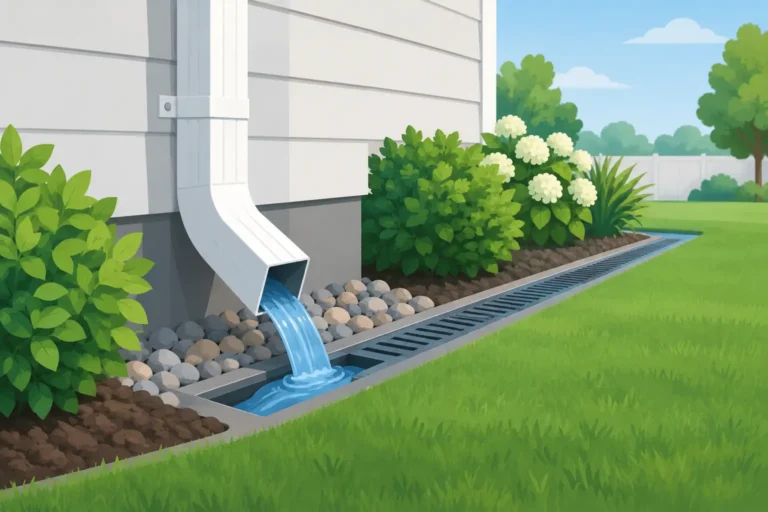
For homeowners in Eustis, Mount Dora, Tavares, Leesburg, and Lady Lake, exterior drainage matters just as much as indoor plumbing. Heavy Florida rain can move leaves, mulch, soil, and yard debris into storm drains and catch basins. If the system cannot carry water away, it may pool near driveways, patios, walkways, or the foundation.
Standing water is not always caused by a blocked drain. The yard grade, the amount of rainfall, and the condition of the drainage system all matter. But if a drain grate is buried under debris, water consistently sits in the same area, or a catch basin fills without draining after rain, an obstruction is a likely possibility.
Avoid pushing leaves and mulch into a storm drain. Clear loose debris around the grate when it is safe to do so, but do not reach into a drain or try to force a tool through an unknown blockage. A professional cleaning can remove packed material and identify whether the issue is debris, a collapsed section, or an improperly draining line.
Why Store-Bought Drain Cleaners Often Fall Short
Chemical drain cleaners are tempting because they are quick to buy and easy to pour. Their results can be limited, though, particularly with heavy grease, roots, mineral buildup, or a blockage deep in the main line. They can also create heat and chemical exposure in the pipe, which is not a good fit for every plumbing system.
A plunger can be useful for a minor toilet or sink clog, and a hand-cleaned stopper may solve a hair blockage near the surface. But recurring clogs are a sign to stop repeating the same temporary fix. Repeated chemical use can make later service more hazardous and may delay finding the real cause.
When a Camera Inspection Makes Sense
A camera inspection is not necessary for every slow drain. It becomes valuable when clogs keep returning, multiple fixtures are affected, roots are suspected, or there is concern about an older underground line. The camera provides a clear view inside the pipe so the recommended work is based on what is actually there.
At USA Drain Cleaning, that means explaining the findings in plain language and recommending the work that fits the condition of the line. A clear line after cleaning is useful. Knowing why it blocked, and whether it is likely to block again, is better.
If you are seeing repeated slow drains, gurgling, sewage odors, or water pooling near an exterior drain, treat those signs as an early chance to protect your home. A prompt inspection and proper cleaning can often keep a small drainage problem from becoming the kind that disrupts the whole house.