Drain Cleanout Access Guide for Lake County Homes
A drain cleanout is one of those parts of a home most people never think about until water starts coming up where it should not. This drain cleanout access guide explains where to look, why clear access matters, and what to do when a slow drain becomes a main-line backup.
For homeowners in Eustis, Mount Dora, Tavares, Leesburg, and Lady Lake, a reachable cleanout can save time during an urgent plumbing call. It gives a drain professional a direct entry point to inspect and clear the main sewer line without taking apart an indoor fixture. The key is knowing what you are looking at and keeping the area available before there is a problem.
What a Drain Cleanout Does
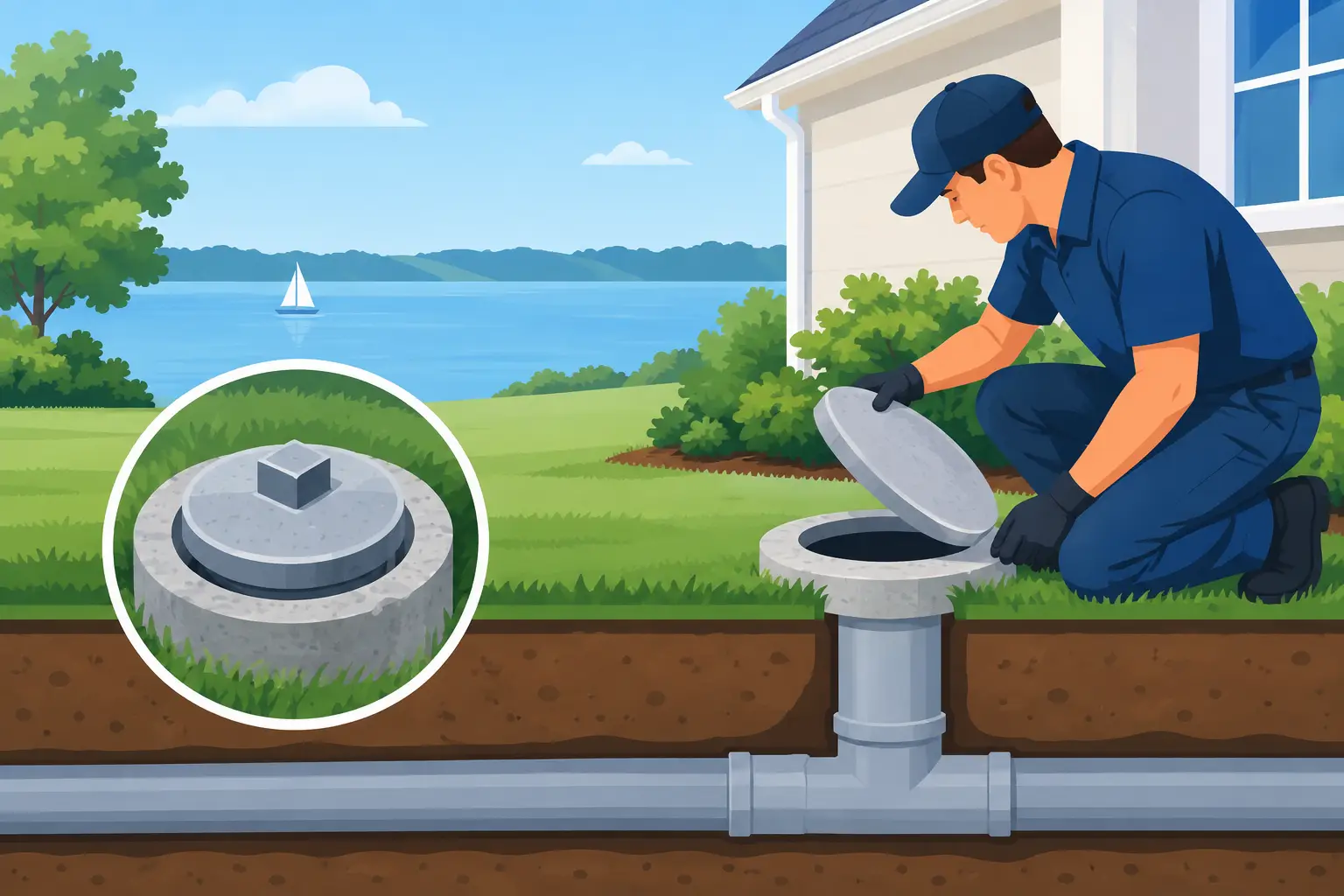
A cleanout is a capped pipe that provides access to your home’s drain or sewer line. It is not a drain you use every day. Instead, it is an access point for clearing a blockage, running a camera inspection, or flushing buildup from the line with professional equipment.
Most residential cleanouts have a round plastic or metal cap, often with a square-shaped fitting in the center. The cap may be white, black, or green depending on the pipe material and cover. It may sit above ground, be set into a small ground-level box, or be just below mulch, grass, or landscaping.
When the main line is clogged, a cleanout allows the technician to work on the problem at its source. That matters because clearing a toilet, sink, or tub may provide short-term relief while leaving buildup, roots, damaged pipe, or a deeper obstruction untouched.
Where to Find Your Home’s Cleanout
Many homes have an exterior cleanout near the foundation, often on the side or back of the house. Look near bathrooms, kitchens, utility areas, or the route where the home’s drain line likely travels toward the street or septic system. In some cases, there may be two cleanouts positioned together, serving different directions of the line.
A cleanout can also be located in a garage, utility room, crawlspace, or near a septic tank. Older properties do not always follow the same layout as newer homes, so location varies. If your home has been renovated, landscaping may also have changed since the cleanout was installed.
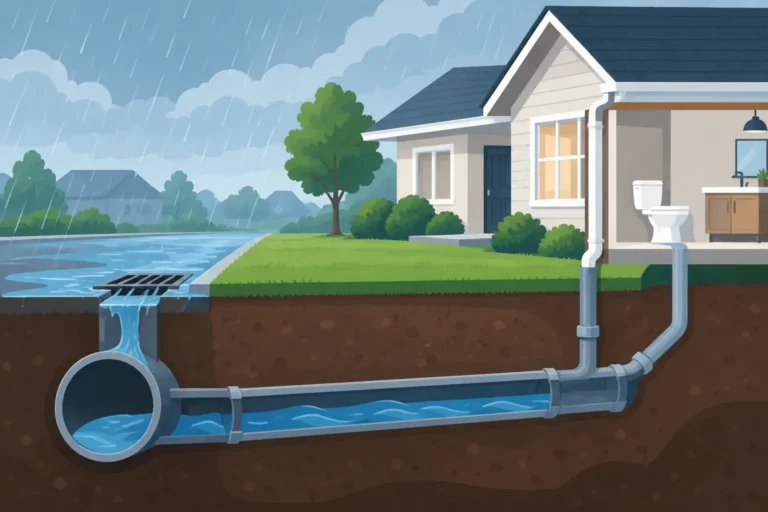
Do not confuse a drain cleanout with an irrigation valve box, a hose bib, a water shutoff, or a storm drain inlet. A sanitary sewer cleanout typically connects to the plumbing that serves toilets, sinks, showers, and laundry drains. A storm drain handles rainwater from yards, driveways, gutters, or outdoor drainage areas. Both need attention when blocked, but they are separate systems.
If you cannot find your cleanout, do not start digging around pipes or cutting into landscaping. A professional camera inspection can help identify the route and condition of the drain line. No guessing. No unnecessary work.
Common Signs the Cleanout May Be Needed
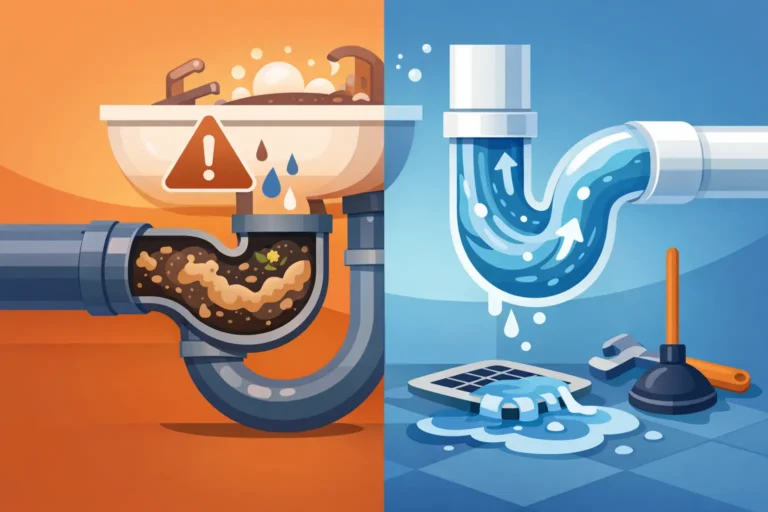
A single slow sink can be a local clog. But several symptoms at once often point to a larger issue farther down the line. Watch for toilets that gurgle when another fixture drains, water backing up into a tub or shower, repeated clogs in different rooms, or sewage odors near drains and outside areas.
Water appearing around an exterior cleanout is another warning sign. It may mean the line is blocked downstream and wastewater is looking for the lowest available exit. Keep people and pets away from the area, avoid running water inside, and arrange service promptly.
Keep Cleanout Access Clear
Once you locate the cleanout, make it easy to reach. This is a small home-maintenance step that can make a major difference when a backup is already happening.
Avoid covering the cap with concrete, pavers, permanent decking, heavy planters, or dense shrubs. Mulch and decorative rock are fine if the cleanout can still be found and uncovered quickly. If it is in a lawn, consider marking the location on a simple property sketch or taking a photo that shows nearby landmarks.
The cap itself should remain intact and secured. A missing or cracked cap can allow dirt, rainwater, insects, and debris into the line or box. It can also create a tripping hazard if the cleanout opening is exposed. If the cap is damaged, a drain professional can identify the correct replacement rather than forcing a cap that does not fit.
Do not park vehicles over a cleanout or stack storage items around one in the garage. Pressure, accidental impact, and limited access can turn a routine drain call into a more complicated repair.
Should You Open a Cleanout Yourself?
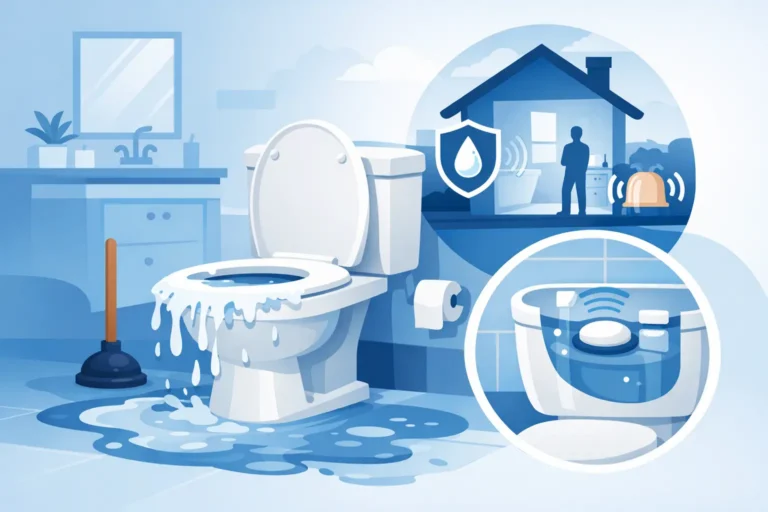
It depends on the situation. Opening a cleanout can release standing wastewater if there is a main-line blockage. That creates a mess and can expose you to harmful bacteria. If you already see water near the cap, smell sewage, or have backups inside the house, it is better to leave the cleanout closed until help arrives.
For a homeowner simply trying to identify the location, visual inspection is usually enough. You do not need to remove the cap to confirm that it is a cleanout. If you choose to handle a visible, dry cap, use care. Do not force it with excessive leverage, and do not stand directly over it while loosening it.
Chemical drain cleaners are also a poor answer for a suspected main-line issue. They rarely remove roots, heavy grease, scale, or solid obstructions deep in a line. They can sit in the pipe, damage certain materials, and create a hazard for anyone who later opens the drain or works on it.
Why a Camera Inspection Can Change the Plan
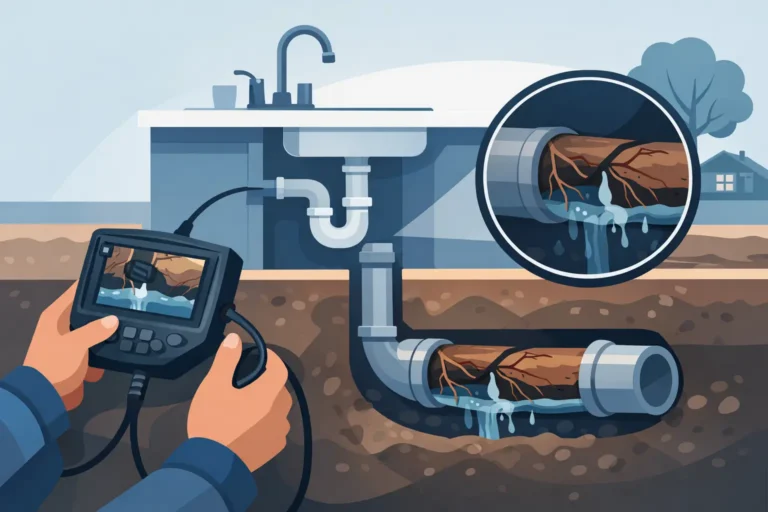
A cleanout provides access, but it does not explain the cause of the blockage. That is where a video camera inspection helps. A camera can show whether the problem is grease buildup, root intrusion, a broken section of pipe, a belly that holds water, an object in the line, or a blockage near the connection point.
The right solution depends on what the camera finds. High-pressure jetting may clear accumulated buildup from a pipe wall more thoroughly than a basic cable machine. Root intrusion may need targeted cutting and follow-up evaluation. A cracked or offset pipe may require repair rather than repeated cleaning.
This is why recurring clogs should not be treated as normal. If the same bathroom backs up every few months, or the main line needs clearing again soon after a service call, there is usually an underlying condition worth identifying. USA Drain Cleaning uses camera findings to explain what is happening in plain language, so homeowners can make a decision based on the actual condition of the line.
Exterior Drain Access Matters Too
Florida rain can expose drainage problems quickly. If water collects near a driveway, patio, yard drain, or storm inlet after a hard storm, check whether leaves, pine needles, mulch, and yard debris are blocking the grate. Clearing surface debris is a reasonable first step when it can be done safely.
Do not push debris deeper into the drain with a hose or attempt to remove a buried blockage blindly. A storm drain line may be packed with sediment, roots, or washed-in material farther below ground. When standing water persists after the surface grate is clear, professional storm drain cleaning can help restore the flow path and reduce the risk of water pooling against the home.
When to Call for Professional Help
Call for service when wastewater backs up inside, multiple fixtures drain poorly, the cleanout is overflowing, or a clog keeps returning. Those signs deserve more than a quick temporary fix. They call for a clear diagnosis, the right equipment, and a careful explanation of what was found.
Before the technician arrives, stop using water when possible and move stored items away from the cleanout area. If you know where the cleanout is, point it out. If you do not, explain where you have seen symptoms and what fixtures are affected. That information helps the inspection start in the right place.
A cleanout is a small access point with a big job. Keep it visible, protect it from damage, and treat recurring drainage trouble as a signal to find the cause, not just clear the symptom. A properly diagnosed drain problem is easier to fix, easier to understand, and far less likely to catch your household off guard.