What to Do When Septic Backups Hit Your Home
A toilet that will not flush is frustrating. A toilet that flushes and sends dirty water into the tub, shower, or floor drain is a septic backup and needs immediate attention. The longer wastewater remains inside the home, the more likely it is to damage flooring, walls, belongings, and your family’s sense of safety.
For homeowners in Eustis, Mount Dora, Tavares, Leesburg, Lady Lake, and across Lake County, the right response is not to keep plunging or hope the problem clears on its own. Stop using water, protect the affected area, and get a clear diagnosis of what caused the backup. No guessing. No unnecessary work.
What septic backups usually look like
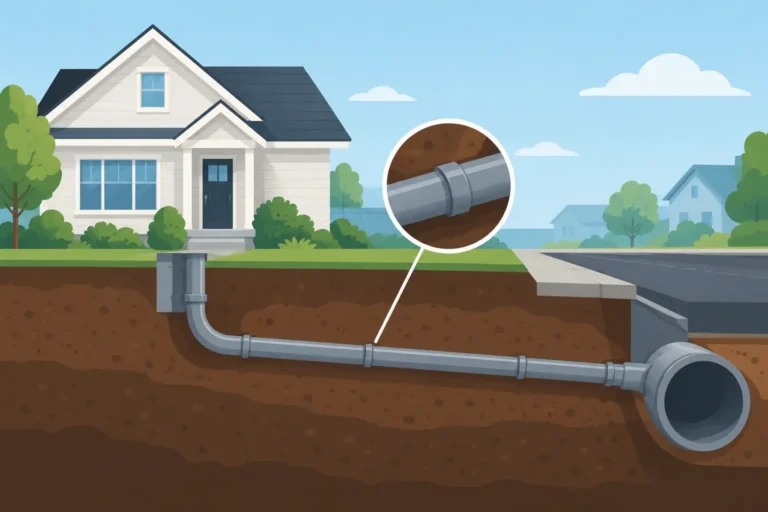
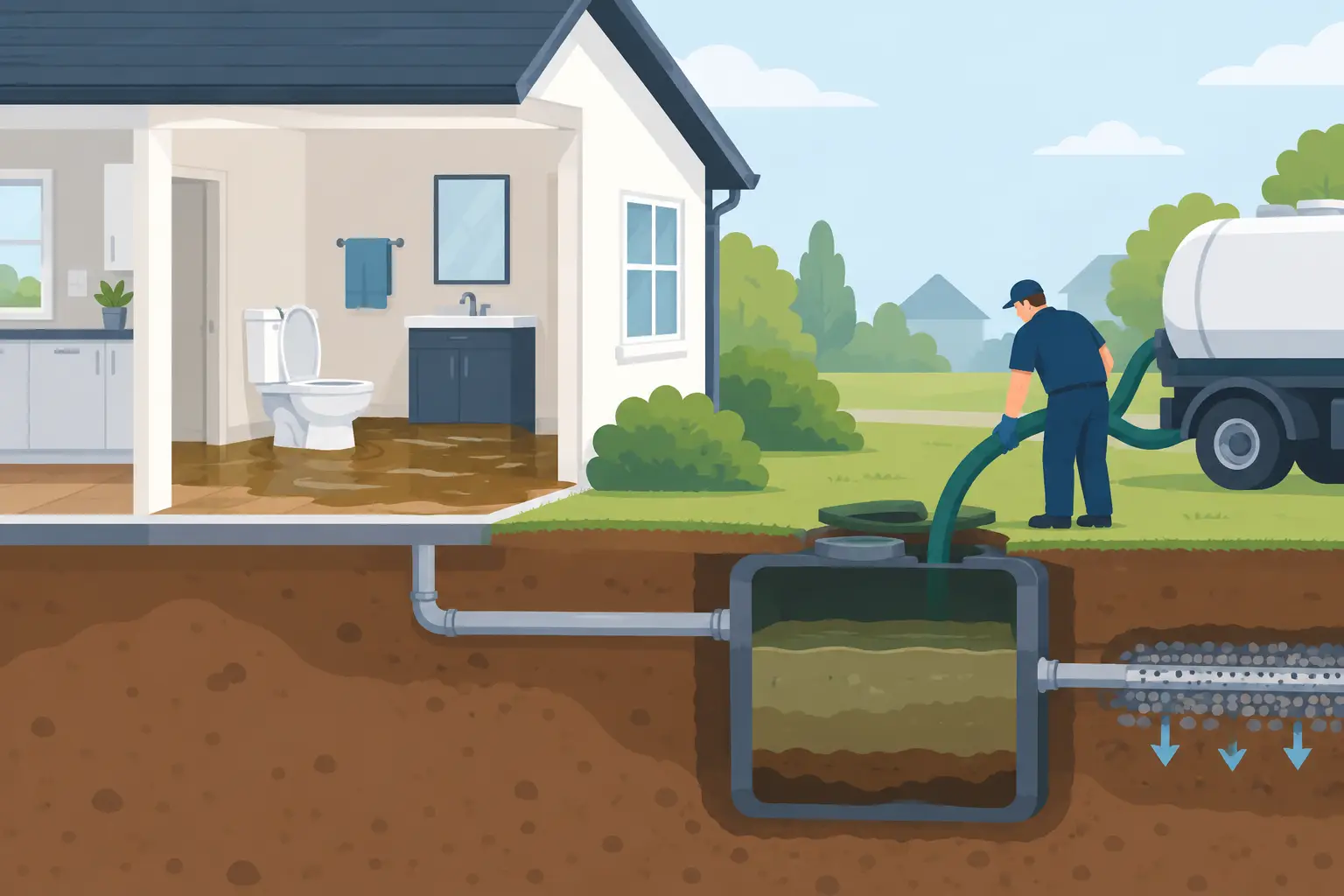
A septic backup happens when wastewater cannot move through the home’s drain system and out to the septic tank or drain field as it should. It may come back through the lowest open drain in the house, often a shower, bathtub, floor drain, or first-floor toilet.
The warning signs can begin quietly. You may notice a toilet bubbling when the washing machine drains, a shower that fills with water after flushing, foul odors near drains, or several fixtures draining slowly at the same time. These symptoms are different from a simple clog in one sink. When multiple fixtures are involved, the issue may be in the main drain line, the septic tank, or the drain field.
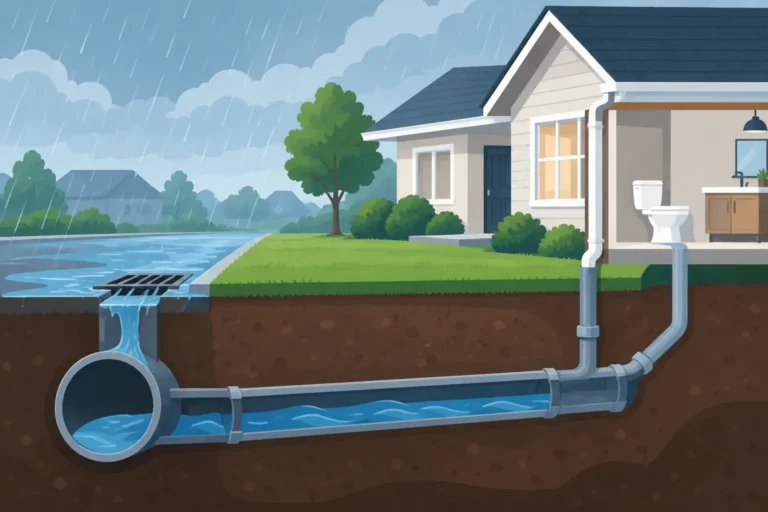
A backup can also appear suddenly after heavy use. Guests, laundry, long showers, and a full dishwasher can put more water into the system than a restricted line or overloaded septic system can handle. In Florida, periods of heavy rain can make the situation worse by saturating soil around the drain field and limiting where treated water can go.
What to do immediately
The first priority is to stop adding water to the system. Do not flush toilets, run faucets, take showers, start the dishwasher, or do another load of laundry. Even a small amount of water can force more wastewater back into the home.
Keep people and pets away from the affected area. Sewage can carry bacteria and other contaminants, so avoid direct contact. If wastewater has reached rugs, furniture, or finished flooring, move clean belongings away if you can do so without stepping into contaminated water. Do not use a household vacuum to remove it.
If the water is still rising or spreading, turn off the water supply to the toilet that is overflowing. This does not fix the drain problem, but it can prevent that fixture from adding more water. Then call for professional help. A septic service provider may be needed for a full tank, pump issue, or drain field concern, while a drain professional can identify and clear a blockage in the home’s main line or septic lateral.
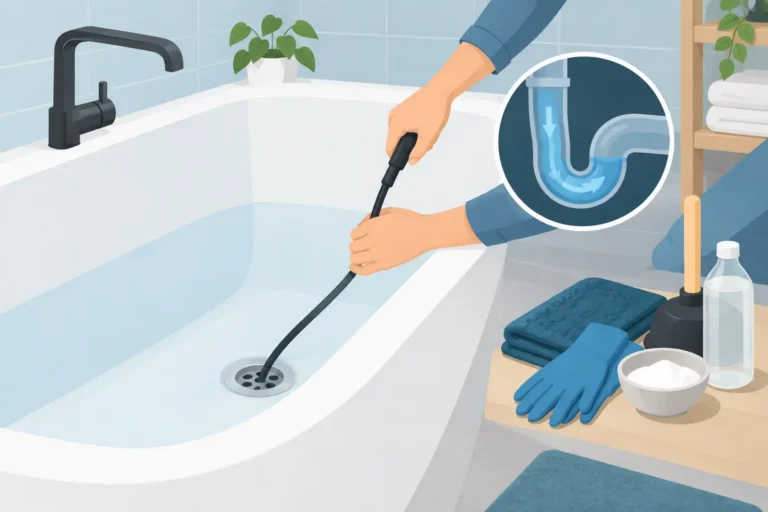
Avoid pouring chemical drain cleaners into the system. They rarely solve a main-line obstruction, can damage some piping, and may create a hazardous situation for anyone working on the line later. A plunger can be useful for a single toilet clog, but it is not the answer when sewage is appearing in a tub or several drains are acting up.
Is it a drain clog or a septic system problem?
The answer matters because the right repair depends on the source of the restriction. A blocked main drain line can mimic a septic failure, and pumping a tank will not remove roots, grease buildup, a collapsed pipe, or another blockage in the line leading to it.
A main-line issue is more likely when the problem developed quickly, several fixtures are backing up, or the home has a history of recurring clogs. Tree roots can enter older pipes through small gaps. Grease, wipes, paper products, and buildup can narrow the pipe over time until normal household water use pushes wastewater back inside.
A septic tank or drain field issue may be more likely if the tank is overdue for service, the yard near the drain field is unusually wet or smells like sewage, or drains slow down after extended rain. A failed pump in a pumped septic system can also cause wastewater to back up. These conditions need a qualified septic professional to assess the tank, pump components, and drain field.
Sometimes there is more than one issue. A tank may be due for pumping while the drain line also has buildup or root intrusion. That is why a clear diagnosis is worth more than a quick, surface-level fix.
Why a camera inspection can prevent unnecessary work
When a main drain line is suspected, a video camera inspection can show what is actually inside the pipe. Instead of assuming the line needs replacement or treating every backup as a septic tank problem, a technician can locate the blockage, check the pipe condition, and explain the findings in plain language.
The camera may reveal grease and scale buildup, root intrusion, a foreign object, separated pipe sections, or a low spot where waste repeatedly collects. It can also show whether professional-grade drain cleaning is likely to restore flow or whether the pipe has damage that requires a different type of repair.
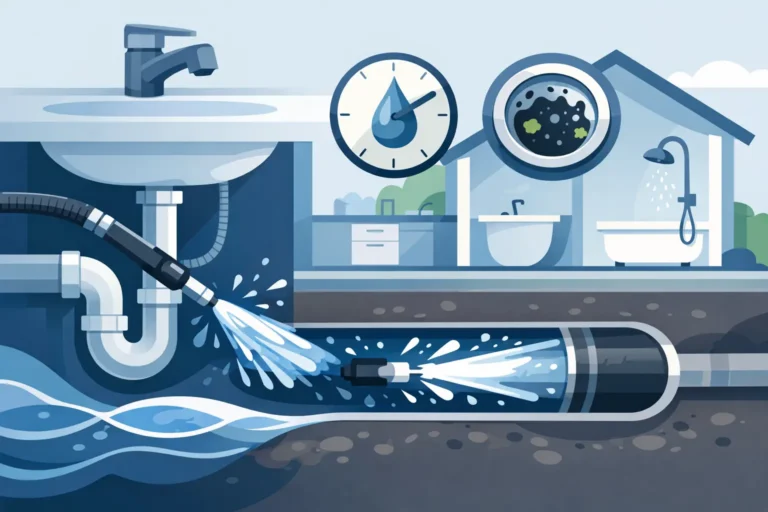
For many line blockages, high-pressure jetting removes the buildup along the pipe wall instead of simply opening a small path through it. That can be a better long-term solution than repeated snaking, particularly when slow drains and clogs have become a regular part of life. The best method depends on the pipe material, the location of the blockage, and what the camera shows.
A good service call should leave you with answers: where the problem is, what caused it, what was done, and what to watch for next. You should not feel pressured into work that does not match the condition of your system.
Cleanup should be treated seriously
Once the source of the backup is corrected, the affected area may still need professional cleaning and restoration. Wastewater that has contacted porous materials such as carpet, padding, drywall, insulation, or unfinished wood can require removal. Hard surfaces should be cleaned and disinfected using appropriate protective equipment and products.
Take photos for your records before major cleanup begins, especially if flooring, walls, or personal property have been affected. Your homeowner’s insurance coverage may vary based on the cause of the loss and the policy details, but documentation gives you a better starting point for a conversation with your insurer.
Do not close up walls or cover damaged flooring until the area is fully dry and contamination has been addressed. Odors that linger after a backup can signal trapped moisture or material that was not properly cleaned.
How to reduce the chance of another backup
Septic systems and drain lines both benefit from regular attention. Have your septic tank serviced on the schedule recommended for your household and system size. A family of five will generally fill a tank faster than a home with one or two occupants, so the correct interval depends on use, not just the calendar.
Inside the home, treat toilets as toilets, not trash cans. Flush only human waste and toilet paper. Wipes labeled flushable, paper towels, feminine hygiene products, cotton swabs, and dental floss can all contribute to drain restrictions. In the kitchen, keep grease, cooking oil, and food scraps out of the drain.
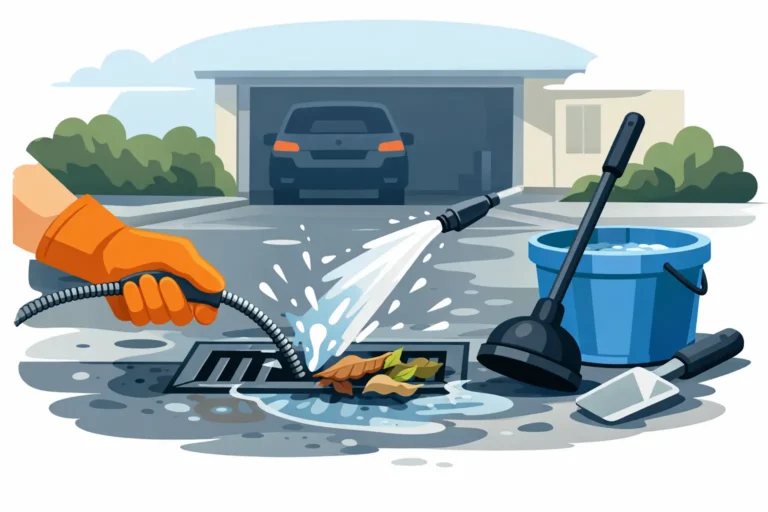
Outside, pay attention to changes in the yard. Persistent wet spots, sewage odors, unusually lush grass over the drain field, or slow drains after rain are reasons to act before wastewater reaches the house. Keep vehicles and heavy equipment off the drain field, since compacted soil and damaged pipes can interfere with the system’s performance.
If your home has recurring slow drains, gurgling fixtures, or repeated clogs, schedule an inspection before the next holiday weekend, storm, or houseful of guests turns a warning sign into an emergency. A straightforward look at the line now can save you from cleaning sewage out of your home later.
When wastewater is coming back through a drain, do not wait for it to get worse. Stop using water, keep the area clear, and have the system diagnosed so you can make the right repair with confidence.