How to Clean a Blocked Driveway Drain Safely
A driveway drain can look fine on a dry afternoon, then turn into a fast-moving problem during a Central Florida downpour. If water is pooling at the garage, spreading across the driveway, or sitting over the drain grate, it is time to clean a blocked driveway drain before that water has a chance to reach your home.
Leaves, grass clippings, mulch, sand, and roof runoff debris are common causes. But a blockage is not always sitting right under the grate. When water keeps returning after you clear the surface, the drain line itself may be packed with sediment, damaged, or invaded by roots.
Start With Safety and a Clear View of the Drain
Do not step into deep standing water or remove a drain cover while water is actively rushing toward it. The grate may be loose, the opening may be deeper than it appears, and pooled water can hide sharp debris. Wait until the heaviest rain has passed if possible.
Put on work gloves and wear shoes with good traction. Use a flashlight to look through the grate and around its edges. Before taking the cover off, clear leaves, pine needles, mud, and other debris from the area around it. This keeps loose material from falling farther into the drain while you work.
If the grate is held by screws, set them aside somewhere safe. Lift the cover carefully rather than prying aggressively against the surrounding concrete or pavers. Once it is off, you can usually see whether the blockage is close enough to remove by hand.
How to Clean a Blocked Driveway Drain
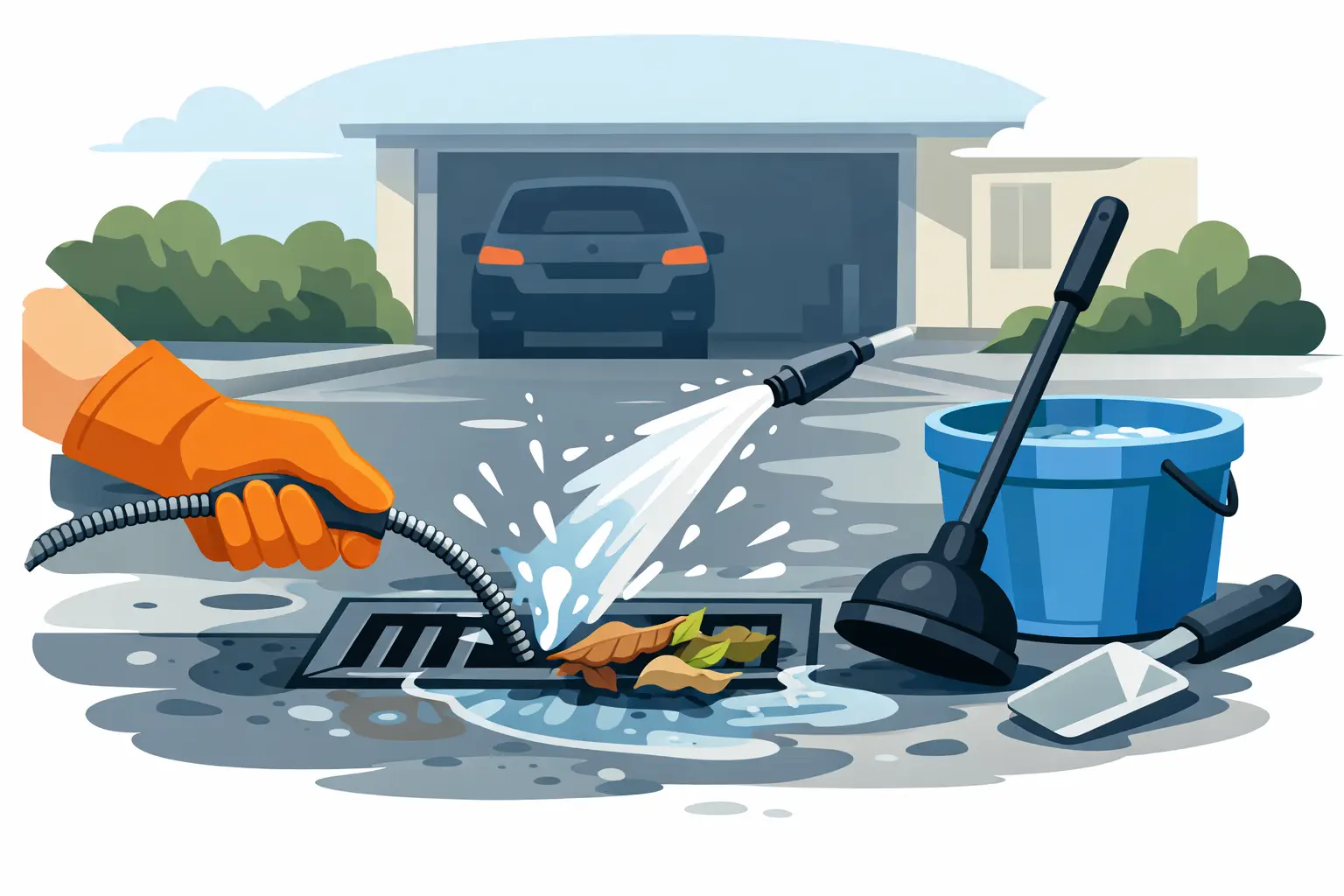
Start with the simplest fix: remove anything you can safely reach. A small hand trowel, gloved hand, or drain scoop can pull out wet leaves, packed mud, and lawn debris. Put it in a bucket or yard-waste bag. Do not sweep it into the street, where it can wash back toward another storm drain.
If the drain basin is full of muddy water, use a wet/dry vacuum to remove the water and sediment. This can make a major difference when the obstruction is a heavy layer of silt at the bottom of the catch basin. Work slowly so you do not damage any visible drain components.
After removing surface debris, test the drain with a garden hose. Run a moderate stream of water into the opening for several minutes. A clear drain should carry water away without rising into the basin. If the water drains slowly, stop and let it settle before testing again. Forcing a large volume of water into a backed-up drain can send it across your driveway or toward the garage.
A hose can sometimes clear a light blockage a short distance down the line. Feed it in gently, then move it back and forth while the water runs. Do not force the hose if it meets hard resistance. You could damage a fitting, push debris deeper, or get the hose stuck in the pipe.
Avoid using chemical drain cleaners in an exterior driveway drain. These products are not designed to solve mud, leaves, roots, or stormwater sediment. They can also create a safety issue for anyone who later works on the line.
Know the Difference Between a Surface Clog and a Line Problem
A clean grate does not guarantee a clear drain. The pattern of the water tells you a lot about what is happening below ground.
If water begins draining normally once you remove leaves and mud near the opening, routine maintenance may be all you need. Keep an eye on it during the next rainfall. If water briefly rises but then clears, there may still be sediment in the basin that should be cleaned before the next storm.
If water remains in the drain after you remove visible debris, or rises quickly when you run the hose, the blockage is likely farther down the pipe. Exterior drain lines can collect sand, washout from landscaping, roof grit, and compacted organic material. Older lines may also have cracks, separated joints, or root intrusion.
Recurring driveway flooding is another sign that the issue needs more than a quick cleanup. A drain that clogs every few months may have a low spot holding debris, a crushed section of pipe, or an outlet that is obstructed. Clearing the opening without identifying that condition only buys time.
When a Drain Snake Helps – and When It Can Make Things Worse
A hand-crank drain snake may help with a small, soft obstruction near the opening. It is less useful for outdoor drain lines filled with wet sand, thick mud, or root masses. Those materials often need to be flushed and removed, not merely poked through.
Be cautious with rented power snakes. Driveway drain pipes may have turns, fittings, or pipe materials that are easy to damage when a cable is forced. A cable can also open a narrow path through a blockage without actually removing the buildup. Water may seem to drain for a while, then the same problem returns with the next heavy rain.
Professional high-pressure jetting is often the better answer when a line is packed with debris. It cleans the inside of the pipe and carries loosened material out, rather than leaving it behind the blockage. The right method depends on the pipe condition, which is why diagnosis comes before aggressive cleaning.
Signs You Should Call for Professional Driveway Drain Cleaning
A blocked driveway drain deserves prompt attention when water is approaching the garage, pooling against the foundation, or creating a slick area where people walk. It is also time to call when you have cleared the basin but the water still will not move.
Other warning signs include a drain that repeatedly clogs, muddy water backing up from the opening, a foul odor, visible roots, or a sinkhole-like depression near the drain line. These conditions can point to a problem underground, not a maintenance issue at the grate.
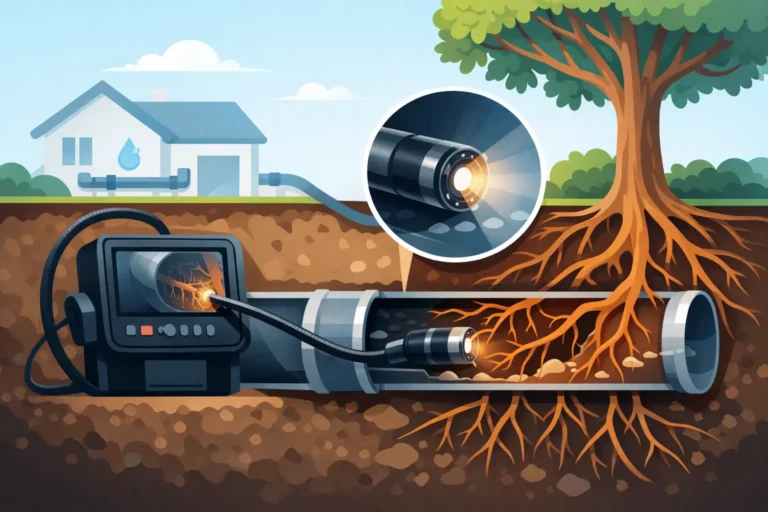
A camera inspection removes the guesswork. It shows whether the line is blocked by sediment, roots, broken pipe, or another obstruction, and it helps determine where the problem is located. You should be able to see what was found and hear a plain-language explanation of the recommended work before any major service begins.
For Lake County homeowners, this matters most before and during the rainy season. Water that cannot leave the driveway has to go somewhere. In the wrong direction, it can enter a garage, wash out landscaping, or place extra moisture near the home.
USA Drain Cleaning uses camera inspections and professional drain-cleaning equipment to identify the actual cause of exterior drainage problems. No guessing. No unnecessary work. The goal is to clear the blockage thoroughly and explain what is happening in the line so you can make an informed decision.
Keep the Driveway Drain Clear Between Storms
A little routine attention can prevent a stressful flooding call. Check the grate after mowing, trimming, or blowing leaves, especially if clippings collect along the driveway. Clear debris before rain pushes it into the drain.
After a storm, look for standing water, new soil around the grate, or slow drainage that was not there before. Keep mulch and loose landscape rock from washing toward the inlet. If downspouts discharge near the driveway, make sure they are not carrying excessive debris directly into the drain.
It also helps to check the drain before a forecasted stretch of heavy rain. Five minutes spent clearing leaves from the grate can be the difference between normal runoff and water moving toward the garage.
When the water does not clear after basic cleaning, do not keep escalating with chemicals, force, or repeated hose pressure. A clear view inside the line can save time, protect your property, and lead to a repair that actually lasts.