Residential Sewer Lateral Guide for Homeowners
A sewer backup rarely starts with water on the floor. More often, it starts with one slow toilet, a tub that gurgles after the washer drains, or a clog that keeps coming back after it has been cleared. This residential sewer lateral guide helps Lake County homeowners understand what that pipe does, what can go wrong, and when a professional inspection is the sensible next step.
Your sewer lateral is out of sight, but it handles every drain in the house. When it is restricted, damaged, or blocked by roots, the problem can move from an inconvenience to a messy home repair quickly. No guessing. No unnecessary work. The goal is to identify the actual condition of the line and address the cause.
What Is a Residential Sewer Lateral?
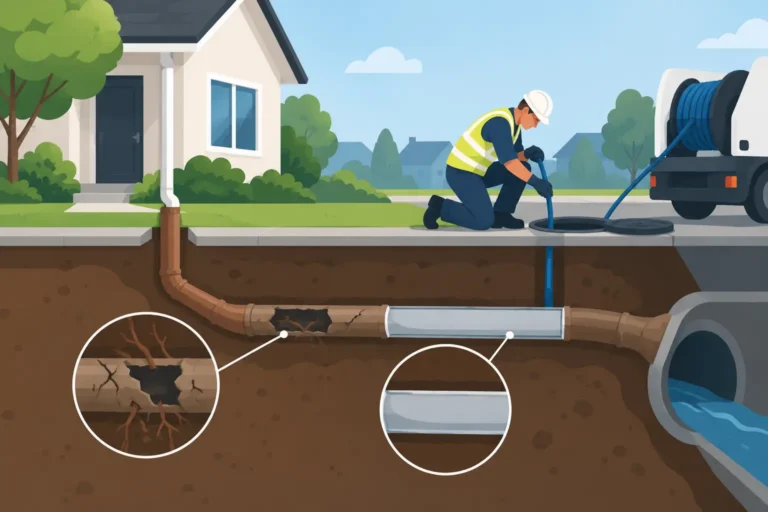
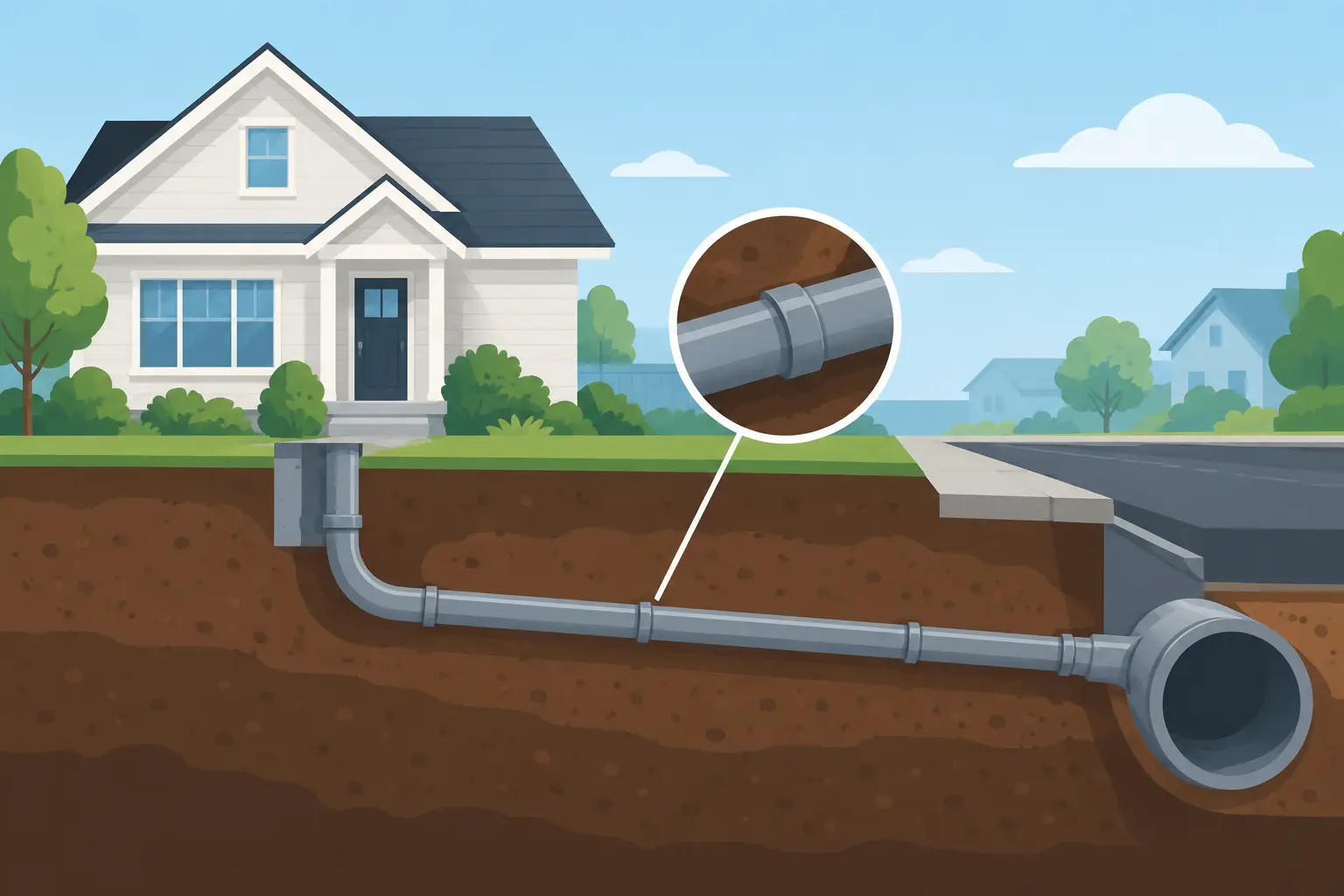
The sewer lateral is the underground pipe that carries wastewater from your home to the public sewer connection. It begins where your home’s plumbing exits the foundation and typically runs through your yard toward the sewer main near the street.
Every toilet, shower, sink, washing machine, and dishwasher that drains into your plumbing depends on this line. A clog in a single bathroom sink is usually a local drain issue. A problem in the lateral can affect multiple fixtures at once, especially the lowest drains in the home.
For most homes connected to public sewer, the homeowner is generally responsible for the lateral on private property. Responsibility can vary near the street connection or utility easement, so it is worth checking local requirements before planning a repair. If your property uses a septic system, the plumbing layout and repair path are different, but recurring whole-house drainage symptoms still deserve prompt attention.
Warning Signs Your Sewer Lateral Needs Attention
A lateral problem does not always create an immediate backup. Partial blockages can build over time as grease, paper products, scale, and debris catch inside the pipe. Tree roots can enter through small openings and gradually create a dense blockage.
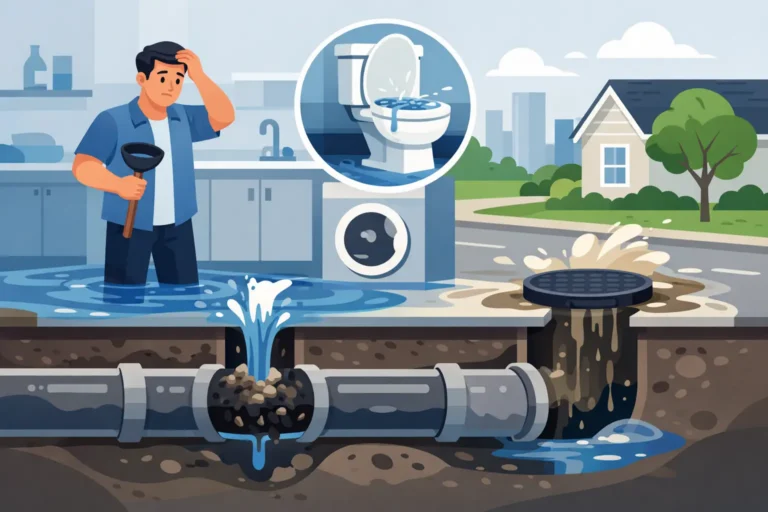
Pay attention when several fixtures act up together. A toilet bubbling when the shower runs, water rising in a tub after flushing, or a washing machine drain that causes a nearby sink to gurgle can point to a restriction farther down the system.
Foul sewer odors indoors or near the yard also deserve attention. Odor does not prove the lateral is broken, but it can signal a blocked line, a damaged pipe, or another plumbing issue that should be diagnosed rather than covered up.
Outside, look for unusually green patches of grass, wet ground during dry weather, soft spots, or sinkholes along the likely pipe route. These can be signs of a leak, although drainage issues, irrigation, and Florida’s frequent rain can create similar symptoms. That is why a visual diagnosis alone is not enough.
A single slow drain may be a simple fixture-level clog. But when drain problems recur after plunging or store-bought chemicals, or when more than one fixture is involved, treating it as a possible main-line issue can save time and prevent a backup.
Why Sewer Laterals Fail in Lake County Homes
Different homes have different pipe materials, installation histories, and yard conditions. Older properties may have aging cast iron, clay, or Orangeburg pipe. Newer homes often have PVC, which is durable but can still be affected by settlement, poor connections, construction damage, or root intrusion at joints.
Roots are a common concern in Central Florida because trees and shrubs naturally seek moisture. Roots do not usually crush a sound pipe from nowhere. More often, they find a small separation, crack, or joint opening, then grow inside where water and nutrients are available. Clearing the roots may restore flow, but the condition of the pipe determines whether cleaning alone is a lasting answer.
Pipe buildup is another common issue. Grease, soap residue, wipes, and excess paper can reduce the open space inside a line. Even products labeled flushable can create trouble in a restricted sewer lateral. A line may drain adequately most days, then back up when the washing machine or several bathrooms send a larger volume of water through it.
Ground movement and age matter, too. A cracked, offset, or sagging section of pipe can catch debris repeatedly. In that situation, the right repair depends on what a camera shows, where the defect sits, and whether the pipe can be cleaned effectively or needs repair.
Start With a Camera Inspection, Not a Guess
The most useful way to assess a suspected sewer lateral problem is a video camera inspection. A technician sends a specialized camera through the line to view the inside of the pipe and locate conditions such as roots, buildup, breaks, standing water, separated joints, or collapsed sections.
This matters because similar symptoms can have very different causes. A recurring clog could be a heavy buildup that responds well to professional cleaning. It could also be roots entering at one joint, or a damaged section that will continue catching debris until it is repaired. The right solution depends on the condition, not just the symptom.
A good inspection should be explained in plain language. You should know what was found, where it is located, and what options make sense before approving additional work. Camera findings also help avoid unnecessary excavation when cleaning is enough, and avoid repeated cleaning when a broken line is the real issue.
Cleaning, Repair, or Replacement: What Makes Sense?
If the pipe is structurally sound and the restriction is buildup or roots, professional drain cleaning may be the right first step. High-pressure jetting can clear accumulated material from the pipe walls and restore flow more thoroughly than a temporary surface-level opening.
However, cleaning is not a cure for every condition. When roots are entering through a damaged joint, the line may need periodic maintenance until repair is scheduled. If the camera reveals a significant crack, collapse, belly, or badly offset connection, the conversation should shift from clearing the blockage to correcting the pipe problem.
Repair can range from addressing a localized damaged section to replacing a longer run of lateral pipe. The least disruptive option is not automatically the least expensive over time. A smaller repair may make sense when the damage is isolated. Replacement can be more practical when an older line has multiple failures or repeated backups.
Before work begins, ask what the camera showed, whether the line was fully cleared, whether the problem is likely to return, and what part of the pipe requires repair. Clear answers protect your budget and make the decision easier.
What Homeowners Can Do to Protect the Line
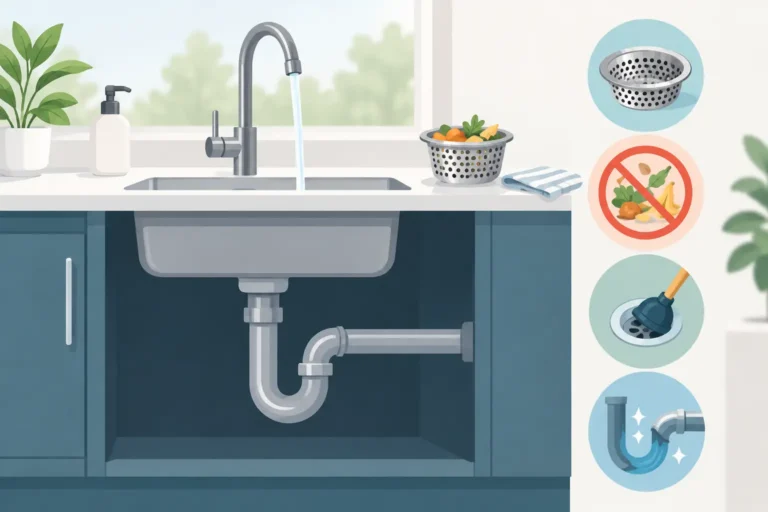
Good habits reduce preventable clogs, even though they cannot stop age-related pipe damage or root growth. Keep grease, cooking oil, coffee grounds, wipes, paper towels, hygiene products, and heavy food waste out of drains and toilets. Use a sink strainer in the kitchen and avoid treating the toilet like a trash can.
Be careful with chemical drain cleaners. They often do little for a main-line obstruction, and repeated use can be hard on certain pipes and fixtures. If drains are backing up or multiple fixtures are involved, stop adding water to the system as much as possible and arrange for a diagnosis.
If you have had roots or a recurring lateral issue before, planned camera inspections and maintenance can be a practical choice. The right schedule depends on the age and condition of the pipe, the landscaping above it, and how often symptoms have returned.
When to Call for Sewer Lateral Service
Call promptly if sewage is backing up into a tub, shower, toilet, or floor drain. Avoid flushing toilets, running the dishwasher, or doing laundry until the issue is checked. More water entering a blocked lateral can make the cleanup larger and more expensive.
For recurring clogs, slow drains across the house, gurgling fixtures, or sewer odors, schedule an inspection before the problem becomes urgent. USA Drain Cleaning can use camera diagnostics to show what is happening inside the line, explain the findings clearly, and recommend only the work the condition calls for.
Your sewer lateral should not be a mystery until it fails. A clear inspection and an honest explanation give you the information to act early, protect your home, and choose a repair that fits the real problem.