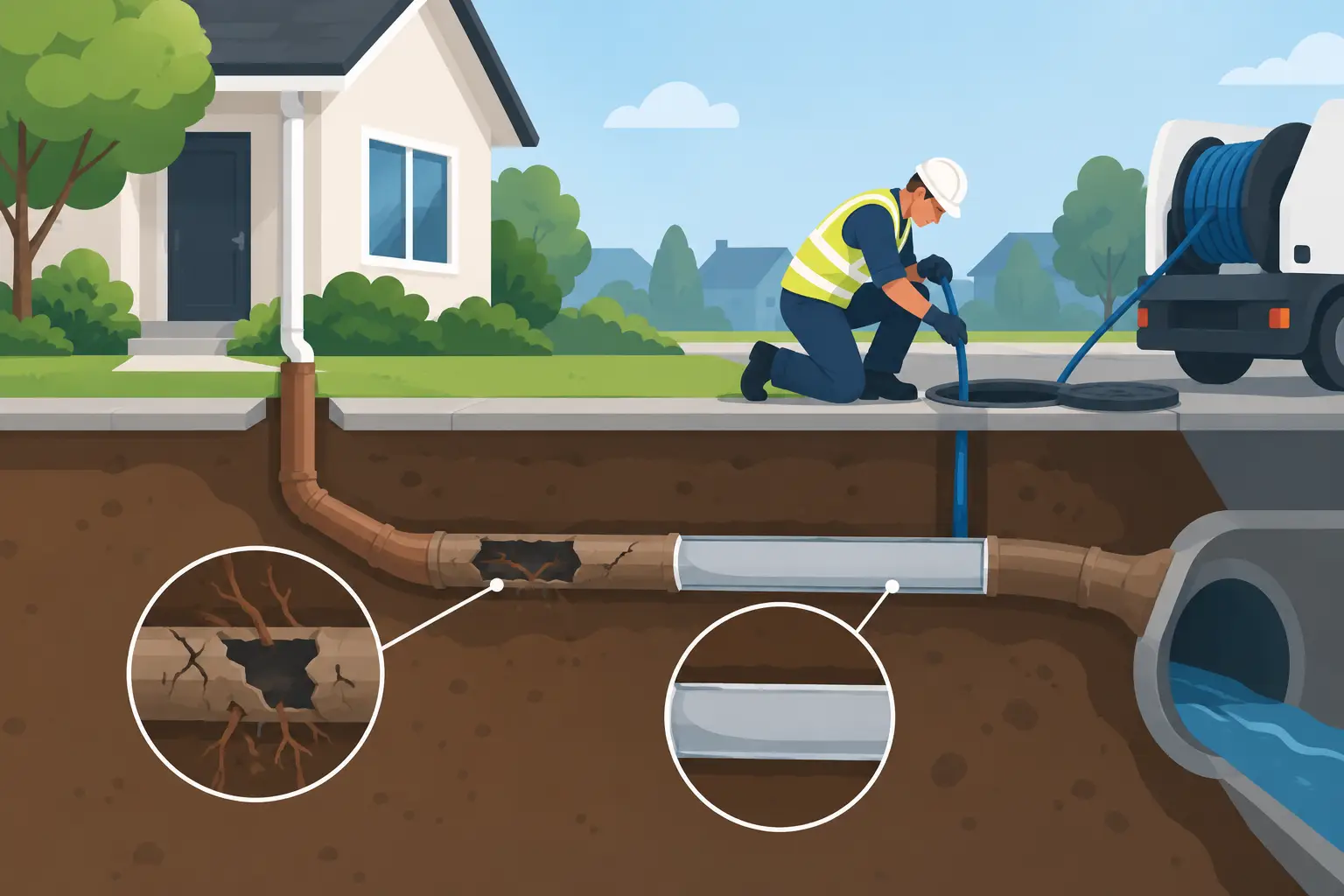
When Sewer Lateral Repair Is the Right Call
A main sewer backup rarely starts as a dramatic emergency. It often begins with a toilet that gurgles when the washer drains, a shower that takes too long to empty, or a kitchen sink clog that keeps coming back. When several fixtures are involved, the trouble may be in the sewer line leaving your home. Sewer lateral repair may be the right answer, but only after someone identifies what is actually happening inside that buried pipe.
For Lake County homeowners, guessing can get expensive fast. A drain may need thorough cleaning, a root blockage may need removal, or a damaged section of pipe may need repair. Those are different problems with different solutions. The goal is not to sell the biggest job. It is to find the cause, explain it clearly, and make the repair that fits the condition of the line.
What Is a Sewer Lateral?
Your sewer lateral is the private pipe that carries wastewater from your home to the public sewer connection or a septic system. It usually runs underground from the house, across the yard, driveway, or landscaped areas. Because it is out of sight, homeowners may not know there is a problem until drains begin backing up indoors.
The exact ownership line can vary by location and utility rules, but homeowners are commonly responsible for the lateral on their property. That makes early diagnosis especially valuable. Catching a developing issue can help you plan the work before sewage reaches a bathroom, laundry room, or living area.
A sewer lateral handles everything sent down household drains: toilet waste, soap residue, grease, paper products, and wastewater from showers and appliances. Over time, buildup, roots, shifting soil, aging materials, and physical damage can affect how well it flows.
Signs You May Need Sewer Lateral Repair
One slow drain does not automatically mean the sewer lateral is damaged. A clog may be limited to that fixture or its nearby branch line. The warning signs become more serious when multiple drains react at the same time or the problem keeps returning after routine clearing.
Watch for patterns such as toilets bubbling when a sink drains, water coming up in a tub or shower after flushing, sewage odors near the home or yard, and repeated backups at the lowest drain in the house. A ground-level shower, bathtub, or floor drain is often the first place wastewater appears when the main line cannot move water out properly.
Outside, a persistently wet area, unusually green grass in one strip of the yard, or a sewer odor can point to a leaking or separated pipe. These signs are not proof on their own. Florida rain, irrigation, and drainage issues can also create wet spots. That is why looking inside the line matters before digging begins.
Root intrusion is another common concern. Tree and shrub roots naturally seek moisture. If a pipe has a loose joint, small crack, or opening around an older connection, roots can enter and grow inside the line. At first, this may cause an occasional slow drain. As roots thicken and collect debris, they can create recurring blockages that ordinary plunging will not solve.
Why Camera Inspection Comes Before Sewer Lateral Repair
A camera inspection takes the guesswork out of a buried-line problem. A technician sends a specialized camera through the pipe and reviews the footage to see the pipe’s interior condition. This can reveal heavy buildup, root intrusion, standing water, cracked sections, offsets where pipe joints have shifted, or a collapsed area.
The camera also helps determine where the issue is located. That matters if a repair is needed. Rather than digging along an entire suspected route, the repair can be focused on the affected section when conditions allow.
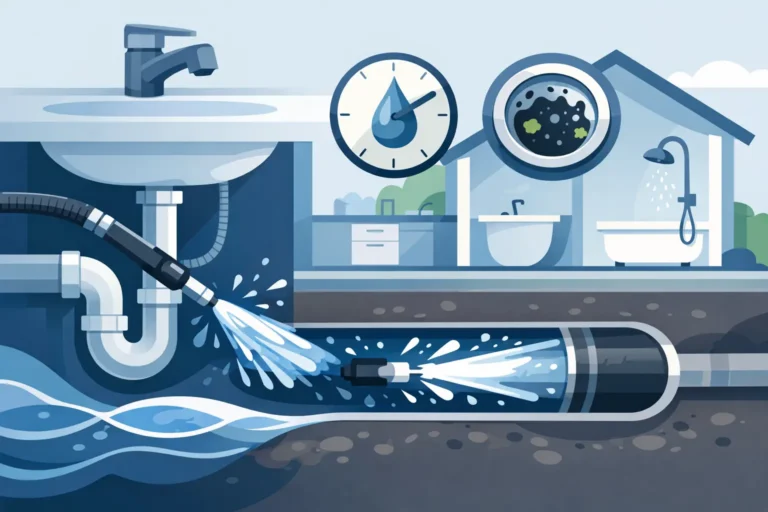
Just as important, a camera can show when repair is not needed. A pipe with grease, sludge, scale, or roots may still be structurally sound after professional cleaning. High-pressure jetting can clear the obstruction from the pipe walls and restore flow without replacing a section of line. If the camera shows a break, severe offset, collapse, or repeated root entry through damaged pipe, cleaning alone may only provide temporary relief.
At USA Drain Cleaning, the point of inspection is straightforward: show the homeowner what is there, explain the finding in plain language, and recommend work based on the actual condition of the line. No guessing. No unnecessary work.
When Cleaning Is Enough and When Repair Makes Sense
The right choice depends on both the blockage and the pipe itself. A single blockage caused by buildup may respond well to professional drain cleaning or jetting. After cleaning, a follow-up camera view can confirm whether the line is open and whether the pipe walls and joints remain in acceptable condition.
Repair becomes more likely when the same area repeatedly clogs because the pipe is damaged. Roots that return quickly after removal are a good example. If the roots are entering through a cracked joint, they will keep finding their way back until the opening is corrected.
A low spot in the pipe, sometimes called a belly, can also create ongoing trouble. Water and solids settle in the dip instead of flowing freely downhill. Cleaning may improve the line for a time, but it cannot correct a section that has lost its proper slope. A collapsed pipe, broken connection, or major separation generally requires a physical repair.
There is a practical budget question here, too. Repeated emergency drain calls can add up, especially if backups keep happening at inconvenient times. On the other hand, replacing a line that only needs thorough cleaning is unnecessary. A documented camera inspection gives you a better basis for deciding whether to clean, monitor, repair one area, or consider a larger replacement.
Sewer Lateral Repair Options for Homeowners
Not every repair requires the same level of excavation. The best method depends on the pipe material, depth, location, extent of damage, access, and local requirements.
Spot Repair
A spot repair replaces or corrects one damaged section of pipe. This is often appropriate when the rest of the lateral is in good shape and the problem is isolated. It can be a sensible option for a localized break, separated joint, or root-damaged area.
The trade-off is that access is still needed to reach the damaged section. If it sits beneath a driveway, mature landscaping, patio, or other hard-to-replace feature, excavation can affect the overall cost and restoration work.
Trenchless Repair or Replacement
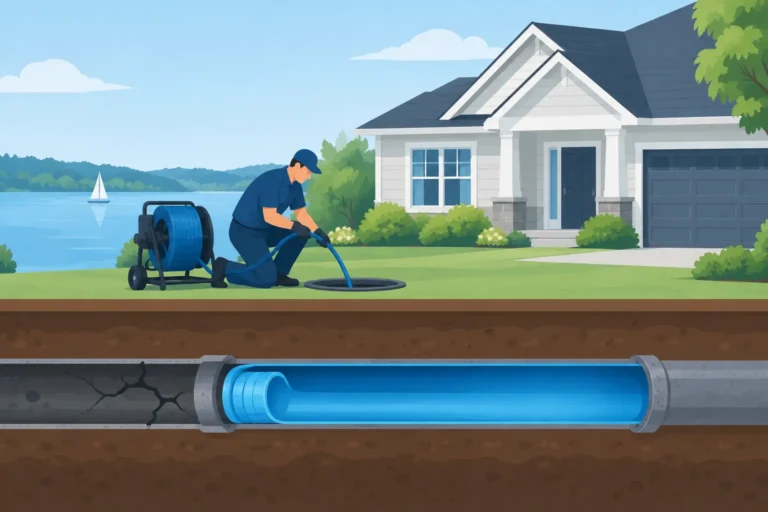
Some conditions may allow trenchless methods, such as lining or pipe bursting. These methods can reduce surface disruption compared with opening a long trench, but they are not automatic solutions for every property. The existing pipe layout, damage type, access points, and local permitting requirements all matter.
Trenchless work can be attractive where preserving landscaping or pavement is a priority. However, a line that is severely collapsed, improperly routed, or filled with certain obstacles may still require excavation. A contractor should explain why a particular method fits your pipe instead of treating one approach as the answer for every home.
Full Lateral Replacement
A full replacement may make sense when the line has widespread deterioration, multiple bad sections, repeated root intrusion, or an older material that is failing in several locations. It is a bigger project, but it can be the more durable choice when patching one area would leave several others likely to fail.
Before approving replacement, ask to see the camera findings and understand the planned route, repair method, restoration expectations, and permit responsibilities. A clear written quote should separate the work being performed from assumptions about items such as landscaping, concrete, or utility coordination.
What to Do While You Wait for Service
If wastewater is backing up, stop using water fixtures as much as possible. Do not keep flushing toilets or running the dishwasher to test whether the line has cleared. More water can worsen the backup and spread contamination inside the home.
Keep people and pets away from sewage-affected areas, especially if water has reached flooring or personal belongings. If you notice a sewer odor or wet area outdoors, avoid digging or attempting a repair yourself. Underground utilities and damaged piping are not a safe do-it-yourself project.
When you call for help, describe which fixtures are affected, when the symptoms began, whether the problem has happened before, and whether you have a septic system or municipal sewer connection. Those details help narrow down the likely source before the inspection begins.
A Clear Diagnosis Protects Your Home and Budget
Sewer problems are stressful because the pipe is hidden and the symptoms can feel urgent. Still, the next step does not have to be a guess or a rushed decision. A proper camera inspection can separate a removable blockage from a damaged lateral and give you a clear picture of what needs attention.
If several drains are backing up or a clog keeps returning, act before the next load of laundry or heavy use turns it into a mess inside the house. Get the line inspected, ask to see the findings, and choose the repair that addresses the real problem while respecting your property and budget.