Drain Snake Versus Plunger: Which Clears Clogs?
A sink that will not drain before guests arrive or a toilet that rises instead of flushes can make any homeowner reach for the nearest tool. In the drain snake versus plunger decision, the right choice depends on where the clog is, what is causing it, and how often the problem returns. A plunger can solve a fresh, nearby blockage quickly. A drain snake can reach farther into certain drain lines. Neither tool is a cure for every slow drain.
Drain Snake Versus Plunger: The Real Difference
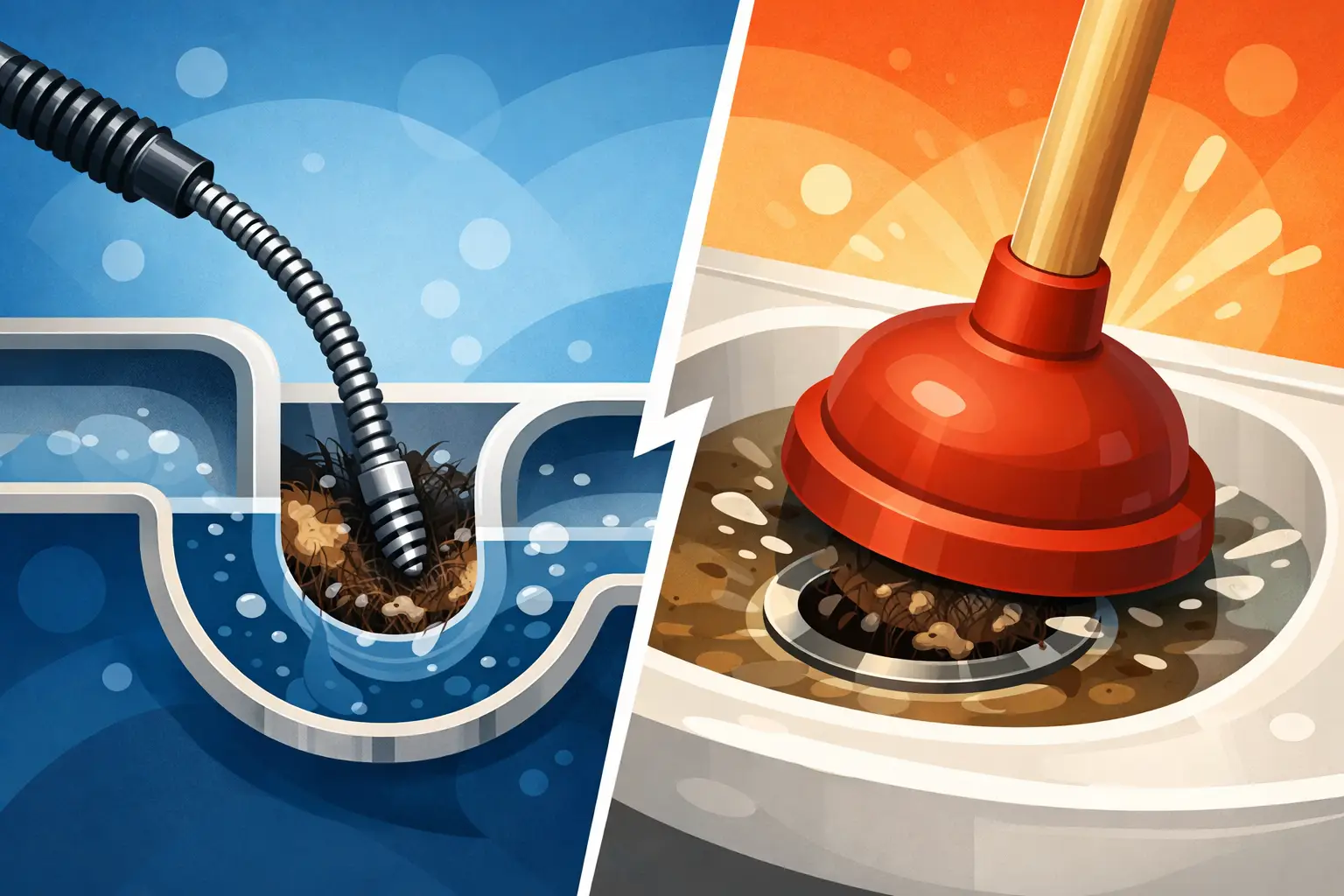
A plunger works by creating pressure and suction. That motion can loosen or push apart a clog close to the fixture opening. It is usually the first tool to try when a toilet, kitchen sink, or bathroom sink suddenly stops draining.
A drain snake, also called an auger, uses a flexible cable to physically reach into a drain. Depending on the type of snake, the cable may break through, pull out, or bore a small path through a blockage. It can be useful when a clog is deeper than a plunger can affect.
The key difference is simple: a plunger moves water and pressure; a snake reaches into the pipe. That does not automatically make a snake the better option. If the issue is grease buildup coating a kitchen line, a small hand snake may poke a narrow opening through it without removing the buildup. Water may drain for a few days, then slow down again.
What a plunger does well
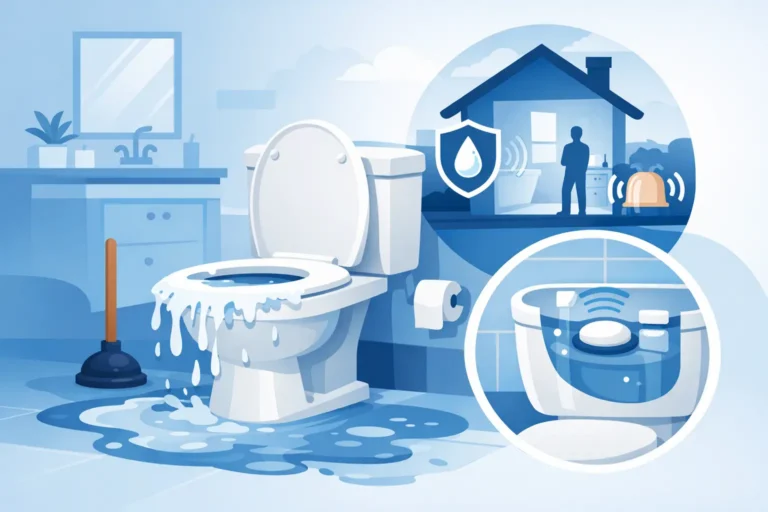
For a toilet clog caused by too much paper or waste, a flange plunger is usually the appropriate first step. Its extended rubber collar seals against the toilet outlet better than a flat sink plunger. Several controlled plunges can clear a simple blockage without putting anything into the drain line.
A flat-bottom cup plunger is better suited for sinks, tubs, and showers. Cover the overflow opening on a sink or tub with a wet rag first, then add enough water to cover the plunger cup. A good seal matters more than force. Short, steady plunges are safer and often more effective than aggressive pounding.
Plungers are inexpensive, easy to store, and low-risk when used correctly. They are not designed for every fixture, though. Plunging a double-bowl kitchen sink without sealing the other side can make a mess, and forceful plunging can push dirty water up through another nearby drain if there is a larger line problem.
What a drain snake does well
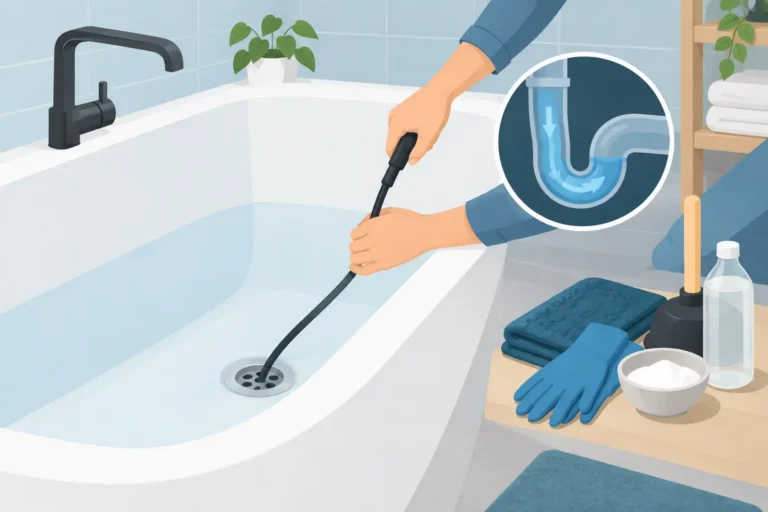
A small hand snake can be helpful for hair and soap buildup near a bathroom sink, tub, or shower drain. In those cases, the clog is often close enough for the cable to grab or disturb it. Remove the stopper or drain cover when possible, feed the cable gently, and pull it back slowly. Hair clumps can be unpleasant, but removing them is often more effective than forcing them farther down the line.
A toilet auger is a separate tool made specifically for toilets. Its protective sleeve helps reduce the chance of scratching the porcelain while the cable travels through the toilet trap. It is a better choice than feeding a bare hand snake into a toilet.
For deeper lines, professional machines are very different from the lightweight snakes sold for home use. They use longer, stronger cables and cutting heads chosen for the pipe and blockage. That difference matters because an undersized tool can become stuck, damage the pipe, or leave the actual restriction behind.
When a Plunger Is the Better First Move
Start with a plunger when the clog is isolated to one fixture and happened suddenly. A toilet that was working normally yesterday but will not flush today is a common example. The same is true for a bathroom sink that stopped draining after shaving, brushing teeth, or washing up.
A plunger is also the better first choice when you do not know what is in the drain. If a child dropped a small object into a toilet or sink, a snake may push it farther into the plumbing. A careful plunge may dislodge it, but if the fixture still will not drain, stop before the object moves beyond reach.
Do not keep plunging if water begins backing up in a tub, shower, or another sink. That is a warning that the blockage may be in a shared branch line or the main sewer line, not in the fixture you are working on.
When a Drain Snake May Help
A drain snake makes sense when a plunger does not change the flow and the problem appears limited to one bathroom fixture. Slow tub drains and bathroom sinks that collect hair are common examples. A hand snake may remove the material causing the immediate restriction.
Use a snake gently. If it will not advance, do not crank harder and force it. The cable may be hitting a tight bend, a fitting, a damaged section of pipe, or a solid obstruction. Forcing it can scratch older pipes, damage a plastic drain assembly, or cause the cable to knot inside the line.
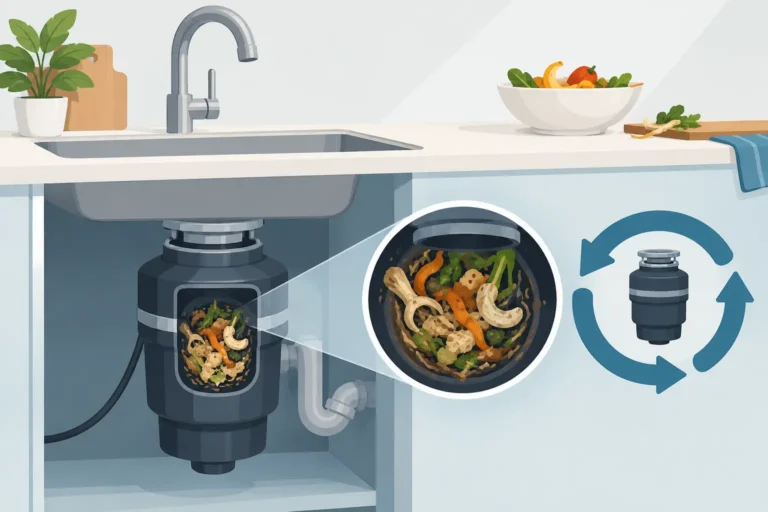
Be especially cautious with kitchen drains. Food scraps, cooking oil, detergent residue, and grease often build up along the pipe walls. A small snake may make a temporary channel, but it does not wash the pipe clean. When kitchen clogs keep coming back, the line usually needs a more thorough cleaning method.
When Neither DIY Tool Is Enough
Recurring clogs are the clearest sign that the visible symptom is not the whole problem. If you plunge the same toilet every few weeks, snake the same shower drain repeatedly, or notice more than one slow fixture, it is time to find the cause instead of trying another temporary fix.
Watch for gurgling sounds, foul drain odors, water backing up into a tub when the toilet flushes, or wastewater appearing at a floor drain. Those symptoms can point to a blockage farther down the line. In Lake County homes, roots can also enter aging or damaged sewer lines through small openings and gradually create a larger obstruction.
Chemical drain cleaners are not a reliable substitute for either tool. They can sit in a blocked pipe, create heat, damage certain plumbing materials, and expose anyone working on the drain afterward to harsh chemicals. If you have already used a chemical product, tell the technician before any professional service begins.
Why the Cause Matters More Than the Tool
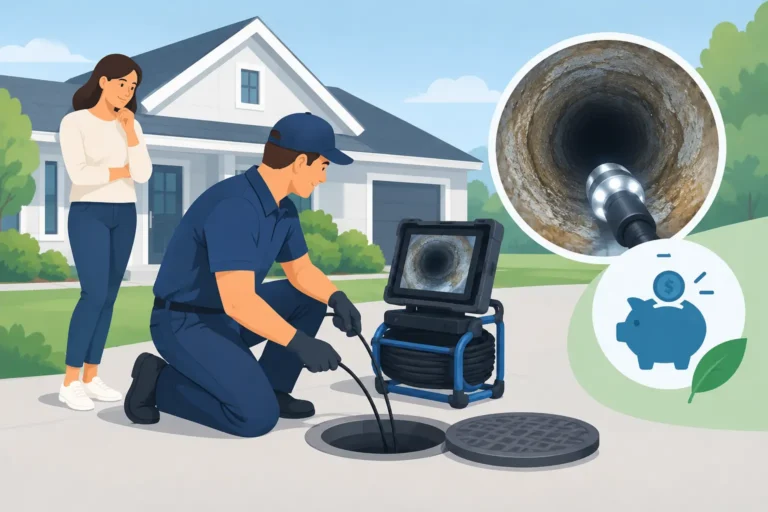
A plunger or snake addresses a blockage from one direction. Professional drain service starts by determining what is actually in the line and where it is located. A video camera inspection can show whether the problem is hair, grease, scale buildup, a broken pipe, root intrusion, or an object lodged in the drain.
That information helps avoid unnecessary work. If the camera shows a localized buildup, the drain can be cleaned with the equipment that fits the condition. If it shows roots or pipe damage, the homeowner can see why the drain keeps failing and make an informed decision about next steps.
For heavy buildup, professional high-pressure jetting can clean more of the pipe wall than a small snake can reach. It is not the right answer for every pipe or every problem, which is why inspection and a clear explanation should come first. No guessing. No unnecessary work.
USA Drain Cleaning uses camera inspections to show homeowners what is happening inside the line, explain it in plain language, and recommend work based on the condition of the drain rather than a one-size-fits-all approach.
A Practical Way to Protect Your Drains
Use a plunger for a fresh, simple clog near one fixture. Use a hand snake carefully for accessible hair buildup in a bathroom drain. After either attempt, run water for several minutes and watch how the fixture responds. A drain that seems clear but immediately gurgles, drains slowly, or causes a backup elsewhere has not been fully resolved.
For kitchen sinks, keep grease, coffee grounds, fibrous food scraps, and large amounts of food waste out of the drain. In bathrooms, clean hair from stoppers and drain covers before it collects below the surface. These small habits reduce common clogs, but they will not correct a damaged pipe or a main-line obstruction.
When water is backing up, multiple fixtures are affected, or the same clog keeps returning, put the plunger and snake aside. A clear diagnosis can save time, prevent property damage, and give you a lasting fix instead of another short-lived opening in the pipe.