Florida Stormwater Drainage Guide for Homeowners
A Florida downpour can turn a small drainage problem into standing water across a driveway or against the side of a home in minutes. This Florida stormwater drainage guide helps Lake County homeowners recognize what normal runoff should look like, what pooling water is trying to tell you, and when a blocked exterior drain needs professional attention.
Stormwater has to go somewhere. When gutters, downspouts, swales, yard drains, catch basins, or underground drain lines cannot move water as designed, it finds the lowest available path. That may be a flower bed, a garage entrance, a patio, or the area next to your foundation. The goal is not to make every part of the yard perfectly dry during a heavy storm. The goal is to make sure water drains away from the house and does not remain where it can create damage.
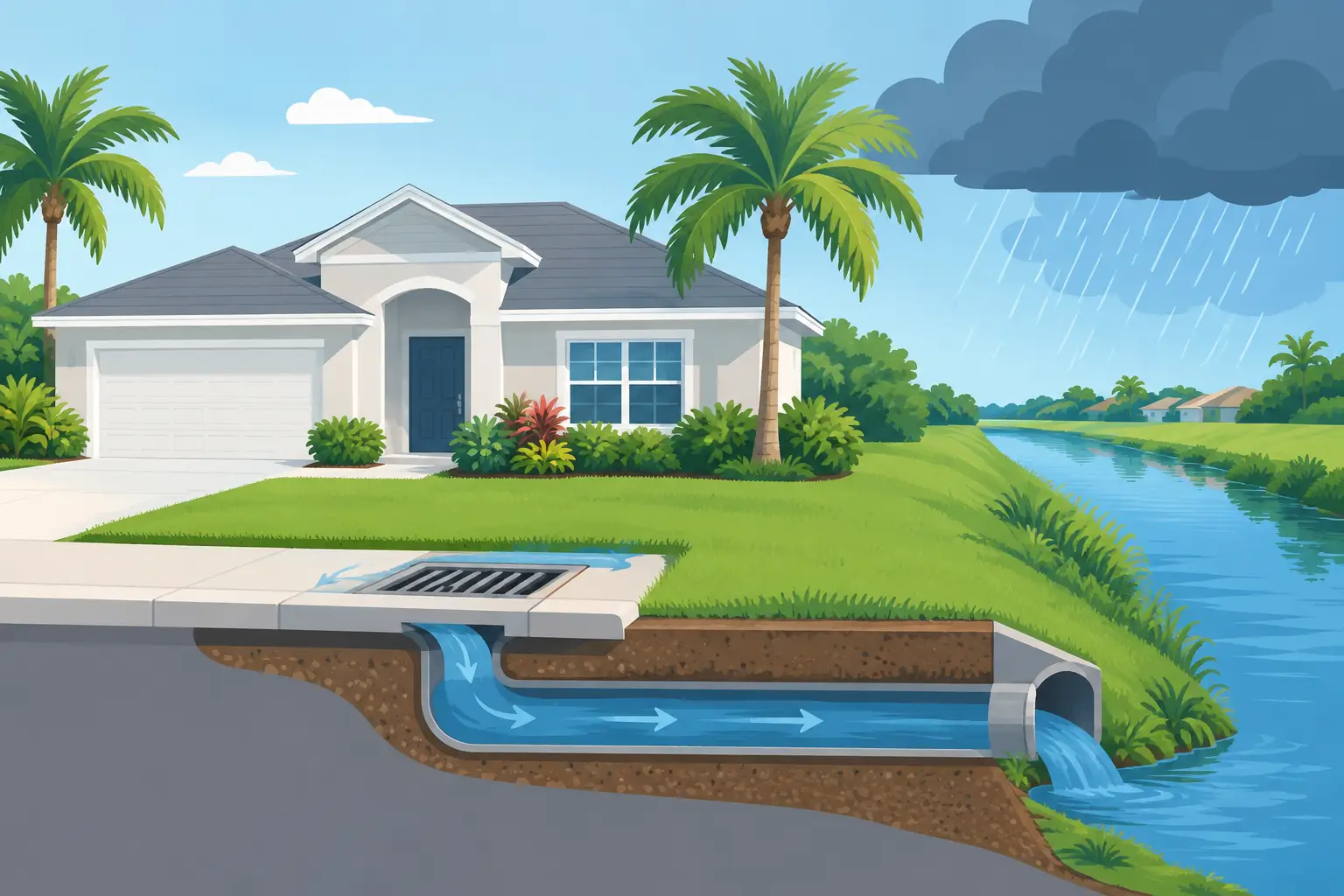
How Stormwater Drainage Works Around a Florida Home
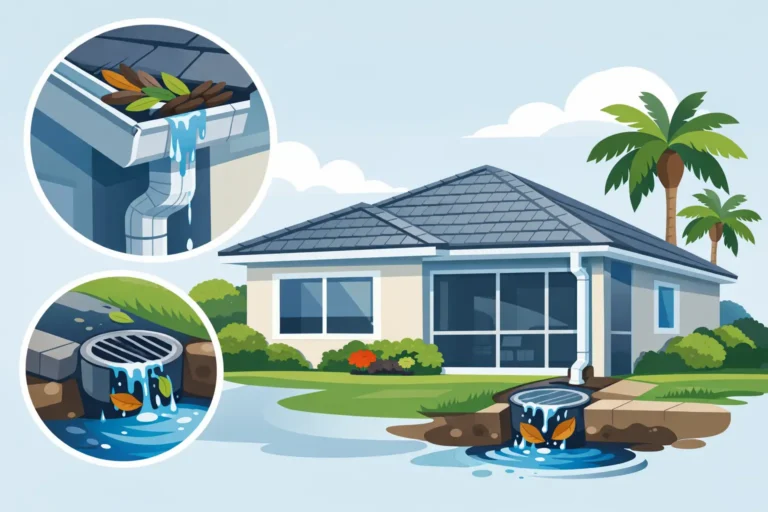
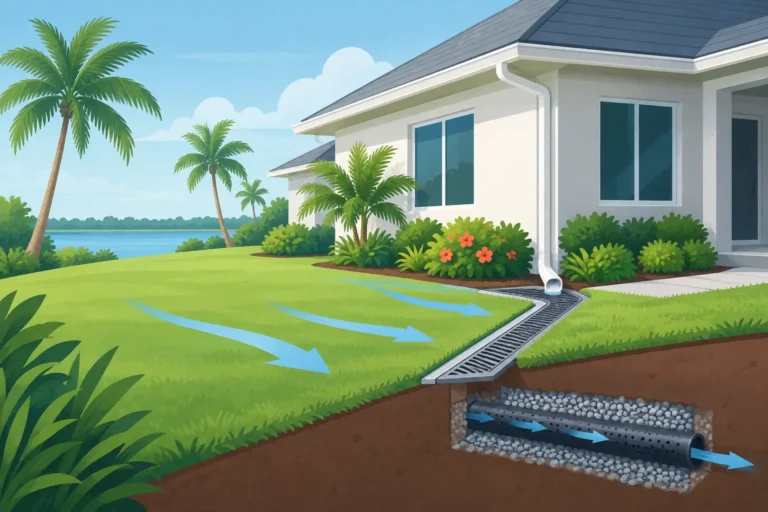
Most homes rely on several parts working together. Roof gutters collect rain from the roof. Downspouts carry it toward the ground. Yard grading, swales, and drain inlets direct water away from the house and toward an approved discharge area, retention area, or drainage system.
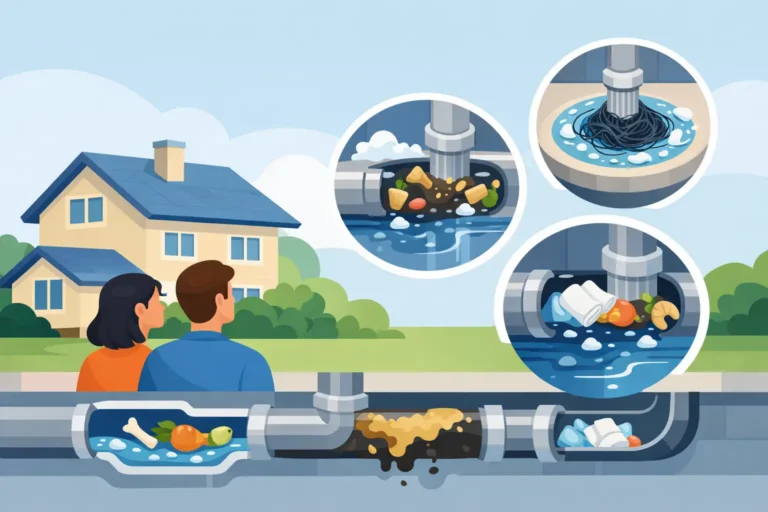
A storm drain is different from the plumbing drain inside your home. Your kitchen sink, shower, and toilet connect to your sanitary plumbing system. Exterior yard drains and catch basins are built to handle rainwater. Both can clog, but they require different troubleshooting. If water backs up from an outdoor grate after rain, the issue may be leaves, mulch, sand, roots, or a blocked underground storm line.
Florida soil, mature landscaping, and sudden rain make this more complicated. Sandy ground can absorb some water quickly, but compacted areas, clay pockets, low spots, and thick turf may not. A yard that once drained well can change after landscaping, driveway work, settling soil, or root growth.
Warning Signs Your Exterior Drainage Needs Attention
Do not wait for a major storm to reveal a drainage issue. A few small signs often show up first. Water lingering for a short time during heavy rain can be normal. Water that stays for hours or returns in the same place after every storm deserves a closer look.
Watch for water pooling near exterior drain grates, around downspouts, along the driveway, or near the home’s perimeter. Other warning signs include mulch washing out of beds, soil erosion, water stains on exterior walls, soggy areas that never seem to dry, and a musty smell in the garage or around a patio.
A catch basin that fills but drains very slowly may have debris at the grate, but the blockage may also be farther down the line. If you clear visible leaves and the water still does not move, avoid assuming the problem is solved. The pipe could contain packed sediment, roots, broken sections, or a buildup that cannot be reached from the opening.
Pay attention to water near your foundation. One storm does not automatically mean there is structural damage, but repeated water exposure next to the house is not something to ignore. It can saturate soil, invite pests, affect landscaping, and create moisture concerns inside or around the structure.
A Florida Stormwater Drainage Guide for Routine Maintenance
Regular maintenance is usually less stressful and less expensive than dealing with a flooded entryway. Check your exterior drainage before the rainy season, after major storms, and whenever you notice water behaving differently around the property.
Start by looking at gutters and downspouts from the ground. Leaves and roof debris can cause overflow that lands right next to the house. Make sure downspouts are connected, aimed away from the foundation, and not discharging onto a walkway where water can create a slippery surface.
Next, inspect visible yard drain grates and catch basins. Remove loose leaves, pine needles, grass clippings, and mulch from the surface. Keep landscaping materials from covering the grate. If the opening is buried under soil or decorative rock, it cannot collect water when you need it most.
Walk the property after a normal rain, if it is safe to do so. This is often the clearest way to see the route water takes. Look for places where runoff stops, flows back toward the home, or cuts a new channel through the yard. Photos from different storms can be useful because they show whether the problem is isolated or recurring.
Avoid sending large amounts of material into a drain line. Sweeping dirt, mulch, or grass clippings toward a grate may seem convenient, but that material can settle in the pipe and reduce its capacity. Outdoor drains are built for water, not yard waste.
When the Problem Is More Than Leaves at the Grate
Some drainage problems are simple surface clogs. Others require a closer look below ground. A drain that repeatedly backs up after you clear the grate is a good example. So is a basin that overflows even during a moderate rain, or an area where water disappears slowly but never seems to fully drain.
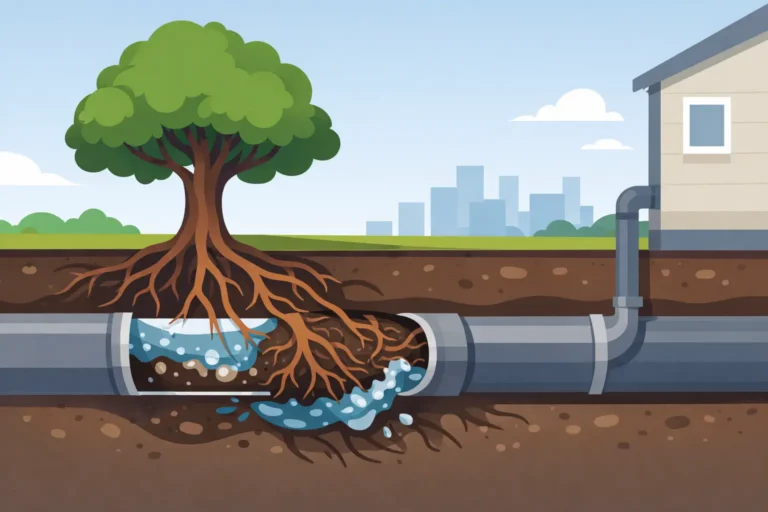
Roots are common in older lines and around mature trees. They can enter small gaps, catch debris, and gradually restrict the pipe. Sand, silt, and decayed leaves can also build up over time, especially in low sections of pipe. In some cases, a line may be crushed, separated, or improperly sloped, meaning water has no reliable path out.
This is where guessing can cost time and money. A camera inspection can show the condition inside an underground drainage line and identify the actual source of the restriction. No guessing. No unnecessary work. Once the issue is visible, a technician can explain whether cleaning is likely to restore flow or whether the line needs a repair assessment.
Professional-grade high-pressure jetting can remove packed organic debris, sludge, and other buildup from suitable drain lines. It is not the right answer for every pipe condition. If a camera shows a broken or badly deteriorated line, forcing water through it may not address the real problem. The right service depends on what is inside the pipe, not just what is visible at the grate.
What Homeowners Should Not Do
It is reasonable to remove loose debris from a surface grate, but use caution around underground drains. Do not reach deep into a basin where you cannot see what is inside. Avoid using harsh chemical drain cleaners in exterior drainage systems. They rarely solve sediment or root problems, and they can damage surrounding vegetation or create unsafe conditions.
Be careful with rented drain machines and pressure equipment as well. A cable can get stuck, damage a pipe, or fail to remove the material causing the backup. Pressure equipment used incorrectly can force water toward the house, damage a compromised line, or make a hidden break worse.
If water is approaching electrical equipment, entering the home, or collecting near a garage door or foundation during a storm, focus first on safety. Stay clear of standing water around electrical hazards and contact a qualified professional for help. Once conditions are safe, document the affected areas with photos and note how long the water remained.
Drainage Improvements Need a Complete View of the Yard
Adding another drain or extending a downspout can help in the right situation, but more pipe is not always the answer. The water still needs a proper destination and a route that keeps it away from the home and neighboring properties. A change that fixes one low spot can create a new problem elsewhere.
Before making major grading or drainage changes, consider the whole property: roof runoff, driveway slope, existing swales, mature trees, underground utilities, and where water currently exits. Local rules, easements, and permit requirements may apply depending on the work. A thoughtful assessment is better than burying pipe and hoping it solves the problem.
For a blocked or slow exterior line, start with a diagnosis. USA Drain Cleaning can inspect and clean residential storm drain lines in the Eustis and Lake County area, explain what is causing the backup, and recommend only the work the condition calls for.
The next time rainwater lingers where it should not, take it as an early warning rather than a reason to panic. A clear drain path now can protect your yard, your entryways, and your peace of mind when the next Florida storm rolls through.