A Clogged Cleanout Example and What It Means
Water should not be standing at your sewer cleanout. If you remove the cap and find sewage, dark water, or a wet mess around the pipe, that is a clogged cleanout example that points to a problem farther down the line. The cleanout itself is usually not the cause. It is the access point telling you that wastewater cannot move where it is supposed to go.
For homeowners in Eustis, Mount Dora, Tavares, Leesburg, and Lady Lake, this can become urgent fast. A main sewer line backup can affect toilets, tubs, showers, and floor drains at the same time. Knowing what the cleanout is showing you can help you avoid guesswork, limit damage, and choose the right next step.
What Is a Sewer Cleanout?
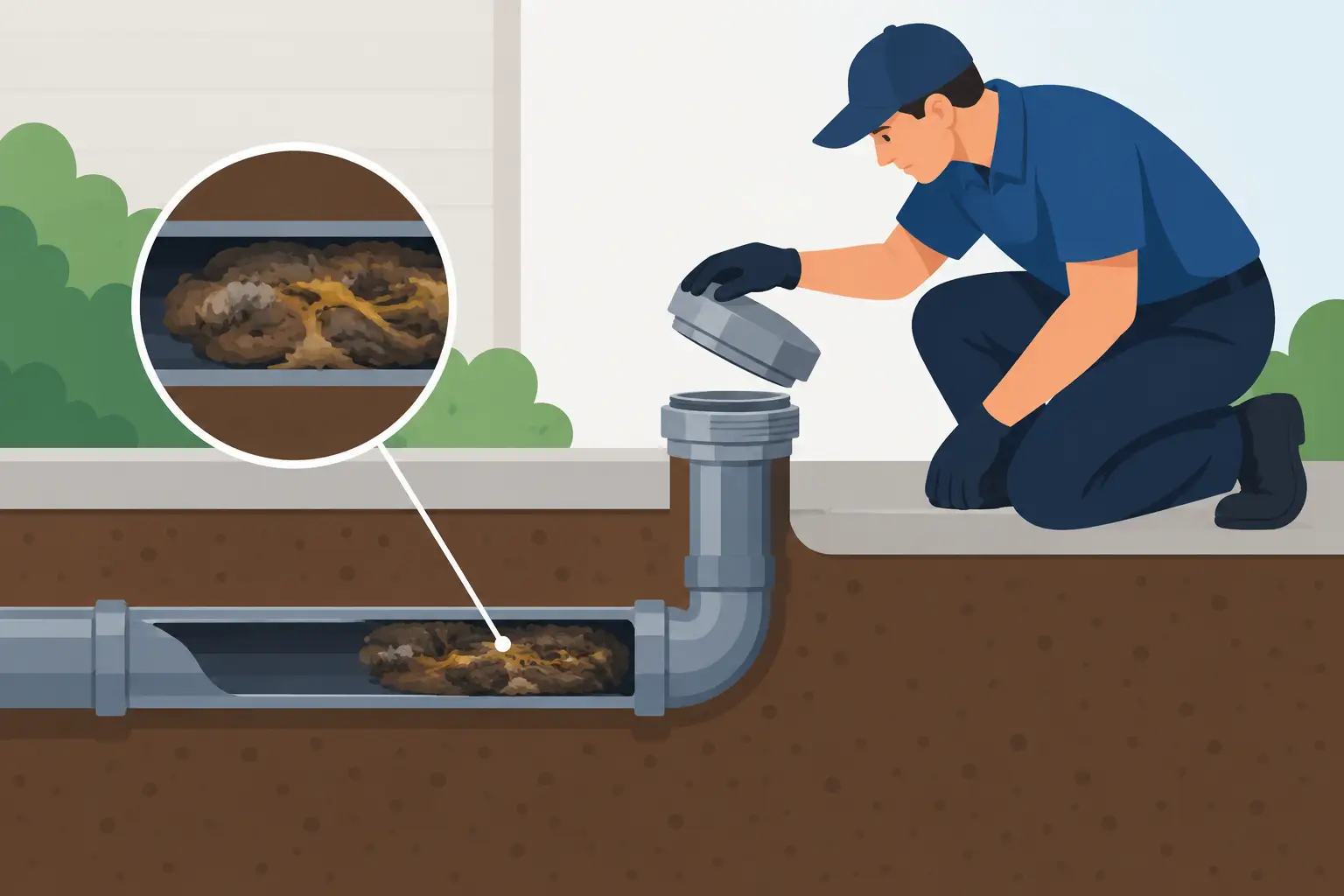
A sewer cleanout is a capped pipe that gives a drain professional direct access to your home’s main drain line. It may be located outside near the foundation, along a side yard, near the property line, or occasionally in a garage, utility area, or bathroom. Most residential cleanouts have a plastic or metal cap, often at ground level.
This access point lets a technician inspect and clean the line without removing a toilet or opening walls. It is also a useful diagnostic location because it helps show whether the blockage is inside the home, in the main line leading away from the home, or possibly beyond your property’s line.
A cleanout cap should stay closed and secure during normal operation. It is not meant to release wastewater, and it is not a drain where water should regularly collect.
A Clogged Cleanout Example: What You Might See
Picture this: A homeowner flushes a toilet, and the bowl rises instead of clearing normally. A few minutes later, water appears around an outdoor pipe with a missing or loose cap. When the cap is carefully removed, the pipe is full of murky water near ground level. Running the kitchen faucet makes that water move or rise.
That is a common clogged cleanout example. The main sewer line has a restriction downstream from the cleanout, so wastewater cannot continue toward the sewer connection or septic system. It takes the easiest available path, which may be back toward the cleanout opening or into the lowest fixture in the home.
The water level matters. If the cleanout is full when no fixtures are running, the line may be holding water behind a substantial blockage. If the level rises only when a toilet is flushed or a washing machine drains, the restriction may still allow limited flow. Either way, the line needs attention before the next load of laundry or shower turns a slow backup into an indoor cleanup.
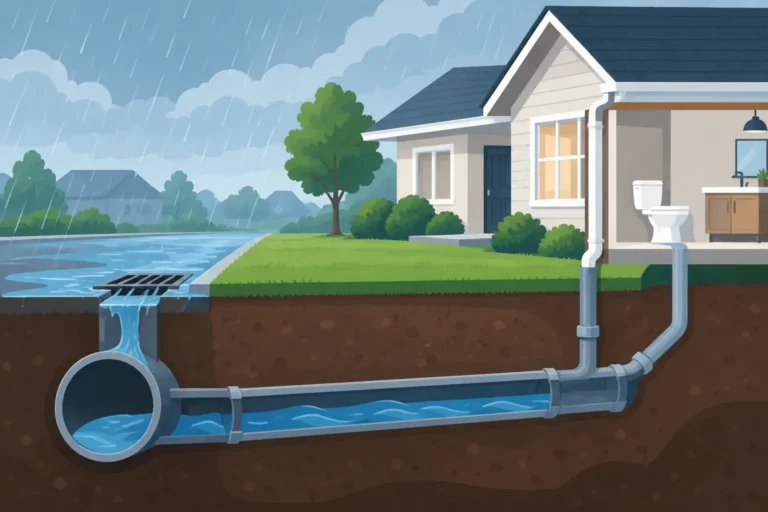
There is one important exception: an exterior cleanout can be filled by rainwater if its cap is damaged, missing, or below a low spot where water collects. Even then, the cap and surrounding grade should be corrected. Rainwater entering a sewer line can add stress to the system and make diagnosis harder.
Signs the Problem Is in the Main Drain Line
A single slow bathroom sink does not always mean the main line is blocked. Hair, soap residue, and toothpaste buildup can clog a local branch drain. But several fixtures acting up together is a different pattern.
Watch for a toilet that gurgles when the shower runs, a tub that fills when the washing machine drains, sewage odors near an outdoor cleanout, or water backing up from a floor drain. These signs often mean wastewater is meeting resistance after multiple fixture drains join the main line.
A backup that appears at the lowest point in the house is especially concerning. In many homes, that could be a first-floor shower, tub, floor drain, or toilet. The blockage may be several feet away from that fixture, which is why plunging the visible drain often does not solve the real issue.
If the cleanout is overflowing or wastewater is entering the home, stop using water whenever possible. Do not run the dishwasher, washing machine, showers, or sinks to “test” the line. Every gallon you send down a drain may have nowhere to go.
What Can Block a Cleanout Line?
The cause depends on the age of the pipe, its material, its condition, and what has entered the drainage system. A camera inspection is the clearest way to identify the source instead of treating every backup as the same kind of clog.
In Lake County, root intrusion is a frequent concern, particularly where older sewer lines run near mature trees. Roots seek moisture and can enter small openings at pipe joints or cracks. Once inside, they catch toilet paper and other debris until flow becomes restricted or stops.
Grease buildup is another common issue. Cooking grease may look harmless when poured down a warm kitchen sink, but it cools and sticks to pipe walls. Over time, grease combines with food particles, soap residue, and debris to reduce the open space inside the line.
Other possible causes include flushed wipes, hygiene products, excessive paper products, broken or offset pipe sections, collapsed piping, and a line with poor slope. A clog caused by soft buildup may respond well to professional cleaning. A line that has shifted, cracked, or collapsed may need a different repair plan. That is why the cause matters as much as the backup itself.
Why Chemical Cleaners and Quick Fixes Can Fall Short
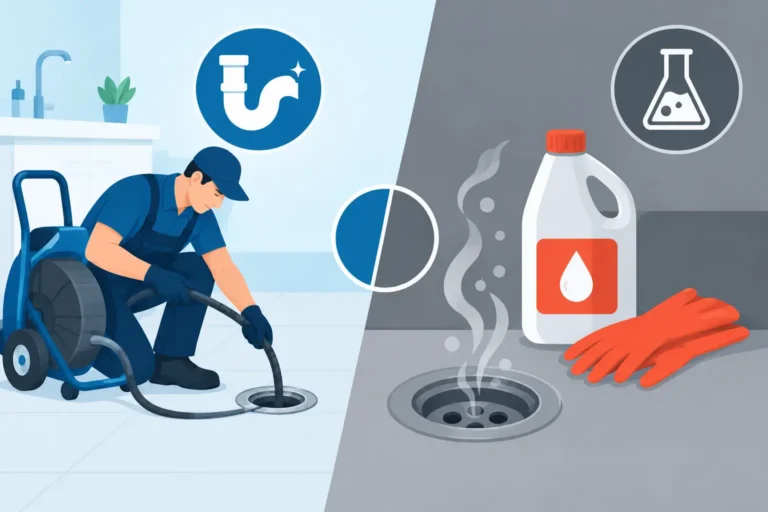
When a drain backs up, it is understandable to want the fastest, least expensive answer. But pouring a chemical cleaner into a main-line problem rarely provides a dependable solution. The product may not reach the obstruction effectively, especially if the line is already holding water. It can also create safety concerns for anyone who later opens the line or services the drain.
A plunger may help a minor fixture clog, but it cannot remove roots, correct a damaged pipe, or clear heavy buildup deep in the main line. A small drain snake can sometimes poke a narrow opening through a blockage, yet that is not the same as cleaning the pipe wall or confirming its condition.
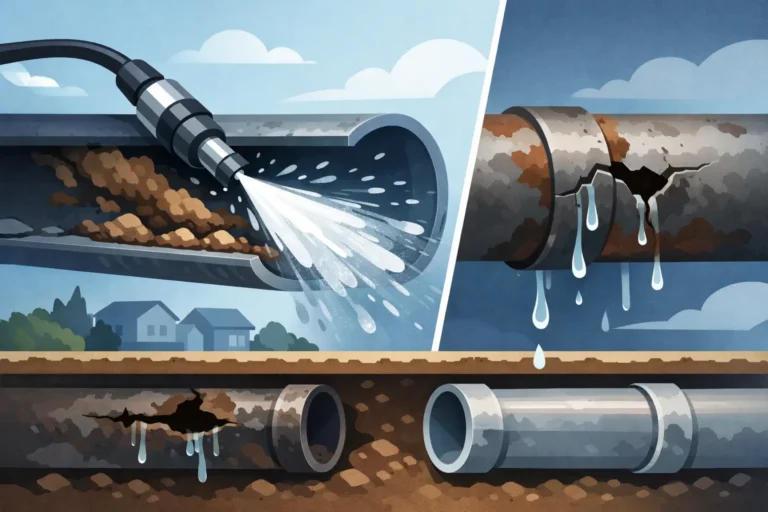
Professional-grade cable equipment and high-pressure jetting are selected based on what is actually in the line. Jetting can remove grease, sludge, and buildup more thoroughly than simply punching a hole through them. For roots or suspected damage, a camera inspection helps show whether cleaning is enough or whether the pipe needs further attention.
No guessing. No unnecessary work. The goal is to clear the restriction and explain what caused it, not sell a one-size-fits-all service.
What a Professional Visit Should Look Like
A good drain service call starts with the symptoms: which fixtures are slow, when the backup began, whether it happens after laundry, and whether the problem has returned before. Those details help narrow down the likely location and cause.
The technician can access the main line through the cleanout, assess the backup, and use the appropriate equipment to restore flow. After cleaning, a video camera inspection can show what remains inside the pipe. You should be able to see and understand the findings in plain language, whether the issue was grease, roots, wipes, a broken section, or a line that is otherwise in good shape.
There is a trade-off between stopping at the first sign of flow and doing enough work to reduce the chance of a quick recurrence. If water begins draining after a cable passes through, that is encouraging, but it does not always mean the full obstruction has been removed. A camera view helps make that decision based on evidence.
USA Drain Cleaning approaches main-line problems with that diagnostic mindset. The work should be explained clearly, priced straightforwardly, and completed with care for your yard, floors, and home.
How to Protect the Line After It Is Cleared
Once the drain is flowing, daily habits can help keep buildup from returning. Keep grease, food scraps, coffee grounds, wipes, paper towels, and hygiene products out of household drains and toilets. Even products labeled flushable can snag on roots, rough pipe walls, or existing buildup.
If roots were found, periodic maintenance may make sense, but the interval depends on how quickly they return and how compromised the pipe is. If the camera shows serious cracks, separation, or collapse, repeated cleaning may only be a temporary measure. An honest recommendation should reflect the condition of your specific line, not a standard schedule.
Outside, make sure the cleanout cap is secure and visible. Avoid burying it under mulch, landscaping, or heavy decorations. A technician can work more efficiently when the access point is easy to find, and you will have a better chance of noticing an early warning sign before sewage reaches the house.
If you see water at a cleanout, hear gurgling from multiple drains, or notice a backup after using appliances, treat it as a signal to act early. A clear diagnosis now is usually far easier to manage than wastewater on the bathroom floor later.