How to Stop Dishwasher Drain Backups at Home
A dishwasher that leaves dirty water in the bottom, sends water into the sink, or leaks onto the floor is more than an inconvenience. To stop dishwasher drain backups, look beyond the appliance itself. In many Lake County homes, the real problem is a restricted kitchen drain, a blocked air gap, or a drain hose installed in a way that lets wastewater flow backward.
The good news is that a few simple checks can identify obvious issues. The key is knowing when a basic cleanup is enough and when the backup points to a deeper blockage that needs professional drain cleaning.
Start by Recognizing What the Backup Is Telling You
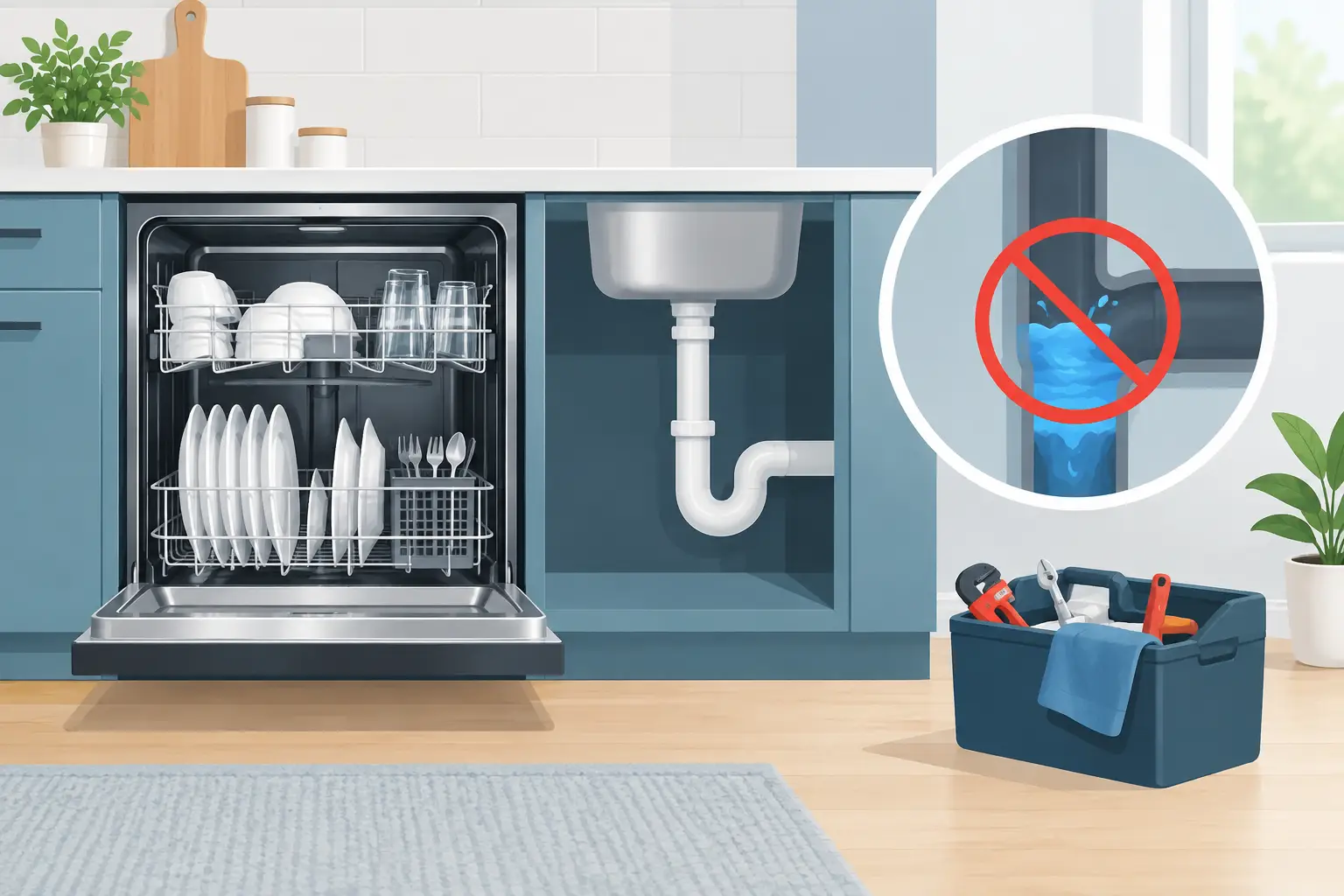
The pattern matters. If only the dishwasher has standing water after a cycle, the filter, drain pump area, hose, or air gap may be the issue. If the kitchen sink gurgles when the dishwasher runs, or dishwasher water rises into the sink, the kitchen branch line is likely draining too slowly.
A garbage disposal can also affect dishwasher drainage. Many dishwashers connect to the disposal, so a disposal packed with food debris or a clog farther down the sink line can stop the dishwasher from emptying properly.
Pay attention to recurring symptoms. Water that drains after you run the disposal, then returns a few weeks later, is not a lasting fix. Grease, soap residue, food particles, and mineral buildup can narrow a kitchen drain over time. Florida homes can also deal with frequent use, hard-water deposits, and older pipe conditions that make buildup more likely.
Check the Dishwasher Filter and Drain Area First
Before checking plumbing connections, turn off the dishwasher and remove standing water with a cup, towel, or wet vacuum. Then locate the dishwasher filter, usually on the bottom of the tub beneath the lower rack. The exact design varies by model, but most filters twist or lift out.
Rinse away food particles, labels, glass fragments, and greasy residue. Use warm water and a soft brush rather than forcing sharp tools into the filter screen. While the filter is out, inspect the drain area for anything that could block water from reaching the pump.
This is routine maintenance, not a cure for every backup. A clean filter will not clear a clogged kitchen line, but it eliminates one common cause before you move to the drain connection.
Clean the Air Gap or Check the High Loop
Many homes have an air gap mounted near the kitchen faucet. It is the small metal or plastic cap that helps prevent dirty sink water from flowing back into the dishwasher. When it becomes blocked with grease or food debris, water may spill from the air gap or fail to drain correctly.
Remove the cap and inner cover, then clean visible debris from inside. A small brush can help. The hose leading from the air gap to the disposal or sink drain may also be restricted, especially if it has collected buildup over time.
Some installations use a high loop instead of an air gap. In that setup, the dishwasher drain hose should rise high under the countertop before dropping to the disposal or sink drain. The high point prevents wastewater from running backward into the appliance. If the hose has slipped down, is kinked, or is crushed behind the cabinet, correct its position before running another cycle.
Do not cut, stretch, or reroute a hose without checking the dishwasher installation instructions and local plumbing requirements. A poorly routed hose can create repeated drainage trouble even when the kitchen line is clear.
Inspect the Garbage Disposal Connection
If your dishwasher drains through a garbage disposal, run cold water and operate the disposal briefly to clear loose food waste. Never reach into the disposal. Turn power off at the switch and breaker before removing anything from inside.
If the disposal was installed recently and the dishwasher has never drained properly, there is one specific possibility: the dishwasher inlet knockout plug may still be in place. This plug must be removed from the disposal connection during installation. When it remains intact, dishwasher water has nowhere to go.
That situation is different from a drain clog. It is an installation issue, and it should be corrected carefully. If you are unsure whether the plug was removed, a drain professional or qualified installer can verify the connection without guesswork.
When the Kitchen Drain Is the Real Problem
A dishwasher pumps water out with force, but it cannot overcome a restricted drain line forever. If the sink drains slowly, makes gurgling sounds, smells foul, or fills when the dishwasher empties, the blockage is likely beyond the appliance.
Kitchen drain clogs are often layers of grease and food residue rather than one solid object. Store-bought chemical drain cleaners are a poor answer for this kind of problem. They may not reach or remove the full blockage, can sit in standing water, and may damage certain pipes or create a hazard for anyone working on the drain afterward.
A plunger may help with a minor sink stoppage, but it has limits. If you use one, block the other basin in a double sink and avoid forcing water toward the dishwasher connection. Repeated plunging without improvement is a sign to stop and get the line inspected.
Professional drain cleaning removes buildup from the pipe rather than simply opening a small passage through it. Depending on the condition of the line, a technician may use a cable machine or high-pressure jetting. A camera inspection can show whether the trouble is grease buildup, a damaged pipe, a sagging section of line, or a blockage farther toward the main drain. No guessing. No unnecessary work.
Do Not Ignore These Signs of a Larger Backup
A dishwasher issue becomes more urgent when other fixtures are involved. Call for help promptly if you notice any of the following:
- Dishwasher water backing into the kitchen sink or onto the floor
- Gurgling from the sink, nearby bathroom fixtures, or laundry drain
- A kitchen sink that drains slowly even when the dishwasher is off
- Sewage odors, dark wastewater, or repeated clogs after basic cleaning
- Water appearing in more than one drain when the dishwasher runs
If multiple fixtures are backing up, the issue may be in a shared branch line or the main sewer line. Continuing to run the dishwasher can add more water to a line that is already struggling to drain.
Prevent Dishwasher Drain Backups Before They Start
The best way to stop dishwasher drain backups is to reduce what reaches the drain and deal with slow drainage early. Scrape dishes well before loading them, even if your dishwasher does not require pre-rinsing. Avoid sending cooking grease, coffee grounds, rice, pasta, eggshells, and fibrous vegetable scraps into the disposal.
Clean the dishwasher filter regularly, especially in a busy household. Run the disposal with cold water before starting the dishwasher if they share a connection. If you have an air gap, check it when you clean around the faucet so debris does not build up unnoticed.
Most importantly, treat a slow kitchen sink as an early warning. Waiting until the dishwasher cannot drain often turns a manageable cleaning job into a messy backup. If your kitchen drain keeps slowing down or backing up, USA Drain Cleaning can inspect the line, explain what is causing the restriction, and recommend the right repair without pushing work you do not need.
A dishwasher should finish its cycle with clean dishes and an empty tub. When it does not, address the warning early, protect your kitchen from water damage, and get a clear answer about what is happening inside the drain line.