Why Garbage Disposal Clogs Keep Coming Back
A kitchen sink that fills with cloudy water every time the disposal runs is more than an inconvenience. Garbage disposal clogs can stop meal cleanup, create unpleasant odors, and sometimes point to a blockage farther down the kitchen drain line. The right response depends on where the obstruction is and what caused it. A quick reset may help a jammed unit, but recurring backups deserve a closer look.
What Causes Garbage Disposal Clogs?
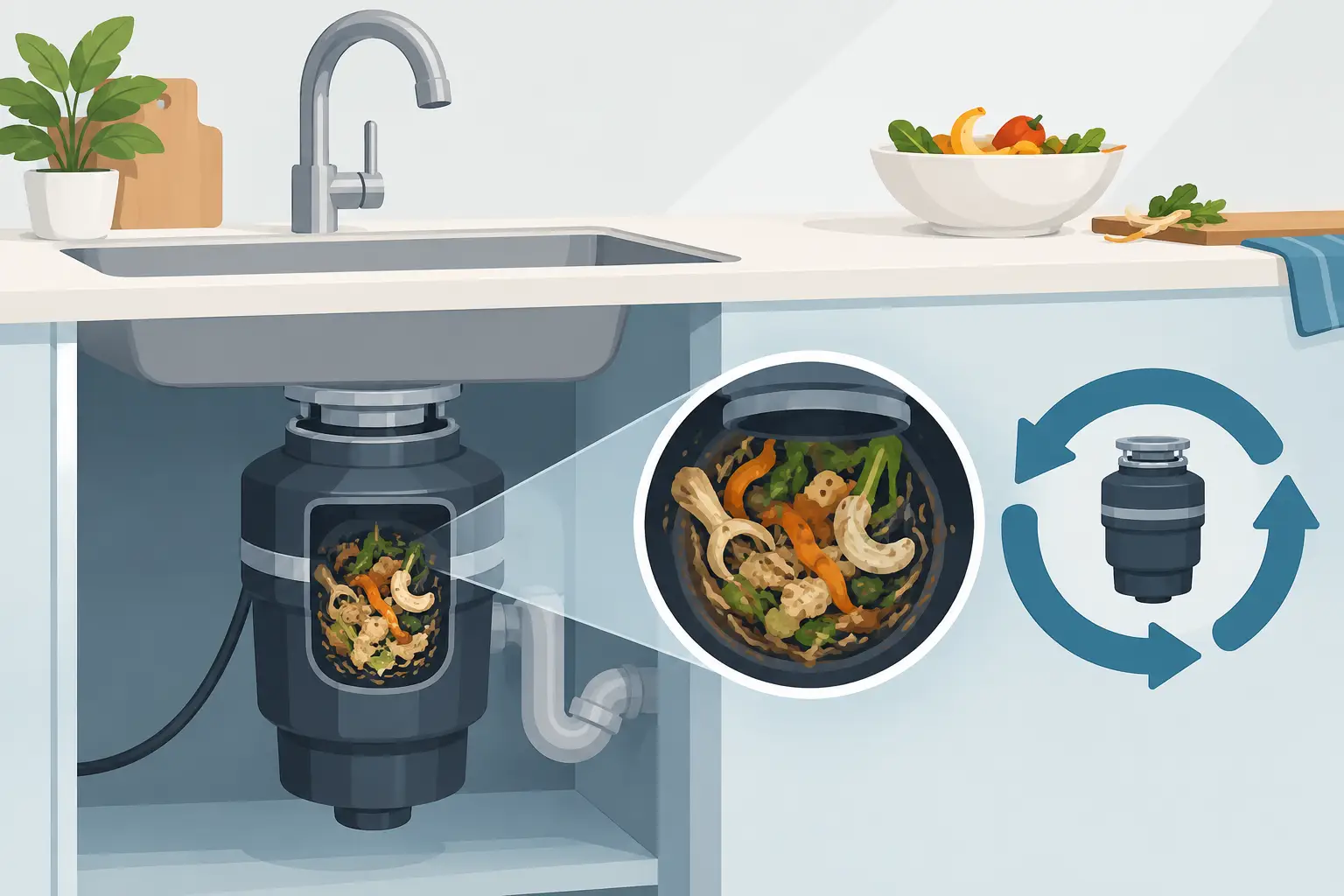
A disposal is built to grind small, soft food scraps while a steady stream of cold water carries those particles through the drain. It is not designed to replace the trash can or compost bin. Many kitchen clogs begin when foods that do not break down well collect in the disposal chamber, trap, or horizontal drain pipe below the sink.
Grease is a common culprit. It may go down warm and liquid, but it cools as it moves through the pipe. There, it sticks to the pipe walls and catches food particles. Over time, that buildup narrows the line until even ordinary sink use causes slow drainage or a backup.
Fibrous foods can create a different problem. Celery strings, corn husks, onion skins, asparagus ends, and artichoke leaves can wrap around disposal components or form a tangled mass inside the drain. Starchy foods such as pasta, rice, potato peels, and bread can swell with water and become a thick paste. Coffee grounds, eggshells, and large amounts of food scraps can also settle in the pipe rather than wash through it.
Sometimes the disposal is not the true source of the problem. If water backs up through both sides of a double sink, or the sink drains slowly even when the disposal is not running, the blockage may be farther along in the kitchen branch line. In older homes, pipe buildup, a sagging section of pipe, or an issue where the kitchen line meets the main drain can keep clogs coming back.
Signs the Clog Is More Than a Minor Jam
A humming disposal that will not spin usually means something is jammed inside the unit. That is different from a drain clog. If the disposal spins normally but water rises in the sink, the problem is likely in the drain path below it.
Pay attention to what happens elsewhere in the kitchen and home. A slow kitchen sink with a sour smell may be a local buildup issue. Water backing up into the opposite sink bowl, gurgling when the dishwasher drains, or repeated clogs shortly after plunging suggest a deeper restriction. If several fixtures are slow or a toilet gurgles when the kitchen sink drains, do not assume the disposal is to blame. That can signal a larger drainage issue that needs professional diagnosis.
In Lake County, homeowners also should not ignore a pattern of repeat clogs. Humid weather can make kitchen odors more noticeable, but odor alone is not the issue. The concern is the organic buildup sitting in the disposal or pipe, where it can continue to collect more debris.
Safe First Steps for a Clogged Disposal
Before trying anything, turn off the disposal at the wall switch. For added safety, unplug it under the sink if the plug is accessible. Never put your hand into a garbage disposal, even when it appears to be off. A stuck utensil, bone fragment, or other hard object can release suddenly when the obstruction moves.
If the unit is humming but not turning, look for the small reset button on the bottom of the disposal. Pressing it may restore power after the motor has overheated. Wait a few minutes first if the unit has been running, then try the reset button and run cold water before turning the disposal on again.
Many disposals also have a socket underneath for a disposal wrench or the correct hex key. Turning it back and forth can free a minor jam. If you remove an object from the chamber, use tongs or pliers, not your fingers.
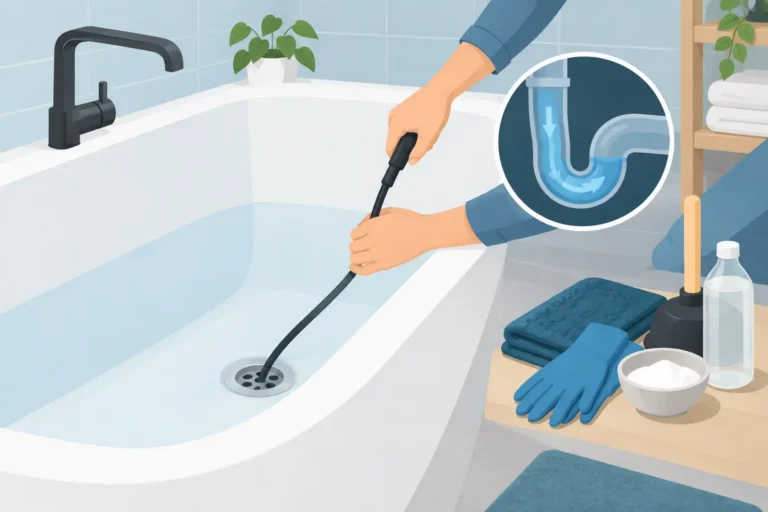
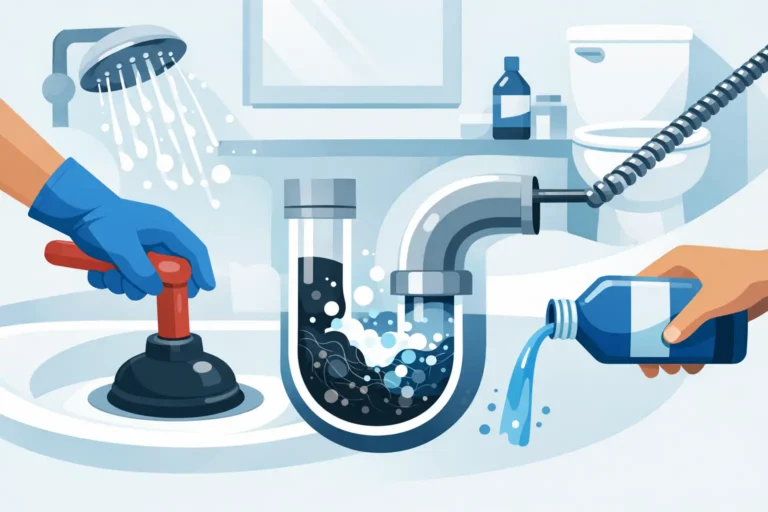
If the disposal runs but the sink still will not drain, a sink plunger may help dislodge a small blockage. For a double sink, seal the other drain opening with a wet cloth or stopper before plunging. Use a few firm strokes, then test the sink with water. This works best for a fresh, localized clog, not a pipe that has accumulated grease and debris over months or years.
Avoid pouring chemical drain cleaner into a disposal. These products can damage seals and metal parts, create dangerous splashing hazards, and leave corrosive liquid in the trap if they do not clear the blockage. They also do not tell you why the line clogged in the first place.
What Not to Put Down the Disposal
The simplest way to prevent future clogs is to treat the disposal as a tool for small leftovers, not bulk waste. Scrape plates into the trash or compost first, then use the disposal only for the small remnants left behind.
Keep grease, cooking oil, and pan drippings out of the sink. Let grease cool in a container and discard it with the trash. Avoid feeding fibrous vegetable scraps, large bones, fruit pits, seafood shells, coffee grounds, pasta, rice, potato peels, and heavy amounts of eggshells into the disposal.
Cold water matters, too. Run cold water before turning on the disposal, keep it running while food is being ground, and continue for several seconds after the grinding sound stops. The water helps carry particles through the trap and into the drain line. Hot water is useful for washing dishes, but it can melt grease just long enough for it to travel deeper into the plumbing and harden there.
When a Professional Drain Inspection Makes Sense
A one-time jam caused by a spoon or small bone may be an easy fix. A disposal that repeatedly clogs after normal use is different. Repeated plunging can temporarily open a small channel through buildup, but it does not remove the material coating the pipe walls.
Professional drain cleaning is the better next step when the sink backs up repeatedly, has a persistent odor, drains slowly even after the disposal runs freely, or sends water into the other side of the sink. A technician can clear the line with equipment designed for the pipe and blockage, rather than relying on harsh chemicals or guesswork.
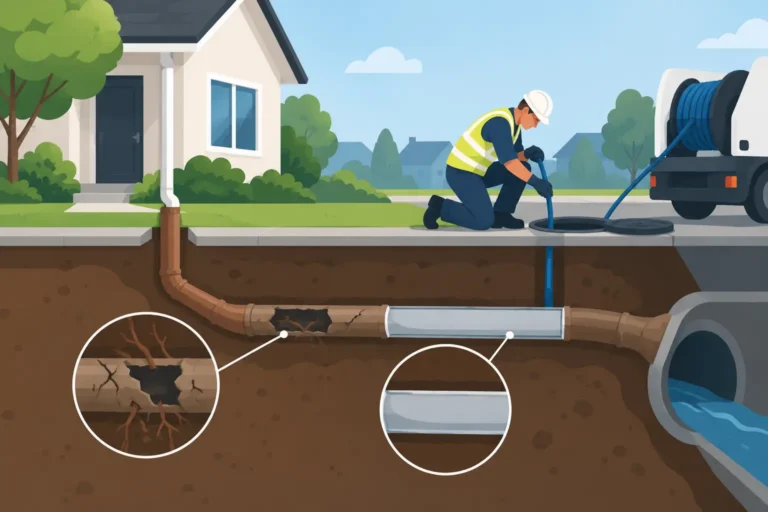
When the cause is not obvious, a camera inspection can show what is actually happening inside the line. The camera may reveal grease buildup, food accumulation, a damaged pipe connection, or another issue farther downstream. That matters because the right repair for a compact food clog is not necessarily the right repair for a pipe with heavy buildup or a structural problem.
USA Drain Cleaning uses clear diagnostics to help homeowners understand the condition of the drain before recommending work. No guessing. No unnecessary work. You should know whether the disposal itself needs attention or whether the kitchen drain line is the real source of the backup.
A Cleaner Kitchen Starts With the Drain Line
Garbage disposal clogs are often preventable, but they should not become a regular part of kitchen cleanup. Use the disposal for small scraps, keep grease and fibrous foods out of the sink, and respond early when the water starts draining slowly. If the same backup returns, a thorough look at the drain line can save you from another disrupted dinner, another bottle of cleaner, and another flooded sink.